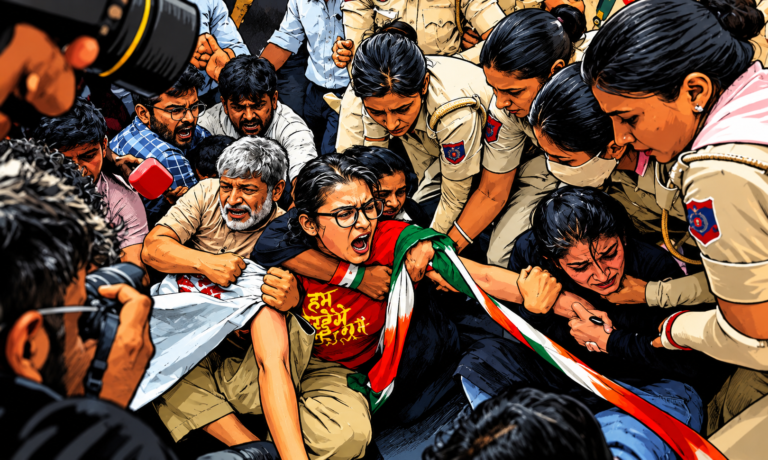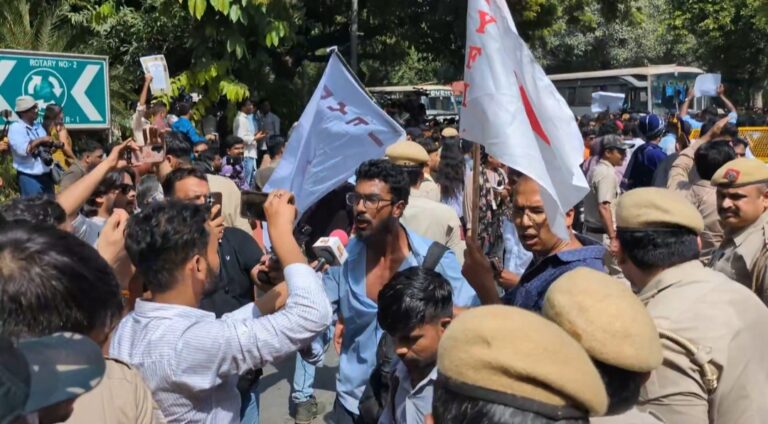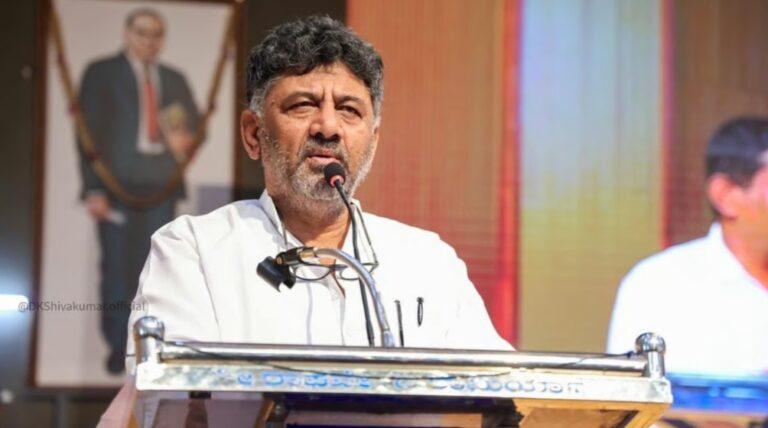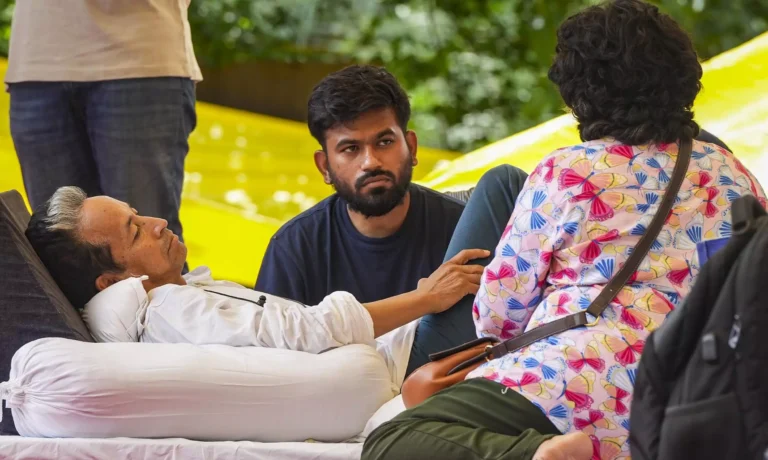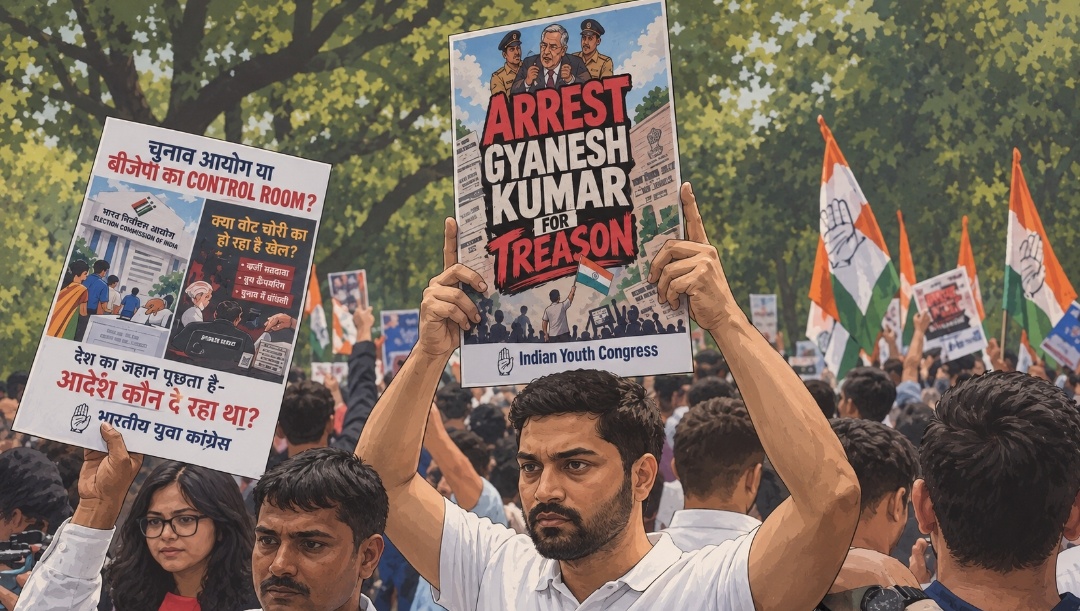
On 2 October, Delhi Police detained more than a thousand people at Jantar Mantar who were demanding the removal of the Chief Election Commissioner. To understand why they were there, it helps to start in Madhubani, where the exercise at the centre of their anger began a year ago.
Jantar Mantar, Delhi’s designated protest site, has been barricaded three times in ten days. On 2 October, police detained more than 1,000 protesters, and the next day they detained another 60 to 70, with prohibitory orders under Section 163 of the Bharatiya Nagarik Suraksha Sanhita still in force. The protesters’ demands have stayed the same since late September: that Chief Election Commissioner Gyanesh Kumar resign, and that the Special Intensive Revision (SIR) of electoral rolls be halted.
The anger in Delhi has a long trail, and much of it runs back to Bihar, where the SIR was first carried out. Understanding why so many people now see the exercise as a threat to the right to vote means understanding what it did there.
What the SIR is
The SIR is a door-to-door re-verification of the entire voter list. Under the Election Commission’s 24 June 2025 notification, every registered voter in Bihar had to fill in an enumeration form. Those who were on the last intensive revision roll of 2003, or whose parents were, had little more to prove, and the Commission told the Supreme Court that roughly 6.5 crore of Bihar’s 7.9 crore electors fell into this group. Everyone else had to produce one of 11 listed documents.
The Commission has defended the exercise as a constitutional duty. In court, it relied on its powers under Article 324 and argued that, since only citizens can vote, it is obliged to verify citizenship before deciding who belongs on the roll.
What happened in Madhubani
The effect of those rules was most visible in districts like Madhubani. When the draft roll was published on 1 August 2025, 3,52,545 enumeration forms in the district had not been returned, a figure exceeded only by Patna, and an unreturned form usually meant a name dropped from the list. Madhubani, where Muslims are about 18 per cent of the population, was one of four districts with large Muslim populations among the ten with the most deletions. Across Bihar, the draft dropped 65,64,075 names.
Some of those names returned two months later. The final roll, published on 30 September 2025, listed 7.42 crore voters, still more than 47 lakh below the pre-SIR figure. According to Bihar’s Chief Electoral Officer, 21.53 lakh eligible voters were added back, but 3.66 lakh names that had survived the draft were deleted during the claims and objections phase without any stated grounds. Because no district-wise breakdown was released, Madhubani still does not know how many of its missing voters came back before Bihar went to the polls in November.
What is known about those voters explains why critics call the exercise unequal. An Indian Express analysis of Patna, Madhubani and East Champaran, which together accounted for 10.63 lakh deletions, found that 53.35 per cent of those removed were women and 37.87 per cent were under 40, the age group that had to produce documents. More than a third were marked “permanently shifted”. In a district where women move to their husbands’ villages after marriage and young men spend much of the year working in other states, being “shifted” or “absent” is often just the shape of ordinary life.
Why critics say the SIR is wrong
The case against the SIR rests on three connected arguments. The first, made by petitioners led by the Association for Democratic Reforms, is that asking people already on the roll to prove their eligibility with documents amounts to a citizenship inquiry that the Commission has no power to conduct, and that it risks mass exclusion. The second, which the Bihar data appears to bear out, is that this burden falls hardest on women, migrants and young voters. The third is that the safeguards meant to protect them have not worked as promised.
The Commission’s answer to that third charge has been that not a single voter appealed a deletion after Bihar’s final roll was published, and it has denied petitioners’ claims that Muslims were disproportionately excluded. Critics reply that an appeal is only possible for a voter who knows her name is gone. The Supreme Court had ordered lists of excluded voters to be displayed at panchayat bhawans and block offices, but whether they reached people in places like Madhubani has never been publicly verified.
On 27 May 2026, the Supreme Court unanimously upheld the Bihar SIR, accepting the Commission’s power to carry out such revisions. Activist Yogendra Yadav wrote that the verdict had effectively given the Commission a free hand over the voter list. Meanwhile, the exercise has continued in states including West Bengal, Gujarat, Kerala and Goa.
How the dispute reached the streets
The protests themselves were set off by a report from inside the Commission. In September, The Indian Express revealed that Election Commissioners Sukhbir Singh Sandhu and Vivek Joshi had put their objections on record at least 14 times in 10 months, on decisions ranging from the deletion of names to the centralisation of electoral-roll data. One dispute concerned Form 6, which new voters use to register, and which Joshi argued could not be changed without amending the Registration of Electors Rules, 1960. The Commission replied that differing views are a normal part of deliberation, and after a meeting of all three commissioners it said the SIR decisions had been unanimous and that the Form 6 changes had been upheld by the Supreme Court.
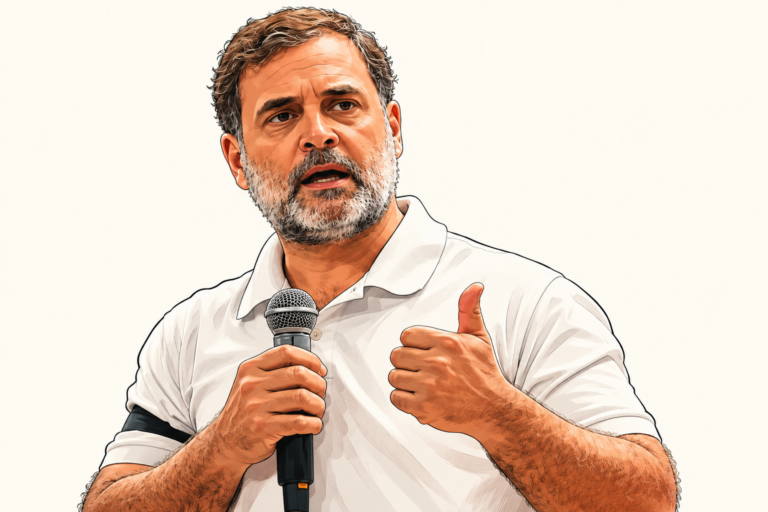
For the opposition, the report seemed to confirm what it had alleged for over a year. Rahul Gandhi accused the Chief Election Commissioner of “vote chori, kanun chori, sanstha chori”, and Congress leader Jairam Ramesh noted that an impeachment motion moved by 73 opposition MPs in April was still pending. On 25 September, protests demanding Kumar’s resignation and an independent audit of the SIR were held across states from Assam to Haryana, where police used water cannons. At Jantar Mantar that day, police detained Yogendra Yadav, CPI(ML) general secretary Dipankar Bhattacharya and AISA president Neha Bora, among others.
The Cockroach Janta Party, founded by Abhijeet Dipke, then issued an ultimatum, warning that it would launch a nationwide protest from Mumbai on 2 October if Kumar did not resign. By the time that day arrived, the movement had spread well beyond any one party, and Delhi alone saw more than a thousand detentions. On 3 October, Rahul Gandhi launched a “Satyagraha” portal to map and connect protests across the country, and on 4 October he accused the Delhi Police of mistreating protesters and journalists, asking Home Minister Amit Shah to answer for it. Karvaan India has also reported that former Supreme Court judge Justice Madan B. Lokur will head a five-judge independent inquiry into the SIR’s legality and its impact on voters.
What remains unanswered
The protests in Delhi are about the Commission’s conduct, but the questions they raise can only be answered with evidence from the ground, and Bihar is the one state where the full cycle is complete. The Commission has still not said how many of Madhubani’s 3,52,545 excluded voters were restored, on what grounds 3.66 lakh names were deleted after the draft, whether the court-ordered lists were displayed in every panchayat bhawan, or how many of those marked “shifted” still live in the district.
Until those answers are public, the strongest evidence that the SIR worked in Madhubani will remain a number of appeals that nobody filed, and the protesters at Jantar Mantar will keep asking why.