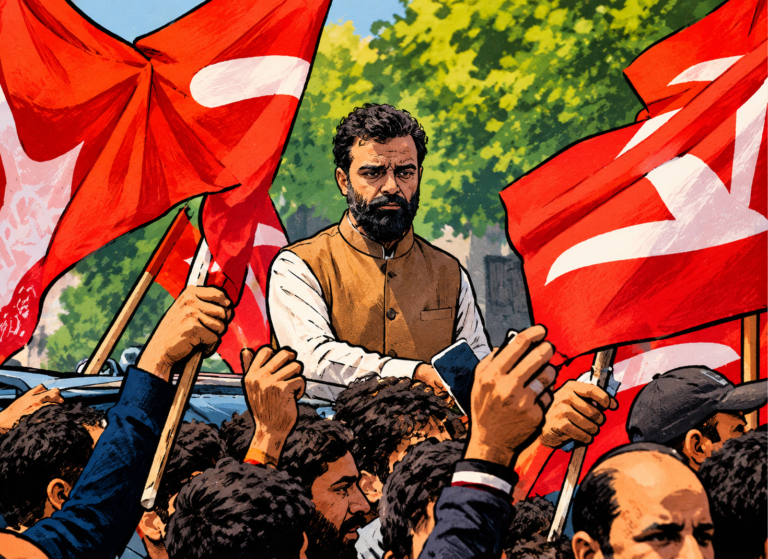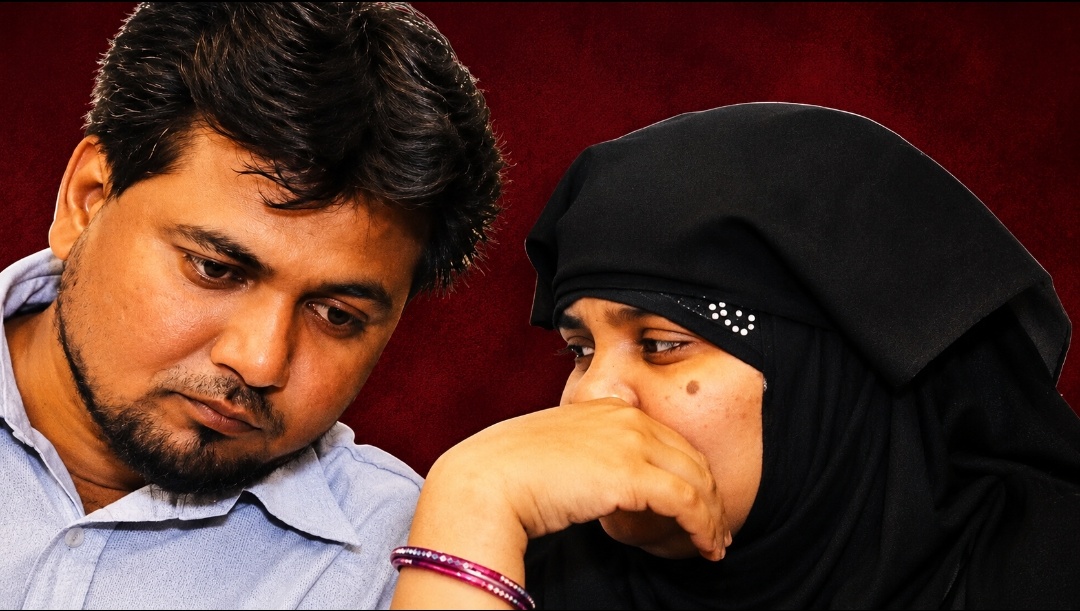
“I hugged her and promised that I would not let her live and struggle alone and would stand by her in the upcoming fight.”
When Yakub Patel recalled making this promise to his wife, Bilkis Bano, he was speaking about a moment that had come to define the next two decades of their lives. It was a promise made in the aftermath of one of the most brutal episodes of communal violence in Gujarat in 2002, when the couple’s family was shattered and their lives were irrevocably altered.
I had spoken to Yakub in 2019, when the legal battle was already several years old. What stayed with me about our conversations was his insistence that standing beside his wife was neither an extraordinary act nor something that deserved particular recognition. In a society where survivors of sexual violence are frequently abandoned, isolated or made to bear the burden of social stigma, his words carried a significance that went beyond the immediate circumstances of the case.
“I don’t think there is anything extraordinary in what I did. Any man doing that would be a coward, and thankfully I was not one,” he had told me.
Years later, as the Bilkis Bano case enters another phase of legal uncertainty, those conversations offer an important perspective on a struggle that is often narrated exclusively through courtroom proceedings and judicial pronouncements.
On November 16, 2026, reports emerged that the Supreme Court had suspended the life sentences of two of the 11 men convicted in the gangrape and murder case, Bipinchand Kanaiyalal Joshi and Pradip Ramanlal Modhiya, granting them bail pending the disposal of their appeals. The order, passed on October 28 by a bench of Justices M.M. Sundresh and Prasanna B. Varale, took note of their prolonged incarceration and the medical circumstances of one of the appellants.
The development has reopened questions surrounding the continued incarceration of the convicts, particularly after the Supreme Court’s landmark January 2024 judgment overturned the Gujarat government’s controversial remission of their sentences.
For Yakub and Bilkis, however, every new legal development comes against the background of a personal tragedy that no judicial intervention can undo.
The search for Bilkis
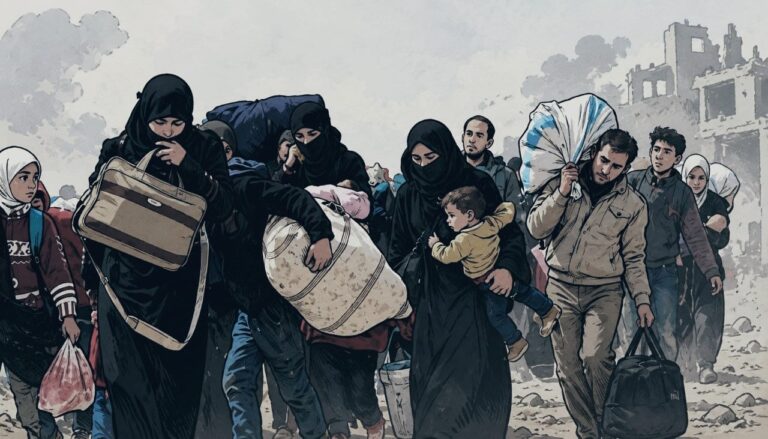
In February 2002, as communal violence engulfed Gujarat following the Godhra train burning, Yakub and Bilkis were among those fleeing their village with members of their extended family and others.
They were travelling with 17 others when they encountered a violent mob. Bilkis, then 21 and five months pregnant, was gangraped. Fourteen members of the family and their relatives were killed, including their three-year-old daughter, Saleha.
The violence separated Yakub from his wife. In the days that followed, he began searching for her, uncertain whether she had survived.
A newspaper report eventually offered him a slender possibility of hope. It mentioned a woman named Bilkis Bano living in a relief camp. Yakub followed the lead and found his wife, physically battered and traumatised but alive.
The reunion was the beginning of another struggle.
In our conversation in 2019, Yakub spoke about the despair and uncertainty that had enveloped their lives. The family had first endured the violence itself and then found itself confronting an institutional system that, in their experience, repeatedly made the pursuit of justice more difficult.
“These years have been full of despair, turbulence, uncertainty, and darkness, not just for Bilkis but also for her family, who first had to bear the trauma of a heinous crime committed against Bilkis and then had to struggle with a very hostile system acting against them,” he had told me.
His account was not simply about the trauma of losing family members or the brutality inflicted upon his wife. It was also about the exhaustion of having to fight for justice after surviving such violence.
A partnership against patriarchy
There is another dimension to Yakub’s story that deserves attention.
In the aftermath of sexual violence, women frequently find themselves confronting a second form of punishment: social exclusion, victim-blaming and the pressure to remain silent. Survivors are often expected to protect family honour by withdrawing from public life, while their experiences are reduced to questions of morality and social acceptability.
Bilkis chose a different path. She refused to disappear into anonymity and pursued a legal battle against the men who had attacked her and murdered members of her family.
Yakub stood beside her.
His understanding of that responsibility was strikingly uncomplicated. He did not describe himself as a saviour or present his support as an exceptional act of sacrifice. He saw it as something any husband should do.
That distinction matters. His commitment challenged the patriarchal expectation that a woman who has experienced sexual violence becomes a source of shame for her family. Instead, he accompanied Bilkis as she confronted the legal system, appeared in court and repeatedly recounted the violence she had endured.
Their struggle was therefore not only about securing convictions. It was also about reclaiming the right to live with dignity after an atrocity that had attempted to destroy their family.
The courtroom and the long struggle
The legal battle was itself protracted and difficult. Following allegations of intimidation and irregularities in the investigation, the Supreme Court transferred the investigation to the Central Bureau of Investigation and the trial to Mumbai.
In January 2008, a special CBI court convicted 11 men and sentenced them to life imprisonment. The Bombay High Court upheld their convictions in May 2017.
By the time I spoke to Bilkis in 2019, she had already spent years pursuing a legal battle that had demanded extraordinary resilience.
When I asked her what had motivated her to continue, she explained that the struggle was about more than obtaining punishment for the perpetrators.
“Nothing can truly compensate for what I have endured and the trauma I have lived through all these years. A jail term for the perpetrators may be a minimal punishment, but the greater victory I have achieved in my years of legal battle is that I stood up for justice.
“Despite a hostile system working against me and favouring the perpetrators, I never gave up on the idea of justice. The concept of justice is paramount, and there can be no compromise on that,” she had said.
She also spoke about those who had lost faith in the possibility of obtaining justice through the institutions meant to protect them.
“I have also fought such a long battle for all those who get exhausted by the system and believe that they will never get justice from it. My message to all those people is that they should not give up on the idea of justice.”
Her words offered a philosophical understanding of what had sustained her through years of litigation. Yakub’s account, meanwhile, revealed the personal commitment that had helped make that struggle possible.
The remission that reopened old wounds
On August 15, 2022, the Gujarat government granted remission to all 11 convicts, releasing them from prison.
The decision caused widespread outrage. The convicts were welcomed and felicitated by sections of the public following their release, prompting questions about the government’s approach to a case involving gangrape and the murder of 14 people during communal violence.
Bilkis challenged the decision before the Supreme Court.
On January 8, 2024, the court overturned the remission orders, holding that the Gujarat government did not have the jurisdiction to grant them. Since the trial had been conducted in Maharashtra, the Maharashtra government was the competent authority to consider remission.
The court also found that the earlier proceedings had involved suppression of material facts. It directed the convicts to surrender within two weeks.
They subsequently returned to prison.
For Bilkis and Yakub, the judgment offered relief after another prolonged period of uncertainty. In a statement issued through her lawyer, Bilkis described the emotional weight that had finally been lifted.
“It feels like a stone the size of a mountain has been lifted from my chest, and I can breathe again. This is what justice feels like.”
The judgment was an important reminder that executive decisions concerning convicted persons remain subject to judicial scrutiny, particularly when questions of jurisdiction and legality arise.
Another legal turn
The latest development involving Joshi and Modhiya has once again brought the case into public discussion.
The Supreme Court’s October 28 order suspending their sentences and granting bail pending their appeals must be understood separately from the 2024 remission judgment. The two men have not been acquitted, and their appeals against conviction remain pending.
The court considered their prolonged incarceration and the circumstances raised in their appeals. The decision is an interim judicial measure, rather than a reversal of the convictions upheld by the Bombay High Court.
Nevertheless, for a family that has spent more than two decades negotiating the consequences of a brutal crime and the uncertainties of the legal system, another round of proceedings inevitably carries an emotional burden.
The latest development also follows the Gujarat High Court’s September 2026 decision granting seven days of parole to Radheshyam Shah, another of the 11 convicts.
These proceedings demonstrate that the legal story surrounding the Bilkis Bano case has not reached its conclusion. The appeals, interim relief and questions surrounding the administration of justice will continue to shape its trajectory.
The promise remains
When I spoke to Yakub in 2019, he did not speak about justice in abstract legal language. His account was rooted in a promise made to a woman who had survived an atrocity that had taken away their daughter and several other members of their family.
He had promised that she would not have to fight alone.
That promise has acquired a larger meaning over the years. It speaks to the importance of solidarity with survivors, to the responsibility of families and communities, and to the need to challenge the social prejudices that frequently accompany sexual violence.
The story of Bilkis Bano is rightly remembered as a landmark struggle for accountability after the 2002 Gujarat violence. But Yakub Patel’s journey alongside her also deserves to be remembered. It is a story of grief, companionship and a refusal to abandon someone when the world around them has become hostile.
In 2019, Bilkis had told me that she had fought not merely for herself but for everyone who had grown exhausted by the system and begun to believe that justice was beyond their reach.
Her words remain particularly relevant today.
The Supreme Court’s latest intervention will have to be assessed through the legal process that follows. But the larger question raised by the case extends beyond the fate of two convicts. It concerns the ability of survivors to retain faith in institutions when the pursuit of justice stretches across decades.
For Yakub, the struggle began with a search for his wife and a promise that he would never leave her alone. More than two decades later, that promise remains central to their story.
And perhaps that is the most important thing to remember about the Bilkis Bano case: behind every judgment, every remission order and every appeal are human lives that have had to bear the consequences of violence long after the headlines have moved on.