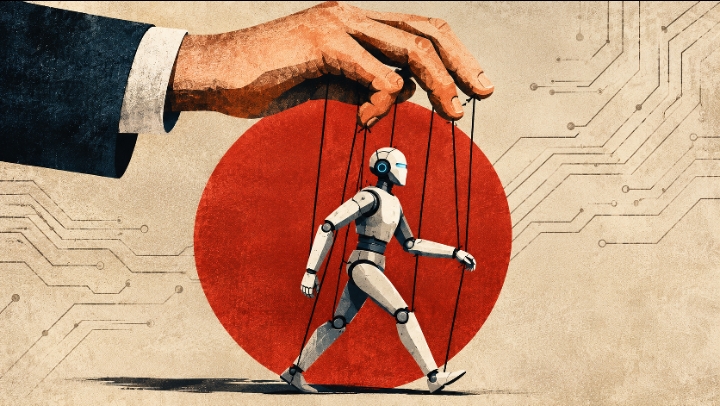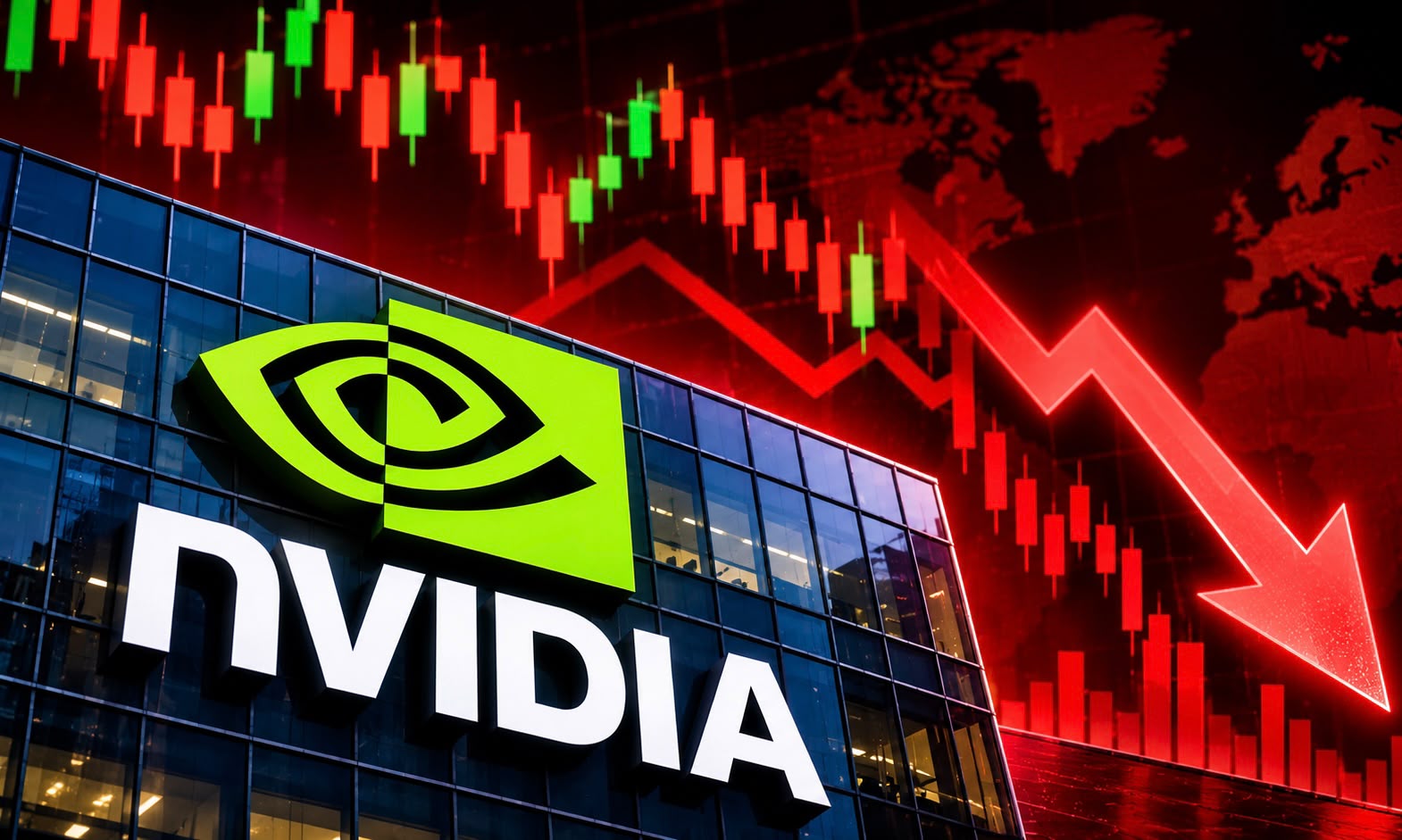
The resignation of Jensen Huang, co-founder and former chief executive of Nvidia, has triggered a major corporate and political crisis, raising questions about American national security, China’s access to advanced artificial intelligence (AI) technology and the future of the global semiconductor industry. Huang stepped down on November 12, 2026, following revelations about reported extramarital relationships, including one involving Alice Huang, a Chinese businesswoman suspected by US intelligence of working for Beijing. The allegations have brought renewed scrutiny to Nvidia’s business dealings with China, its relationship with the Trump administration and the security of international semiconductor supply chains.
From personal scandal to national security investigation
Founded in 1993, Nvidia transformed from a graphics-processing company into one of the world’s most influential semiconductor manufacturers. Its graphics processing units (GPUs) power AI development, data centres and cloud computing services. Under Huang’s leadership, the company reached a valuation of approximately $5 trillion at its peak.
The controversy emerged after US authorities began investigating Singapore-based technology company Megaspeed International in 2025 over suspicions that it helped Chinese customers obtain advanced Nvidia chips in violation of American export restrictions. Alice Huang, a former Megaspeed executive, subsequently attracted intelligence scrutiny because of her reported relationship with Jensen Huang.
On October 29, 2026, The New York Times reported that American intelligence suspected Alice Huang of working for Chinese intelligence. Huang acknowledged being unfaithful to his wife in a November 8 letter to Nvidia employees. The company’s board subsequently initiated an investigation into whether he had been targeted by a foreign intelligence operation or whether sensitive corporate information had been exposed.
However, the espionage allegations remain unproven publicly. Intelligence agencies have reportedly differed over the strength of the evidence, while China has rejected the accusations.
Trump’s relationship with Huang under scrutiny
The controversy has also brought President Donald Trump’s relationship with Huang into focus. The Nvidia chief had become an influential interlocutor of the administration, particularly regarding American AI competitiveness and semiconductor exports to China.
According to reports by The Washington Post and The New York Times, Secretary of State Marco Rubio briefed Trump about intelligence concerns involving Huang and Alice Huang in May 2026, shortly before the president’s China visit. Huang subsequently joined the presidential delegation.
Trump later said Huang had told him he did not know the woman was suspected of being a Chinese intelligence operative and that he believed him.
Trump’s December 2025 decision to permit approved sales of Nvidia’s H200 AI processors to China, subject to a 25 per cent payment to the US government, has also attracted renewed scrutiny. The policy represented a shift in Washington’s approach to advanced chip exports, previously restricted to limit China’s access to technology with potential military applications.
White House divisions and corporate leadership change
The controversy has developed into an internal political dispute involving Commerce Secretary Howard Lutnick. According to The Wall Street Journal and Axios, several administration officials criticised his department’s handling of restrictions on advanced Nvidia chip shipments through Southeast Asian countries.
Treasury Secretary Scott Bessent and other senior officials reportedly challenged Lutnick over delays in restricting companies suspected of diverting American processors to China. The White House, however, has maintained that Trump retains confidence in Lutnick.
On November 12, Nvidia announced Huang’s resignation as president, CEO and board member. Its longtime chief financial officer, Colette Kress, was appointed interim CEO while the board began searching for a permanent successor.
Kress joined Nvidia in 2013 and oversaw its financial operations during its expansion into AI computing. A reported confrontation three months earlier attracted attention when Huang allegedly criticised her presentation, describing her as a “deer in the headlights”. Her appointment now places her at the centre of the company’s leadership transition.
In its November 13 article, The Wall Street Journal, titled “Jensen Huang’s Exit Will Test AI’s Stocks, and Great-Man Theory”, examined whether Nvidia can maintain its market position without the founder whose leadership shaped its technological direction and investment strategy. The newspaper reported that Nvidia shares had fallen 31 percent from their October peak, while the stock closed 4.3 percent lower on Thursday following his departure. Investors are also assessing competition, rising financing costs, export restrictions and the sustainability of AI infrastructure investments.
Global AI industry and US-China competition
The controversy comes amid intensifying competition between Washington and Beijing over advanced semiconductors. The United States has imposed export controls to restrict China’s access to high-performance processors, citing their potential military and strategic applications.
The investigation involving Megaspeed has raised questions about whether third-country companies can provide Chinese customers access to restricted American processors. Singapore and other Southeast Asian economies have consequently attracted greater scrutiny because of their role in international technology distribution.
Tighter restrictions could accelerate China’s efforts to develop domestic semiconductor alternatives. Meanwhile, Taiwan, South Korea, Japan and Europe could face wider implications as companies reassess manufacturing partnerships, semiconductor supplies and AI infrastructure investments.
Implications for India’s technology sector
The Nvidia controversy has brought renewed attention to India’s dependence on foreign technology for its expanding artificial intelligence sector. India’s AI computing ecosystem relies heavily on globally sourced GPUs, making access to advanced processors important for data-centre operators, researchers and AI developers.
Nvidia has established partnerships with major Indian companies. In September 2023, it announced a collaboration with Reliance Industries to develop AI computing infrastructure. In February 2026, Yotta Data Services announced plans to deploy 20,736 Nvidia Blackwell Ultra GPUs at its Greater Noida data-centre campus, in an investment exceeding $2 billion.
India is also investing in domestic capabilities. The IndiaAI Mission, approved with an allocation of Rs 10,371.92 crore, aims to expand computing access and strengthen AI research. In July 2026, the Union Cabinet approved Semicon 2.0 with an outlay of Rs 1,27,500 crore to develop the country’s semiconductor design and manufacturing ecosystem. Meanwhile, India’s data-centre capacity reached 1.57 GW in August 2026 and is projected to approach 8 GW by 2030, according to the Press Information Bureau.
Indian technology coverage has also highlighted potential risks for the country’s AI infrastructure. Inc42 has examined the exposure of Indian GPU-cloud providers to Nvidia’s technology and international financing, while Counterpoint Research analyst Neil Shah, speaking to Moneycontrol, has pointed to the possibility of tighter US scrutiny and additional audits of exported GPUs. The Economic Times, in its 10 November editorial, “Huang in suspense, chips may crack”, warned that stricter US export controls could increase licensing and compliance costs for Indian buyers. It also highlighted India’s dependence on China for critical semiconductor minerals, including gallium, germanium and antimony. Although there is no confirmed evidence of an immediate disruption to India’s Nvidia chip supplies, the controversy highlights the country’s vulnerability to changes in global technology policy and supply chains. For India, strengthening domestic semiconductor manufacturing, diversifying technology partnerships and securing reliable access to advanced computing hardware will remain impor