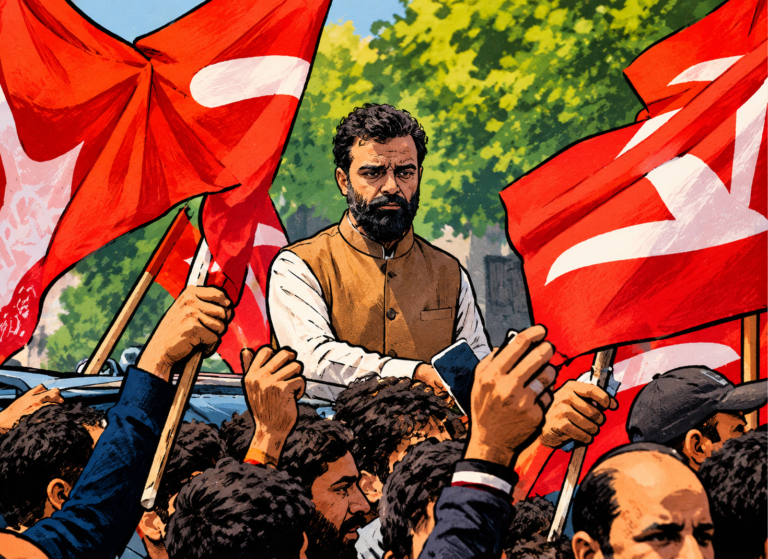
NEW DELHI: The People Against SIR (PA-SIR) has expanded its campaign against the Special Intensive Revision of electoral rolls into a wider demand for electoral reform, placing proportional representation at the centre of its proposed changes to India’s electoral system.
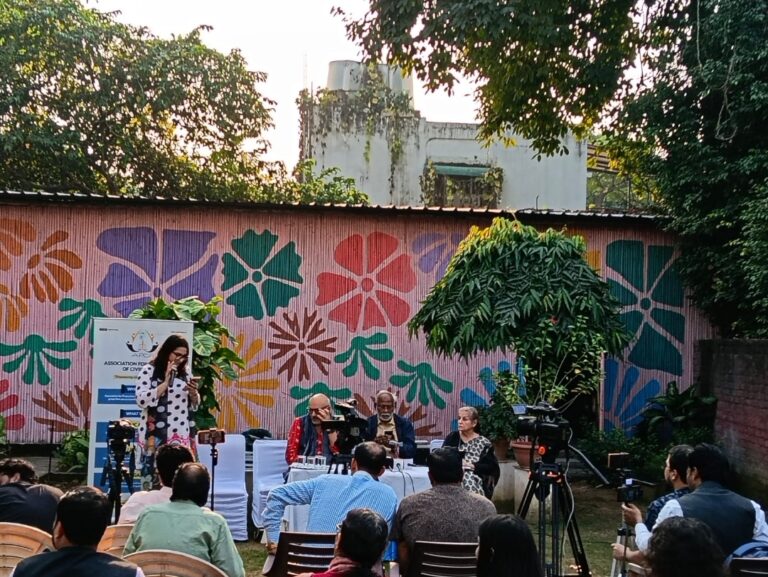
In a press release issued after its Working Group meeting in New Delhi on November 12, the platform called for comprehensive reforms, including proportional representation, curbs on money and muscle power, and the legalisation of state funding of elections. Its demands extend beyond the immediate dispute over voter rolls to the question of how electoral votes are translated into political representation.
The platform has also announced a nationwide campaign from November 26 to December 20, involving public meetings, rallies, voter-list audits and demonstrations. The announcement follows its decision to intensify the movement against SIR and press for the restoration of voting rights.
What is wrong with the first-past-the-post system?
India currently follows the first-past-the-post (FPTP) system for elections to the Lok Sabha and State Legislative Assemblies. Under this arrangement, the country is divided into individual constituencies, each electing one representative. Voters cast a single vote for a candidate, and whoever secures the highest number of votes wins, even without receiving an absolute majority.
Consider a constituency where 100 votes are divided among three candidates. Candidate A receives 38 votes, Candidate B receives 34, and Candidate C receives 28. Candidate A wins the election despite receiving support from only 38 per cent of voters. The remaining 62 votes do not translate into representation for the candidates who received them.
The problem becomes more significant when this pattern is repeated across hundreds of constituencies. A political party may secure a substantial share of the overall vote but win relatively few seats because its support is distributed across constituencies where it does not emerge as the leading candidate. Conversely, a party can secure a disproportionately large share of seats without receiving a comparable share of the total votes.
How would proportional representation work?
Proportional representation (PR) seeks to reduce this disparity by allocating legislative seats in proportion to the votes received by political parties.
One of its most common forms is the party-list system. Under this arrangement, political parties present lists of candidates before an election, and the number of seats they receive is determined by their share of the vote, subject to the rules of the particular system.
For example, in a hypothetical legislature of 100 seats, a party receiving 40 per cent of the vote would be entitled to approximately 40 seats. A party securing 35 per cent would receive around 35, while parties receiving 15 and 10 per cent would receive approximately 15 and 10 seats respectively. The precise allocation would depend on the electoral formula and any minimum vote thresholds.
Unlike FPTP, where a party must win individual constituencies to secure seats, proportional representation allows political support accumulated across a wider electoral area to translate into legislative representation. It could therefore give smaller parties and groups with geographically dispersed support a better opportunity to enter legislatures.
A hybrid model is another possibility. It would retain directly elected representatives from geographical constituencies while introducing additional seats allocated according to parties’ overall vote shares.
This is not an entirely new proposal in India. The Law Commission’s 170th Report, submitted in 1999, recommended retaining the existing directly elected Lok Sabha seats while adding seats filled through a proportional party-list system. The proposal envisaged additional seats equivalent to 25 per cent of the then existing strength of the Lok Sabha.
The 2015 Law Commission report revisited this proposal and recommended that the government examine whether the earlier model could be made workable in India. It did not recommend an immediate, complete replacement of FPTP.
Why the debate matters for representation
The argument for proportional representation is not simply about increasing the number of political parties in Parliament. It concerns the relationship between public support and legislative power.
The 2015 Law Commission report noted that proportional representation could improve the correspondence between votes and seats, provide opportunities for smaller parties, and encourage greater participation by women and minorities in electoral politics.
However, the design of such a system would matter considerably. A minimum vote threshold, for instance, could prevent very small parties from receiving seats, but a threshold set too high could disadvantage regional parties. Party-list systems could also give political leadership considerable influence over which candidates enter legislatures, particularly when voters cannot choose individual candidates from the list.
The debate, therefore, also raises questions about internal democracy within political parties, candidate selection and accountability to constituents.
Electoral reform must also address the influence of money
PA-SIR has linked proportional representation to demands for curbing money and muscle power and introducing state funding of elections. These are distinct but connected questions. Changing the way votes are converted into seats would not, by itself, resolve inequalities in campaign financing or the influence of wealth in electoral contests.
The Law Commission’s 2015 report separately examined political funding, recommending stronger disclosure requirements and reforms to election expenditure regulations. It did not consider complete state funding of elections or matching grants feasible under the conditions prevailing at the time, instead supporting existing forms of indirect, in-kind assistance.
PA-SIR’s demand for state funding therefore raises another question for any comprehensive reform process: how can electoral competition be made less dependent on private financial resources while ensuring transparent and accountable funding?
The platform’s November 12 statement does not specify which proportional representation model it wants India to adopt, how seats should be distributed, or what thresholds should apply. Those details remain central to turning the demand into a workable electoral proposal.
Its immediate programme, however, places the wider question of representation alongside the struggle over voter registration. The platform has called for Constitution Day demonstrations on November 26, Human Rights Day gatherings on December 10, and booth-level meetings on December 20 to adopt resolutions urging the President to scrap SIR and restore citizens’ voting rights before further elections are announced.
By bringing proportional representation, political funding and electoral accountability into the same agenda, PA-SIR is seeking to widen the debate beyond the preparation of electoral rolls to the structure of India’s representative democracy itself.