SRINAGAR: Winter has begun announcing its arrival in Kashmir. The mornings are colder, pherans have returned to the streets, and kangris, the traditional earthen firepots carried beneath loose woollen garments, are once again appearing in markets. In homes across the Valley, families have started preparing for the difficult months ahead. But winter comes at a price, and not everyone can afford it equally.
For families with stable incomes, preparing for the season may mean buying additional heating appliances, arranging warm clothes and stocking household supplies. For those dependent on daily wages, small businesses or seasonal occupations, the same preparations can become a financial challenge. In Srinagar, Ruqaiya says her family begins preparing for winter long before the cold becomes unbearable.
“Preparations for winter begin quite early in our homes. We start storing dried vegetables, buying kangris and stocking up on coal. We also cover our windows with polythene sheets to prevent the cold from entering the house. These are small but essential practices that become part of our routine every winter,” she says.
Her account offers a glimpse into the everyday arrangements that make winter manageable for Kashmiri households. Food must be preserved, fuel purchased, and homes insulated against freezing temperatures. Yet these preparations also expose an economic divide. The ability to keep a house warm depends as much on household income and access to electricity as it does on traditional knowledge. For thousands of families, the arrival of winter brings an uncomfortable calculation: how much money can be set aside for warmth when everyday expenses already consume much of the household income?
When Snowfall Takes Away a Day’s Earnings
For Kashmir‘s street vendors and informal workers, snowfall is more than a seasonal spectacle. It can mean the loss of several days of income. On the streets of Srinagar, vendors who depend on daily sales must contend with falling temperatures, disrupted transportation and the possibility of having to close their stalls during heavy snowfall. A street vendor in Srinagar, who requested anonymity for personal reasons, says the impact on business can be immediate.
“Snowfall makes it very difficult for us to continue our business. We often have to shut down our street stall and take all our goods back home. Travelling also becomes difficult during heavy snowfall, and sometimes we are unable to set up our stall for several days. This directly affects our daily earnings,” the vendor says.
For a worker whose income depends on opening a stall every morning, losing several working days can have consequences that extend beyond the immediate interruption. Household expenses continue even when business stops. Families still need food, heating fuel and other essentials, while the opportunity to earn remains uncertain. The situation highlights a contradiction in Kashmir’s winter economy. Snowfall can attract tourists and generate business for parts of the hospitality sector, while simultaneously disrupting the livelihoods of people working in the informal economy. The same weather that creates opportunities for some businesses can impose substantial losses on others.
The Hidden Cost of Keeping a Home Warm
Across Kashmir, winter preparations often begin with the preservation of food. One of the most familiar traditions is Hokh Syun, the practice of drying vegetables for consumption during colder months. Tomatoes, turnips, brinjals, bottle gourds and other vegetables are sliced and left to dry in the autumn sun. For generations, these preparations helped households manage periods when heavy snowfall disrupted transportation and restricted the supply of fresh vegetables. Although improved market access and changing lifestyles have altered the practice, dried vegetables remain an important part of Kashmiri food culture.
But preserving food is only one aspect of winter preparation. Households must also arrange charcoal, firewood, LPG cylinders, warm clothing and other supplies. In many homes, windows are covered with polythene sheets to reduce the entry of cold air. These practices are often presented as expressions of Kashmir’s distinctive winter culture. They also reflect the practical difficulties of maintaining warmth in a region where temperatures can fall below freezing.
For lower-income families, the financial burden can be considerable. The cost of heating becomes particularly important when electricity supply is unreliable. Households may have to depend on alternative arrangements, adding to the expense of managing the winter months. The economic consequences are uneven. Families with greater financial resources can invest in better insulation and heating systems, while poorer households may have fewer options.
The Electricity Question
Electricity remains one of the most persistent concerns as Kashmir approaches its harshest winter months. According to figures presented during a winter-preparedness meeting chaired by Divisional Commissioner Kashmir Anshul Garg on November 13, 2026, average winter electricity demand in the Valley stands at approximately 1,700 megawatts, against an average supply of 1,300 megawatts. During peak hours, demand can rise to 2,400 megawatts. The gap between demand and supply raises concerns about the ability of the electricity network to meet increased consumption during freezing temperatures.
For residents, electricity interruptions can affect much more than heating. Cooking, household activities and everyday routines may all be disrupted. Amina, a Class 11 student from Srinagar, says her neighbourhood does not face regular electricity shortages, but transformer breakdowns can leave residents without power for days.
“In our area, regular electricity shortages are not a major problem. However, whenever a transformer breaks down, it can take at least two days to get it repaired,” she says.
During such interruptions, her family must find ways to manage household activities. “We have to make our own arrangements, stock up on groceries and cook our meals on gas. We have to manage our daily household activities with whatever resources are available,” she adds.
Her experience illustrates how even a temporary breakdown in electricity infrastructure can disrupt ordinary life. The administration has directed the Kashmir Power Distribution Corporation Limited to repair damaged transformers, complete pending tree-branch clearance work and adhere to scheduled power-curtailment timings. However, the larger challenge remains ensuring that electricity supply can meet the increased demand during the coldest weeks of the year. For households that cannot afford multiple heating options, reliable electricity can make a significant difference to the cost of surviving winter.
The Artisans Behind Kashmir’s Winter Tradition
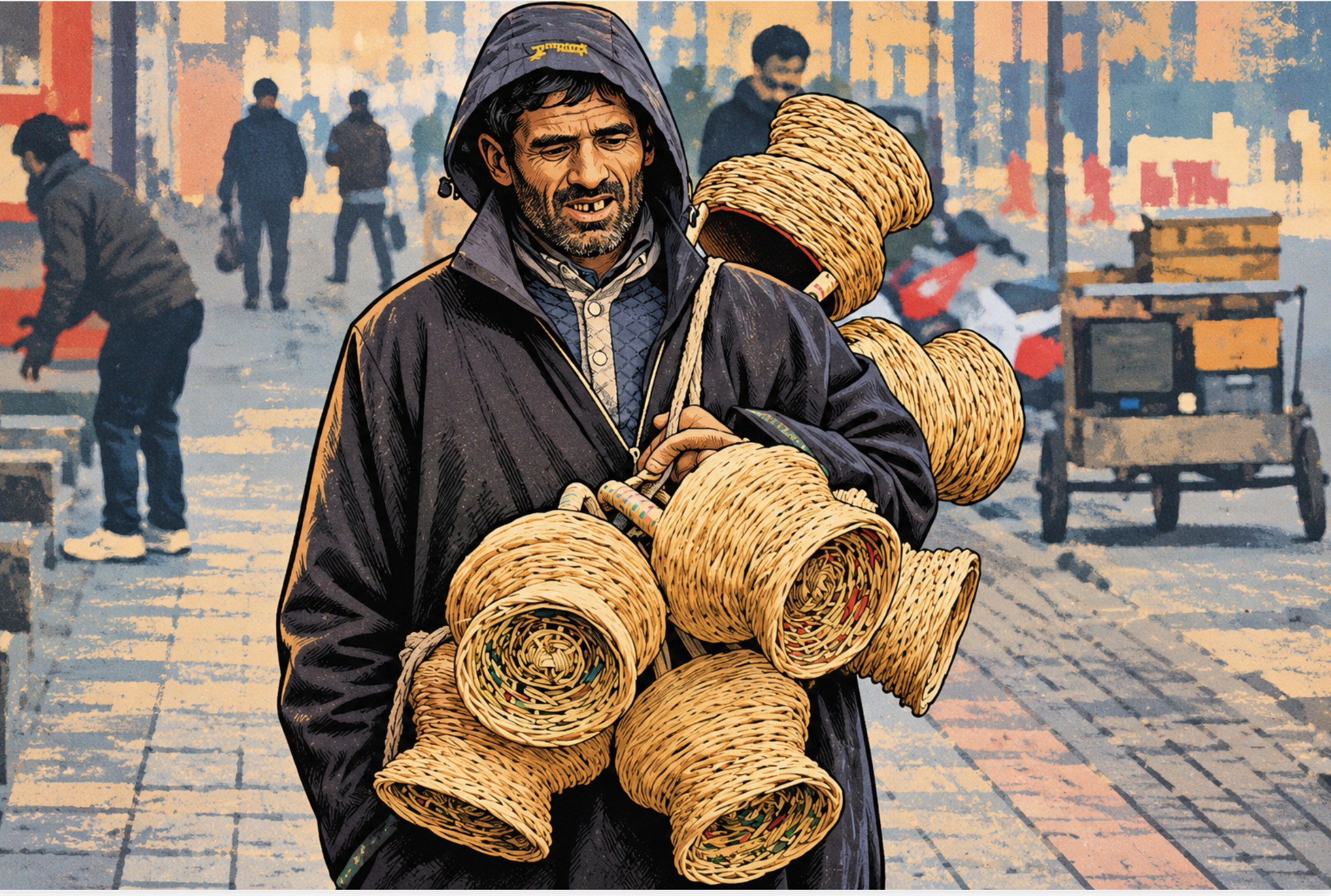
While households prepare to buy kangris, the artisans who make them face a different kind of uncertainty. The kangri is among the most enduring symbols of Kashmiri winter. Made from an earthen pot enclosed in woven willow wicker, it has provided warmth to generations of people across the Valley. In Charar-i-Sharief, in central Kashmir’s Budgam district, the craft continues to support families engaged in willow-wicker work.
Making a kangri requires considerable skill. Willow must be collected, peeled and processed before artisans weave the wicker around the earthen pot. The occupation has traditionally depended on seasonal demand, with winter providing an important market for artisans. But changing consumer preferences have placed the craft under pressure.
Bashir Ahmad Dar, an award-winning willow-wicker artisan from Charar-i-Sharief, has described declining demand for traditional kangris as electric heating appliances become more common. His workshop employs approximately five to eight workers and produces between 5,000 and 6,000 kangris, according to previously documented information about his work. Artisans have increasingly begun producing decorative and bridal kangris in an attempt to diversify their products and reach new customers.
The transition reflects a broader challenge facing traditional occupations in Kashmir. The kangri remains an important cultural symbol, but cultural recognition alone does not guarantee a sustainable income for the people who make it. For artisans, the question is whether the craft can continue providing livelihoods as the market for traditional heating methods changes. The answer will depend partly on their ability to adapt their products and find customers beyond the conventional winter market.
In Remote Kashmir, Winter Can Mean Isolation
The difficulties of winter become more severe in Kashmir’s remote and mountainous regions. In areas such as Gurez, Machil, Keran and Karnah, heavy snowfall can disrupt road connectivity and restrict access to food supplies, healthcare and other essential services. For residents of these areas, winter preparation is closely connected with the possibility of prolonged isolation.
When roads become inaccessible, even routine activities can become difficult. Medical emergencies pose particular challenges, especially for elderly residents, pregnant women and people requiring regular treatment. During the November 13 winter-preparedness meeting, the administration directed the Food, Civil Supplies and Consumer Affairs Department to complete advance stocking of LPG, petroleum products, rice and wheat in vulnerable areas.
The Civil Aviation Department was also directed to operationalise winter air sorties in Bandipora and Kupwara by December 1 to facilitate emergency transportation from inaccessible locations. Authorities reviewed the availability of essential medicines, heating arrangements in hospitals and the requirement for four-wheel-drive ambulances in vulnerable districts. The Forest Department was also directed to ensure adequate stocks of firewood at depots across the Valley.
These measures reflect the scale of the logistical challenges associated with winter in mountainous Kashmir. But administrative preparedness will ultimately be tested by whether supplies reach vulnerable communities before heavy snowfall restricts access. For families living in these regions, a delayed delivery of medicines or essential commodities can have consequences far more serious than the inconvenience of a closed road.
Two Winters in the Same Valley
Every year, Kashmir’s winter attracts visitors eager to experience snow-covered landscapes, frozen lakes and the cultural traditions associated with the season. Tourism forms an important part of the region’s economy, and snowfall can create opportunities for hotels, transport operators and businesses catering to visitors. But the economic benefits of winter are not distributed equally.
For a tourist, snowfall may be the highlight of a holiday. For a street vendor, it can mean closing a stall and losing income. For a family struggling to meet household expenses, it can mean spending more on fuel and food. For an artisan, it can bring a seasonal opportunity shadowed by uncertainty about the future of the craft. For residents of remote villages, heavy snowfall can mean losing access to roads and essential services.
These experiences reveal how the same season can produce sharply different economic realities within the Valley. The familiar images of Kashmir’s winter, its kangris, pherans, dried vegetables and snow-covered streets, tell only part of the story. Behind them are households calculating expenses, workers worrying about lost earnings and communities preparing for disruptions that may last for days or longer.
A Season That Tests More Than Endurance
As Kashmir approaches Chilla-i-Kalan, the traditional 40-day period of intense winter beginning around December 21, the question of preparedness has acquired renewed urgency. The administration has announced measures to strengthen electricity infrastructure, stock essential commodities and maintain emergency transportation to vulnerable areas. But the experience of winter will ultimately be determined by how effectively these arrangements work when temperatures fall and snowfall begins to disrupt daily life.
For Ruqaiya, winter preparation means arranging dried vegetables, coal and kangris. For Amina, it means learning to manage household routines when electricity fails. For the Srinagar street vendor, it means confronting the possibility of losing several days of earnings. Their experiences point to a larger reality: the burden of winter is shaped not only by the severity of the weather, but also by the economic circumstances of the people enduring it.
Kashmir’s winter has long been celebrated for its beauty and cultural traditions. Yet for many residents, its arrival brings a recurring struggle to protect livelihoods, keep homes warm and maintain access to basic necessities. As the Valley prepares for its first major snowfall, the real measure of winter preparedness will lie beyond official meetings and administrative announcements. It will be found in whether a family can afford enough fuel, whether a vendor can continue earning, whether an artisan can sustain a traditional occupation and whether a patient in a snowbound village can reach a hospital.
For Kashmir’s most vulnerable residents, surviving winter is not simply about enduring the cold. It is about being able to afford the season.