Wars are planned in the halls of power, defended in the name of national security and announced from presidential podiums, but their real cost is borne by ordinary people whose lives are never the same again. They travel thousands of miles, follow military personnel into unfamiliar territories and find their way into homes where families wait for telephone calls, messages and, sometimes, news they never wanted to receive.
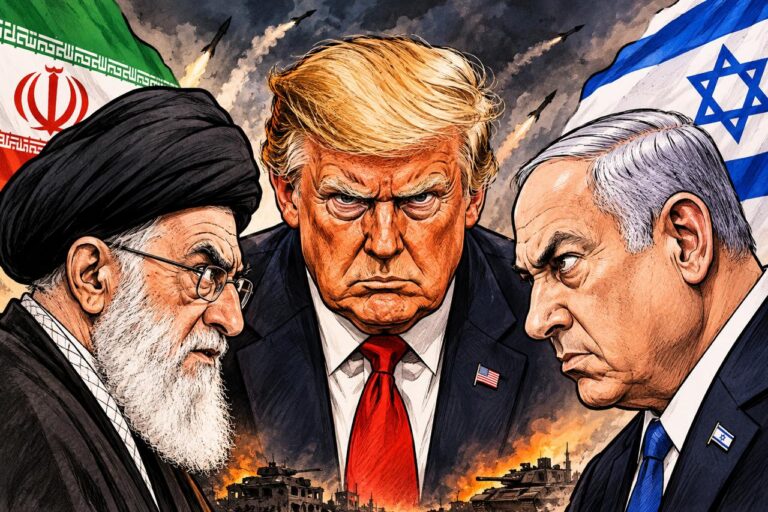
For American soldiers deployed in the Middle East, the US-Iran conflict is not merely another chapter in Washington’s foreign-policy calculations. It is a lived reality of operational danger, prolonged uncertainty, physical exhaustion and the possibility of never returning home. For their families, the war is experienced differently, through separation, anxiety, disrupted routines and the persistent fear that an ordinary day could bring extraordinary news.
While political leaders debate strategic objectives, military analysts calculate expenditure and markets respond to regional instability, the people carrying the immediate human burden often remain peripheral to the public conversation.The question, therefore, extends beyond whether the United States can achieve its objectives in Iran. It is whether the human consequences of pursuing those objectives have received the attention, transparency and accountability they deserve.
The human cost behind the military numbers
Military casualties are often presented as statistics in official briefings. Each number, however, represents an individual with a family, a history, personal ambitions and relationships extending far beyond the battlefield.
According to reporting by The Washington Post on October 29, 2026, the Pentagon’s publicly disclosed casualty database recorded 23 American military deaths associated with overseas operations during the conflict period, including 11 deaths attributed to enemy fire and 12 non-hostile deaths. The database also recorded 865 troops wounded by enemy fire.
The distinction between hostile and non-hostile deaths is important. Not every death recorded during an overseas military operation is necessarily caused directly by enemy action. Nevertheless, the figures demonstrate the range of risks associated with sustained military deployment, including operational hazards that extend beyond direct combat.
An Associated Press report published in early November separately cited a Pentagon estimate of approximately $47.1 billion in war-related expenditure through October 16. It reported 21 service members killed and 865 wounded, using a different reporting snapshot and casualty accounting. These figures should not be combined indiscriminately with other casualty databases because reporting dates and classifications may differ.
The numbers provide a measure of the conflict’s scale, but they cannot fully explain what military personnel experience or what their families endure.
A wounded service member may face months or years of rehabilitation. Physical injuries can affect personal life, employment and independence.
Psychological consequences of war
Psychological consequences may emerge immediately or become apparent long after a person returns home. The Vietnam War left thousands of American soldiers carrying psychological wounds long after they returned home.Beyond the battlefield deaths and bloodshed, many veterans struggled with post-traumatic stress disorder (PTSD), recurring nightmares, flashbacks, hallucinations, survivor’s guilt, depression and severe emotional distress.In a haunting account published in The New Yorker on September 2, 2013, journalist David Finkel documented the experiences of an Iraq War veteran, identified as Nic, whose traumatic memories continued to intrude into his everyday life. In his personal journal, Nic described hallucinating dead Iraqi bodies floating in his bathtub. He also recalled seeing a young girl in a blood-soaked dress, an image that further illustrated the psychological torment he endured. His experience reflects a painful reality of warfare, while soldiers may return physically from combat, the memories of death, violence and suffering can remain deeply embedded in their minds.
Families can find themselves assuming new caregiving responsibilities while simultaneously managing their own emotional and financial pressures.The cost of war does not end when a soldier leaves the operational theatre.For some, the transition home can be as challenging as the deployment itself. Physical rehabilitation, trauma-related difficulties, disrupted sleep and the adjustment to civilian routines can affect relationships and family stability. These are not inevitable experiences for every service member, but they are important possibilities that any responsible assessment of military intervention must acknowledge.
A military operation may have a defined commencement date. Its consequences for an injured soldier or a grieving family may have no comparable endpoint.
Families living through the uncertainty of deployment
When a soldier is deployed, the experience of war enters the household even when the battlefield remains geographically distant.
A spouse may become responsible for raising children, managing finances and making everyday decisions alone. Parents may follow developments in the region with growing apprehension. Conversations at home becomes unusually anxious.
The uncertainty can be particularly difficult because families have limited control over events. Communication may be restricted by operational requirements, time differences or security considerations. Even when regular contact is possible, families cannot always know what their loved ones are experiencing.
There is a distinction between supporting a soldier’s decision to serve and accepting every military decision made by political leadership. Families can be proud of their loved ones’ service while simultaneously questioning the circumstances in which they are being asked to serve. That distinction deserves greater recognition in public debate. Military families should not be reduced to symbols of patriotism, nor should their concerns be interpreted as a lack of support for the armed forces. Their perspectives are diverse. Some may strongly support the mission, others may question its objectives, duration or necessity. Many may hold both positions at once. The emotional reality of deployment is not adequately represented by speeches celebrating military strength. A photograph of a soldier returning home can capture a moment of relief, but it cannot necessarily show the strain of months of separation, the difficulties of readjustment or the anxiety that may accompany another deployment.
The families who wait are stakeholders in war, even though they do not participate in military decision-making.
The price of military intervention
The human consequences of war cannot be separated from the financial resources required to sustain it. Military operations demand extensive logistical support, advanced weaponry, fuel, maintenance, intelligence and replacement equipment.
The Congressional Budget Office (CBO), in its September 15, 2026, analysis of combat operations against Iran, estimated that the Department of Defense had incurred approximately $38 billion in costs through August 1.
The estimate included expended munitions, equipment losses, increased flying hours, fuel and other operational expenses. The agency also warned that continued operations could cost approximately $2 billion to $3 billion per month, depending on the intensity of the fighting.
A more recent Pentagon estimate reported by the Associated Press placed the expenditure at approximately $47.1 billion through October 16, 2026. According to the report, the estimate included approximately $29 billion for replacing munitions, $11.9 billion for operational expenses and $6 billion for equipment losses.
These figures illustrate how quickly the financial demands of military intervention can accumulate.
But there is another cost that deserves attention: the depletion of military resources that may be required to protect service members in future operations.
The CBO identified the expenditure of missile-defence interceptors as a significant opportunity cost. It estimated that replacing certain depleted munitions could take at least five years, even if production increased.
This raises an important question about military preparedness. If a prolonged conflict consumes resources at a rate that takes years to reverse, how does that affect the ability to protect American personnel and respond to future security threats?
Military spending is frequently discussed in terms of national strength. Yet the availability of defensive equipment, adequate personnel support and long-term rehabilitation services is also part of military readiness.
The well-being of service members should not become secondary to the operational demands of a campaign.
When the war reaches American households
The consequences of the conflict extend beyond military bases and deployment facilities.
The Strait of Hormuz is a critical passage for international energy supplies. Disruptions to shipping through this route can influence global oil and gas markets, creating uncertainty for businesses and consumers.
The effects can reach American households through higher transportation and energy costs, increased business expenses and pressure on the prices of goods and services.
The Congressional Budget Office identified disruptions to energy shipments and regional shipping as important contributors to inflationary pressure associated with the conflict.
It is important, however, to distinguish between the war’s contribution to economic pressures and other factors influencing American prices. Tariffs, domestic economic policy, supply-chain conditions and labour costs also play a role. Public concern about the conflict’s consequences has been substantial.
A Pew Research Center survey conducted between September 28 and October 4, 2026, among 5,062 American adults found that 73 per cent were extremely or very concerned about higher fuel prices associated with the conflict. An almost comparable 71 per cent expressed concern about American troops being wounded or killed.
The finding is particularly revealing because it places two very different consequences of war side by side, the economic pressure experienced by households and the physical danger faced by military personnel.
For families of deployed service members, these concerns may overlap. They are not simply watching fuel prices rise or following political developments. They are also waiting for news about someone whose safety may depend on events unfolding thousands of miles away.
The economic cost is measurable in dollars. The emotional cost of waiting for a loved one is much harder to quantify.
Public confidence and the question of accountability
Military action undertaken in the name of national security requires more than military capability. It requires a convincing explanation of its objectives, an assessment of its risks and a credible account of how and when it might end.
Governments have a responsibility to explain why military force is considered necessary. They must also explain the limits of that strategy and the conditions under which they would reconsider it.
The Pew Research Center’s October 8 report, Iran Conflict Remains Deeply Unpopular as Many Americans Expect It To Go On for Months, found that 65 per cent of Americans disapproved of President Donald Trump’s handling of the military action against Iran, while 33 per cent approved.
The survey also found that 52 per cent were not too confident or not at all confident that the administration would achieve its objectives. Meanwhile, 47 per cent expected the conflict to continue for more than another year.
These figures suggest that public concern extends beyond disagreement with a particular political leader. They reflect uncertainty about the purpose, duration and likely outcome of the military campaign.
For the families of service members, these questions are especially consequential.
A clearly defined mission provides a framework for understanding the risks being undertaken. An uncertain endgame makes it harder to assess how long those risks will continue.
This does not mean every military operation must have a predictable timetable. Conflicts can evolve, and national-security threats sometimes require difficult decisions under uncertain circumstances. But uncertainty cannot become a substitute for accountability.
The administration must be prepared to explain what constitutes success, what evidence supports the continuation of military action and what safeguards exist for those serving in the region.
The families who bear the consequences deserve more than assurances that their loved ones are serving a necessary cause. They deserve transparent communication about the mission and meaningful support throughout deployment and after their return.
The November midterms: when foreign policy entered the ballot box
The November 3, 2026, midterm elections have added another dimension to the debate.
Democrats secured control of both the House of Representatives and the Senate, ending unified Republican control of Congress. The outcome represents a significant political setback for Trump and his administration.
According to Associated Press reporting on November 4, economic dissatisfaction, concerns about democracy and opposition to the Iran war contributed to the political environment in which voters made their decisions.
Trump acknowledged that the prolonged conflict and higher fuel prices had hurt Republicans. Vice President JD Vance also identified the war as a factor in the party’s losses.
However, it would be simplistic to conclude that the Iran conflict alone determined the election outcome. Voters were responding to several issues, including affordability, healthcare, tariffs and broader concerns about government accountability.
The result nevertheless provides an important opportunity to examine the relationship between foreign policy and democratic consent.
With control of both chambers, Democrats will have greater influence over congressional investigations, budgetary decisions and oversight of the administration’s military policies.
Congress can demand explanations of expenditure, scrutinise military objectives and examine the long-term consequences of operations for American personnel and national preparedness.
Yet a change in congressional control does not automatically end a military campaign. The president retains substantial authority over military command and foreign policy, while Congress exercises its own constitutional powers, including control over appropriations and oversight.
The political question now is whether the new congressional majority will use its authority to demand meaningful answers about the conflict, rather than simply turn it into another arena for partisan confrontation.
For American soldiers and their families, the significance of the election should ultimately be measured by whether it produces greater transparency, adequate protection and stronger support for those serving.
An electoral victory or defeat may change the political balance in Washington. It does not, by itself, bring a deployed service member home.
Beyond the battlefield: what does responsibility look like?
The responsibility of a government extends far beyond deploying its armed forces. It includes protecting service members, providing long-term medical and psychological care, supporting their families and ensuring that the objectives of military engagement remain open to public scrutiny.
The consequences also reach American households far removed from the battlefield. Many citizens are already struggling with the rising costs of housing, groceries, fuel and other essentials. A prolonged conflict with Iran could add further pressure through higher energy prices, disrupted supply chains and increased government spending. For families already finding it difficult to make ends meet, the economic burden of war could become another crisis they never chose.
The November midterm elections reflected widespread public frustration over economic pressures and the administration’s policies, including its approach to Iran. While voters’ decisions cannot be reduced to a single issue, public opposition to military action demonstrated that the prospect of another prolonged conflict was far from universally accepted.
The responsibility does not end at America’s borders. Iranian families, civilians in neighboring countries and communities exposed to regional instability face the prospect of displacement, destruction and loss of life. Their safety and dignity matter independently of the political positions taken by their governments. Recognizing the suffering of American soldiers and their families must never mean overlooking the lives being lost on the other side. Ultimately, the cost of war can be calculated in billions of dollars, military losses and economic disruption. Its human consequences are much harder to measure, a family waiting for a soldier to return, a veteran struggling with traumatic memories, a parent unable to afford basic necessities or a child growing up amid destruction.
A government’s responsibility should not be measured solely by its ability to pursue military objectives, but by how carefully it protects the lives, livelihoods and futures of the people affected by those decisions
When political leaders decide the course of a war, but soldiers and their families carry its consequences, who truly has the final say over the price of victory and how much of that price should those who never made the decision be expected to bear?