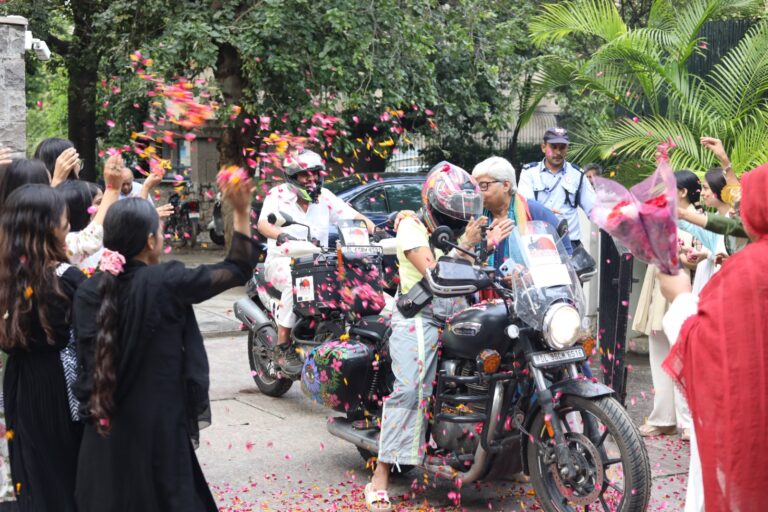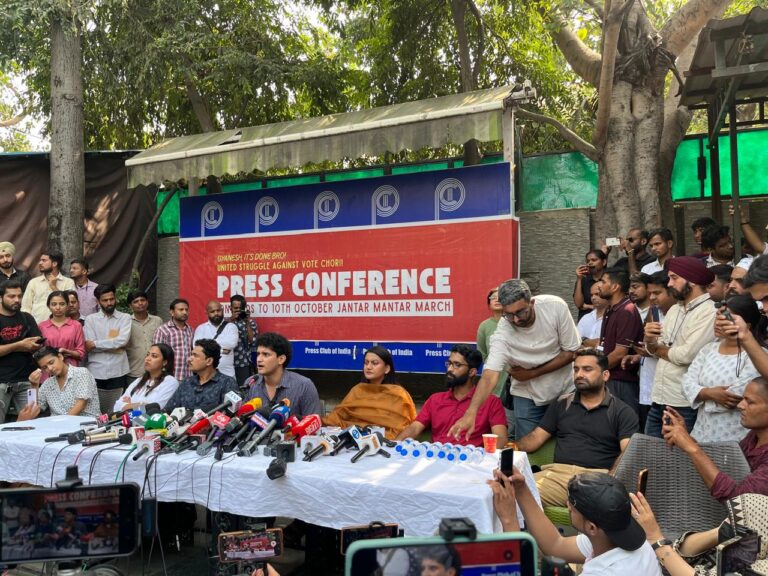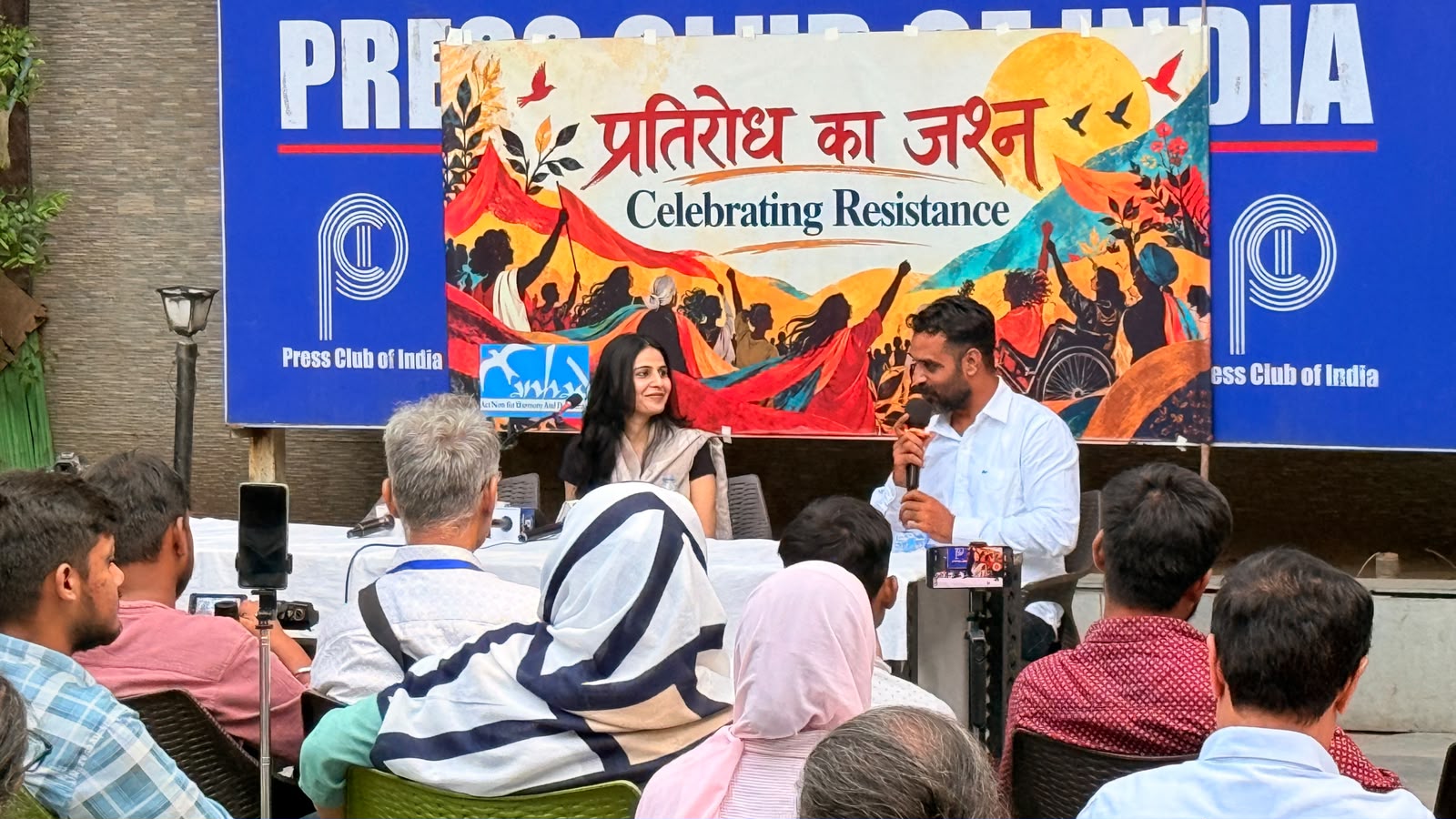
The civil society group ANHAD (Act Now for Harmony and Democracy) held a programme titled “Celebrating Resistance” at the Press Club of India on Raisina Road on Tuesday, 27 October. In a press release, ANHAD said the event brought together poetry, music and cultural thought to affirm the role of dissent in protecting democracy and the Constitution.
Dissent as a foundation of democracy
ANHAD said democracy cannot survive on elections alone and needs citizens who can question those in power, challenge injustice and demand accountability without fear. “Dissent is not disloyalty,” its release said, describing it as an expression of democratic citizenship. When criticism is silenced, the group said, institutions are weakened and the space for justice, equality and freedom shrinks.
The group linked the defence of dissent to the Constitution’s promise of justice, liberty, equality and fraternity. These, it said, are commitments that must shape public life and are not words to be recited on national occasions.
A long tradition of questioning
ANHAD traced a long line of dissent in India. It named the questioning spirit of the Bhakti and Sufi traditions, the anti-caste movements of Jyotirao Phule, Savitribai Phule, Periyar and B.R. Ambedkar, the struggle against colonial rule, voices that challenged the Emergency, and progressive literature and people’s movements. It also cited contemporary struggles for workers’ rights, women’s rights, civil liberties and social justice. In the group’s words, India’s democratic journey was shaped by people who refused to accept injustice as inevitable.
Poetry, music and thought
The programme opened with Hindi poet, critic and editor Ashok Vajpeyi, who spoke on cultural resistance and its changing forms. ANHAD said he addressed how culture and independent thought respond to evolving political and social realities.
Scientist, Urdu poet and documentary filmmaker Gauhar Raza recited poetry of resistance. ANHAD noted that his collection Sarkashi has drawn attention for its engagement with dissent.
The musical presentations featured Mannu Kohli, Yusra Naqvi and Aditi Sharma, accompanied by Prince Chhokar on guitar. ANHAD described Kohli as an artist manager and curator drawing on Hindustani classical music and Urdu and Hindi verse, Naqvi as a classical and semi-classical vocalist and cultural researcher, and Sharma as a singer and social activist associated with people’s movements.
“A climate of fear”
ANHAD said the space for dissent faces serious challenges today. Its release said journalists, students, academics, activists, artists and ordinary citizens who question authority face intimidation, legal harassment and vilification, and that peaceful protests are restricted and critical voices branded anti-national. These are the group’s assertions and the release does not cite specific cases. It said the effect goes beyond those directly targeted, creating a climate of fear that discourages others from speaking.
The group argued that art, poetry, music and literature have long given people the language to challenge oppression and keep the possibility of change alive. Resistance, it said, must be celebrated as well as defended when under attack.
ANHAD’s closing message was that dissent is not a threat to democracy, and that silencing it is.