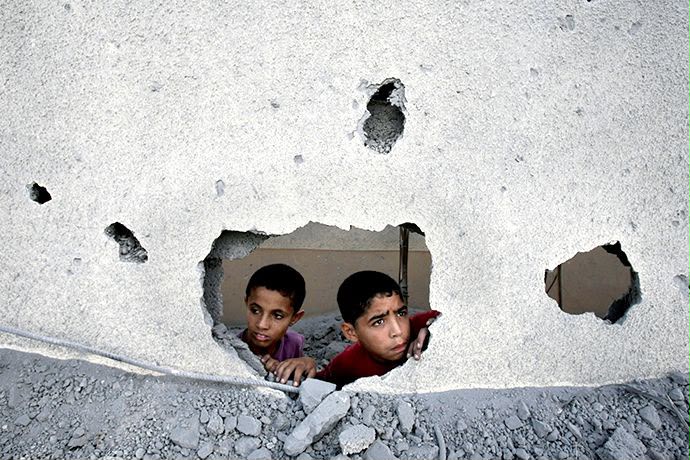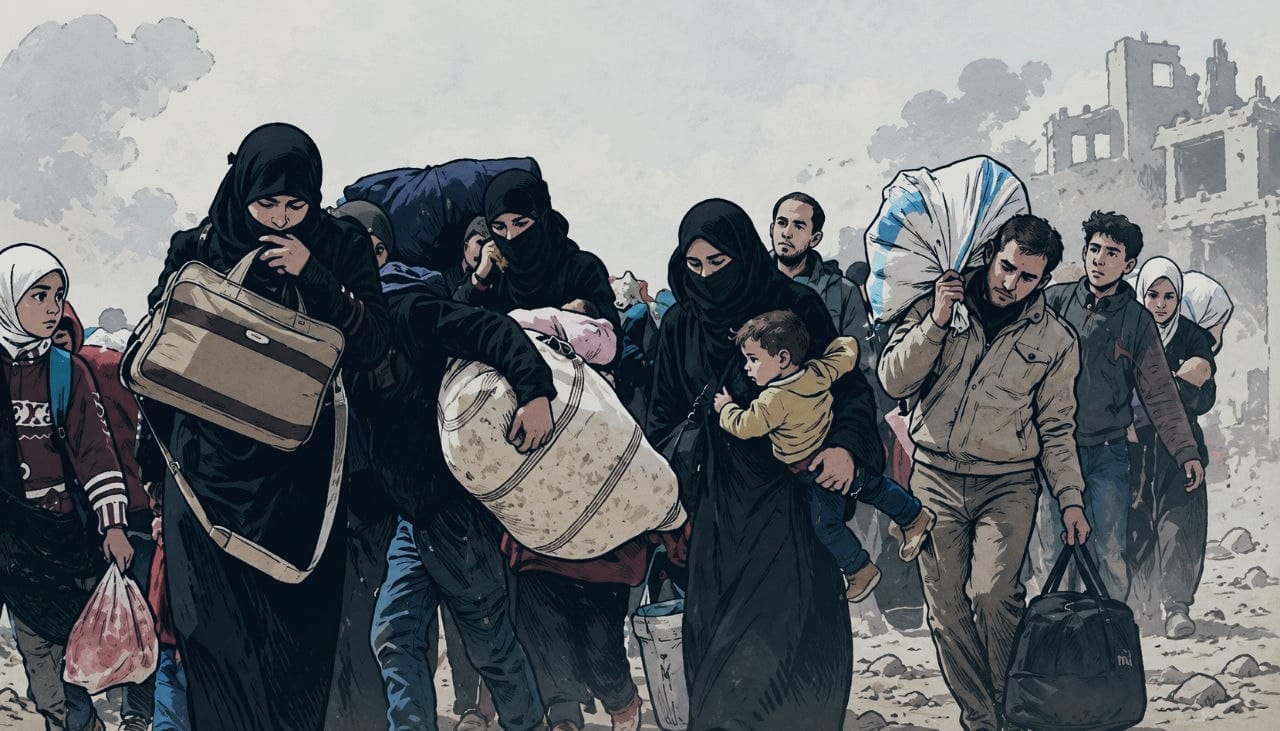
There is something deeply unsettling about the way the world responds to human suffering. Somewhere, a child is searching through the remains of a destroyed house for a family member. Somewhere else, a mother is crossing borders with everything she owns packed into a small bag. In another part of the world, entire communities are waiting for food, medical assistance and the possibility of returning to a normal life.
These are not isolated tragedies. They are the realities of a world experiencing multiple humanitarian emergencies simultaneously. Yet, not every tragedy receives the same attention, sympathy or urgency.
In an age of instant communication, satellite images and twenty four-hour news coverage, geographical distance should no longer determine how closely the world witnesses a humanitarian crisis. Nevertheless, international attention continues to be uneven. Some conflicts dominate television screens, newspaper front pages and diplomatic discussions, while others remain largely absent from mainstream international conversations.
This raises an uncomfortable question: why does the world’s attention depend so heavily on where a crisis happens?
The answer lies not merely in journalism, but in the relationship between media, political power and international interests.
The Unequal Geography of Global Attention
Consider the humanitarian situations in Gaza, Ukraine and Sudan. Each represents a different political and historical context, but all demonstrate the devastating consequences of prolonged conflict for civilian populations.
The war in Ukraine has remained a major subject of international political discussion, particularly because of its implications for European security, NATO, Russia and the broader international order. Gaza has similarly remained at the centre of global attention because of its historical, political and geopolitical significance, alongside the immense suffering of its civilian population.
Meanwhile, Sudan continues to experience one of the world’s most devastating humanitarian emergencies. According to the World Health Organization’s 2026 situation analysis, approximately 33.7 million people in Sudan require humanitarian assistance, while more than 11.5 million have been forcibly displaced. The conflict has also severely damaged the country’s healthcare infrastructure, leaving millions without adequate medical assistance.
The Democratic Republic of Congo presents another troubling example. Despite years of armed conflict, displacement and humanitarian emergencies, it has struggled to receive sustained international media attention.
The purpose of comparing these situations is not to suggest that one population deserves more sympathy than another. Nor should media attention be treated as a competition between victims.
Rather, the comparison exposes a disturbing imbalance: the scale of humanitarian need does not necessarily determine the amount of international attention a crisis receives.
A 2025 study by the Media and Journalism Research Center, titled Humanitarian Crisis Coverage Report, examined 78,667 news articles covering ten major humanitarian emergencies. Its findings revealed significant differences in international media visibility. Gaza received an average of 58.5 articles per day and Ukraine 19.4, whereas the Democratic Republic of Congo received approximately 1.5 articles per day and Chad just 0.06.
The report found that geopolitical significance, the involvement of powerful countries and editorial priorities played important roles in determining which humanitarian crises received sustained coverage.
These figures do not establish that every newsroom behaves identically, but they provide evidence of a wider problem in international news reporting: humanitarian urgency and media visibility do not always correspond.
When Geography Becomes a Political Factor
International politics has never been entirely separate from humanitarian concerns. States frequently respond to international emergencies through the lens of their strategic interests, diplomatic relationships and security priorities.
A conflict involving major powers, international alliances or strategically important regions is more likely to attract sustained diplomatic engagement. In contrast, crises occurring in regions with less influence over global political and economic structures can struggle to secure comparable attention.
This is particularly visible in parts of Africa, where prolonged conflicts have produced enormous humanitarian consequences. Sudan’s ongoing war, for instance, is not simply an internal political struggle. It has wider regional implications involving neighbouring countries, displacement, access to resources and external political interests. Yet, the international response has struggled to match the scale of the emergency.
The question, therefore, is not simply why certain conflicts become international headlines. It is also why other crises fail to generate equivalent political urgency.
The problem becomes even more significant when international humanitarian assistance is considered. According to the Global Humanitarian Assistance Report 2026, international humanitarian funding fell by 20 per cent in 2025, reaching its lowest level in a decade. Only 35 per cent of the requirements in UN-coordinated humanitarian appeals were met.
When resources are limited, decisions about which emergencies receive assistance become increasingly consequential. Humanitarian priorities should be determined by the severity of people’s needs, but political interests, donor priorities and institutional limitations can influence the distribution of resources.
The Media and the Politics of Visibility
The media does not merely report the world; it also influences how the world understands it. The selection of stories, the frequency of reporting and the language used to describe a conflict all contribute to shaping public understanding.
A crisis that receives sustained coverage becomes part of international political consciousness. One that disappears from headlines risks disappearing from public discussion.
This is not necessarily the result of a deliberate conspiracy or a coordinated editorial decision. Newsrooms operate under financial limitations, restricted access, security concerns and competition for audiences. Foreign correspondents cannot be present everywhere, and complex conflicts often require years of reporting to understand properly.
However, these practical limitations can reproduce existing inequalities.
The academic study of international journalism has long examined this phenomenon. In his 2009 article, The Hierarchy of Global Suffering, scholar Stijn Joye examined how television news represented natural disasters in different countries. His research demonstrated how geographical and cultural proximity could influence the way distant suffering was presented to audiences.
People suffering in some parts of the world were portrayed as familiar and relatable, while others were represented as distant outsiders.
This raises a fundamental concern about international journalism: whose suffering is presented as something the world should recognise as its own?
The language used in reporting matters, too. Some populations are frequently represented through individual stories, personal histories and accounts of resilience. Others appear primarily through statistics, casualty figures and images of destruction.
Both forms of reporting are important, but reducing entire populations to numbers risks stripping humanitarian emergencies of their human complexity.
A refugee is not merely a statistic. A displaced family is not simply a figure in a United Nations report. Behind every number is an individual whose life has been transformed by circumstances beyond their control.
The Problem of Selective Humanitarianism
Perhaps the most uncomfortable aspect of this issue is the contradiction between the universal language of human rights and the selective nature of international responses.
The Universal Declaration of Human Rights, adopted in 1948, established the principle that every human being is entitled to fundamental rights and dignity, without discrimination. The Geneva Conventions similarly established protections for civilians and others affected by armed conflict.
These principles are supposed to transcend national borders, political alliances and geographical divisions. Yet, international practice often reveals a distance between the language of universal rights and the realities of global politics.
The suffering of civilians should not become more or less important depending on the identity of the government responsible, the strategic importance of a territory or the political alliances involved.
The challenge is not that some crises receive attention. They deserve it. The challenge is that others are denied sustained attention despite the magnitude of their humanitarian consequences.
There is also a danger in treating humanitarian assistance as an act of political generosity rather than an obligation grounded in human dignity and international law.
If humanitarian concern becomes dependent on political convenience, the very idea of universal human rights loses much of its meaning.
Beyond Headlines: Rethinking Global Responsibility
The geography of human suffering is ultimately a question about the geography of power. Those who possess greater political influence, stronger international alliances and access to global media networks often have a greater ability to shape how their crises are understood internationally.
Those without comparable influence risk being pushed to the margins of global conversations.
Addressing this imbalance requires more than occasional international campaigns or temporary waves of public sympathy. International media organisations must invest in sustained reporting from underrepresented regions. Humanitarian agencies and international institutions must communicate the scale of neglected emergencies more effectively. Governments and donors must make decisions based on humanitarian needs rather than allowing geopolitical considerations to dominate their priorities.
Most importantly, international journalism must recognise that reporting on a crisis should not end when public attention moves elsewhere.
The end of a news cycle does not mean the end of a humanitarian emergency. A conflict may disappear from television screens, but displacement continues. Headlines may change, but hunger does not necessarily disappear.
The world may move on to another political development, while entire populations remain trapped in circumstances they did not choose.
Perhaps the most important question is not why some tragedies become global headlines. It is why others have to become considerably worse before the world notices them.
Human suffering has no nationality, no preferred geographical location and no political affiliation. Its recognition should not depend on any of these either.
If human dignity is truly universal, then the responsibility to recognise and respond to suffering must be universal as well.
The world cannot claim to stand for humanity while allowing the geography of a tragedy to determine the value of the attention it receives.