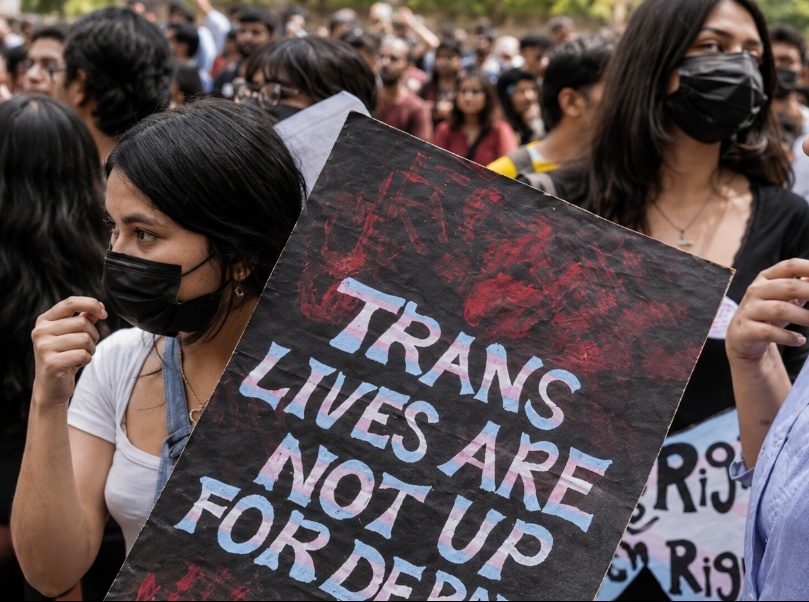
India’s amended transgender rights law is raising concerns among transgender communities, with activists reporting increased police harassment, challenges to gender identity and growing uncertainty over legal recognition. An investigation by Queerbeat, documents how the changes are affecting transgender people across the country.
The investigation, based on interviews with 12 transgender rights activists across 11 states, examines the growing use of the term ‘fake transgender’ to question people’s identities and justify harassment. Activists told the publication that transgender people are increasingly being stopped, questioned and threatened by police officers who demand that they prove their gender identity.
The Transgender Persons (Protection of Rights) Amendment Act, 2026, has changed the legal framework established by the 2019 Act. Among its significant changes is the removal of the earlier provision recognising self-perceived gender identity. Under the amended framework, legal recognition is tied to certification by a government-appointed medical board and specified categories of identity.
The investigation documents concerns that the new requirements could leave transgender people who have not undergone gender-affirming medical procedures particularly vulnerable. Activists also reported that some members of the community are seeking surgeries under pressure, fearing that their identities and legal protections could otherwise be questioned.
The report further highlights growing divisions within transgender communities, with accusations of being ‘fake’ allegedly being used to challenge the legitimacy of individuals who do not conform to particular expectations of gender identity or community structures.
The changes have also raised concerns about the impact on transgender people from marginalised religious and social backgrounds, particularly those who already face discrimination in accessing employment, healthcare and public services.
The amended legislation was introduced by the government with the stated objective of identifying those it considers genuinely vulnerable to exploitation and preventing forced gender transition and trafficking. However, transgender rights activists argue that the new provisions risk undermining the right to self-identification and increasing the vulnerability of an already marginalised community.
The investigation raises questions about the relationship between legal recognition, individual autonomy and the state’s authority to determine gender identity.
Source: The Wire, republishing an investigation originally published by Queerbeat, October 26, 2026.