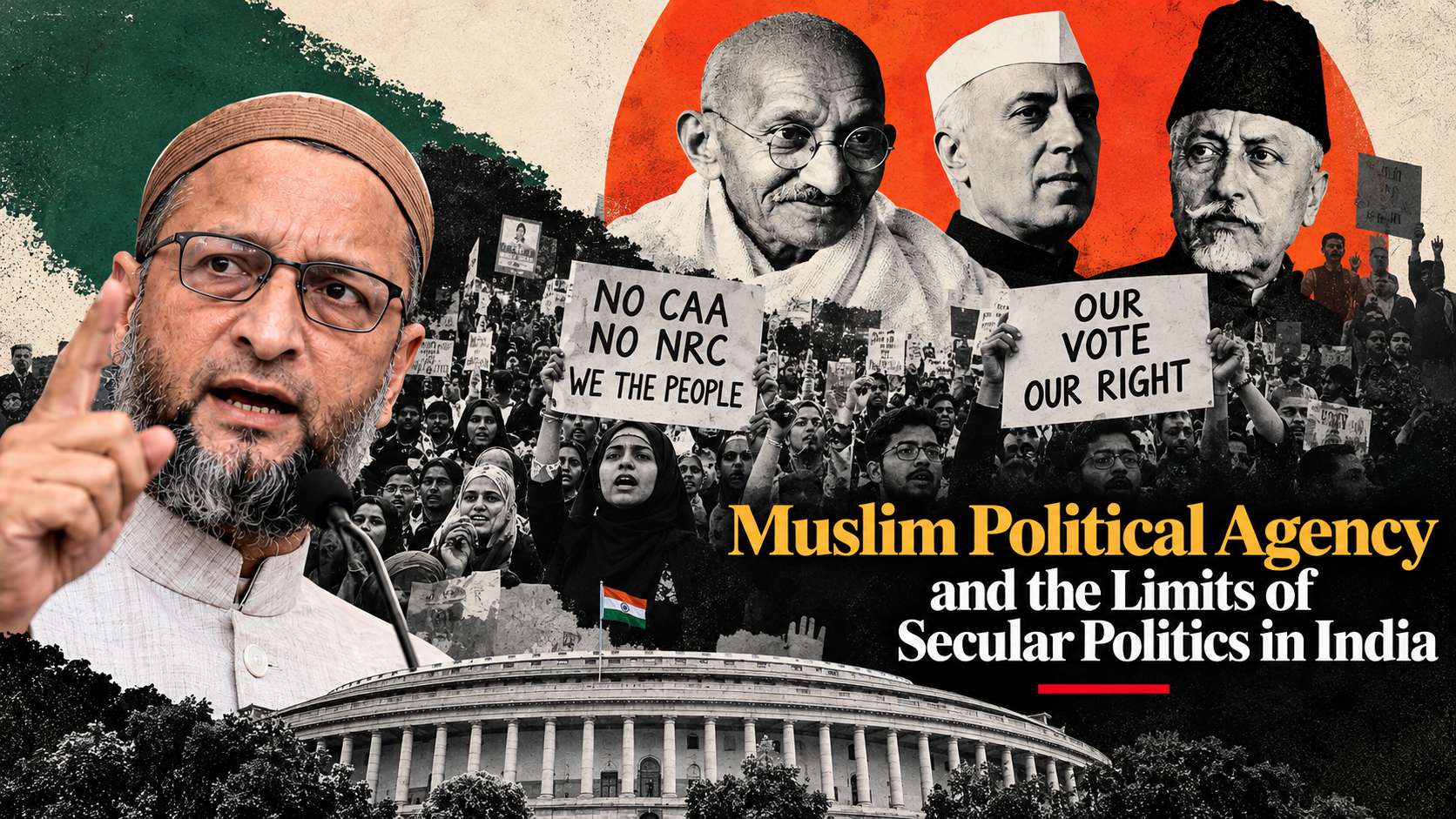
Owaisi’s remark that Muslims should not follow Nehru and Gandhi initially surprised me, so I decided to watch his entire speech before forming an opinion. Having heard it in full, I believe the remark has been taken out of context. His invocation of Maulana Abul Kalam Azad formed part of a larger critique of a political culture in which Muslims have repeatedly been asked to follow non-Muslim figures identified with secularism, while rarely being encouraged to emerge as leaders in their own right. The question he raised deserves serious consideration, irrespective of what one thinks of Owaisi or his secular politics. The community has so often been expected to place its faith in leaders from outside, while claims to political leadership made by Muslims themselves have drawn suspicion. Participation in secular politics can earn a welcome that an independent Muslim voice rarely receives.
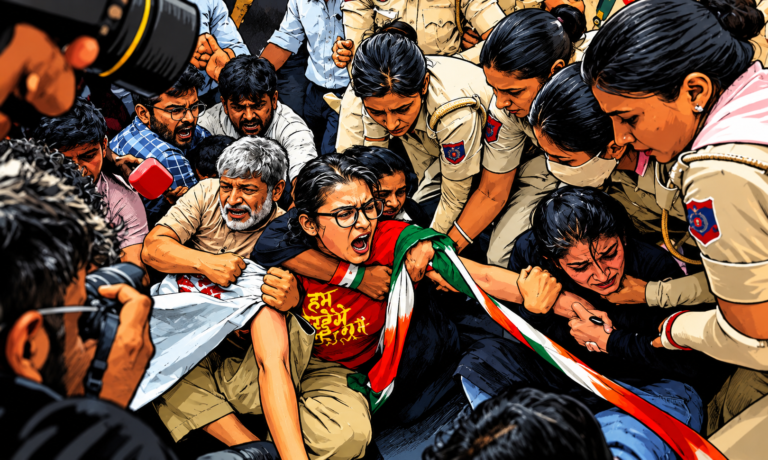
These questions extend well beyond Owaisi, since they point to a deeper contradiction within Indian secular politics that became particularly visible during the resistance against the Citizenship Amendment Act (CAA) and the proposed National Register of Citizens (NRC). During the anti-CAA and NRC movement, Muslims stood at the forefront of a struggle that challenged the exclusionary possibilities of the government’s citizenship policies. From Shaheen Bagh to university campuses and streets throughout the country, Muslim citizens mobilised, organised protests and articulated a constitutional vision of India that rejected religious discrimination. The movement drew support from people of every religious and social background, and its constitutional demands were universal. Solidarity from beyond the Muslim community was welcome, but a persistent tendency also developed to present the resistance as everyone’s movement without adequately acknowledging the political agency of those who had initiated, sustained and led much of it. Universality, however, need not make leadership invisible.
When Muslims asserted their place in the front line of the resistance, many of its prominent figures were called human rights defenders, civil society activists or representatives of the minority community. Such labels may well have been accurate, but they often failed to recognise these individuals as political actors who were articulating a vision of citizenship, constitutionalism and the republic itself. Consider Umar Khalid, Sharjeel Imam, Meeran Haider and Gulfisha Fatima. Their political interventions emerged from a struggle over the nature of Indian citizenship and the relationship between the state and its Muslim citizens. Their public identities have frequently been framed through the language of activism, minority representation and, for those facing prosecution, criminal allegations. The political questions they raised have often received less attention than the labels attached to them.
Human rights activism has earned respect and these categories need carry no limitation in themselves, which makes it fair to ask why Muslim political actors have so often been placed within them while the capacity to lead, organise and articulate an alternative vision has remained insufficiently acknowledged. Muslims have readily been recognised as victims of discrimination, beneficiaries of constitutional protections or participants in collective struggles, and discomfort has followed once they claimed the authority to define the terms of political debate themselves. Such a pattern can reduce agency to participation on terms set by others, and secular politics has reason to treat that as a failing.
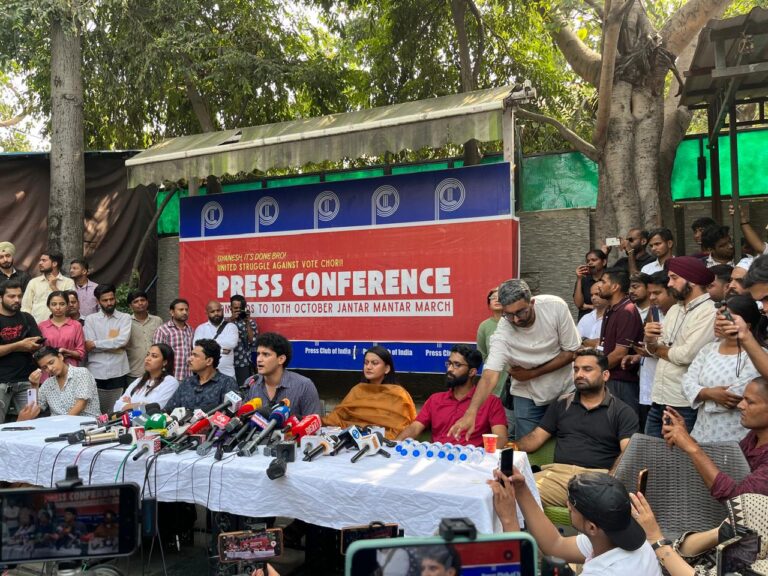
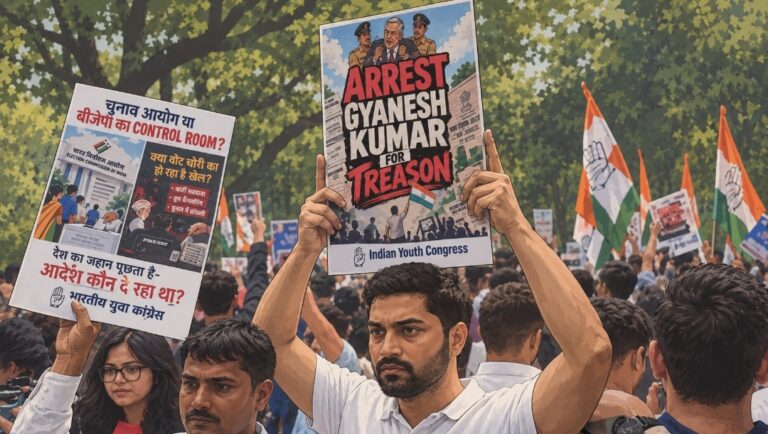
The ongoing resistance against the Special Intensive Revision (SIR) of electoral rolls offers a useful contrast. Opposition leaders who hesitated to stand alongside those resisting the CAA and NRC, or to associate themselves politically with figures such as Umar Khalid and Sharjeel Imam, are now sharing space with protesters against the SIR exercise. Their participation is welcome. Electoral rights should unite political forces beyond ideological and social boundaries, and no movement should be denied solidarity simply because its demands inconvenience those in power. The contrast nevertheless raises a difficult question. Some movements have readily been recognised as expressing the democratic aspirations of the country, while Muslim-led resistance has so often been confined to the vocabulary of minority protection and human rights activism. The political establishment has found it easier to stand alongside Muslims when an issue can be framed as a common democratic concern than to recognise Muslim leadership when the question touches the community’s place in the republic.
The distinction has never been absolute, and important exceptions have appeared. Some opposition leaders and civil society figures did support the anti-CAA movement. Nor does every political calculation stem from prejudice or hostility, since parties have to operate within electoral constraints and alliances are often formed around competing priorities. Nevertheless, the wider pattern deserves scrutiny. If Muslim participation has been welcomed only when an established framework could accommodate it, inclusion has been conditional. Muslims could join a movement while their own claims to independent politics still drew discomfort. A democratic politics worthy of the name would accommodate both solidarity and autonomy.
One recurring argument during the anti-CAA movement held that the struggle should not be called Muslim because its demands concerned the Constitution and the rights of all citizens. The argument contained an important truth, since the movement’s constitutional significance extended far beyond any one community. Universality need not require the erasure of origins. Defending the rights of everyone does not make the identity of the principal organisers irrelevant, and acknowledging Muslim leadership takes nothing from the participation of Hindus, Sikhs, Christians, Dalits, Adivasis or others who joined the resistance. A struggle can belong to everyone without erasing the people who led it.
Recognising the role Muslim citizens played in defending constitutional principles would strengthen the claim that such values belong to all Indians. It would show Muslims steering the political and moral direction of the country while also seeking protection from an unjust state. Celebrating diversity as a slogan has always been easier than accepting its political consequences. Acceptance would mean recognising that communities historically pushed to the margins can develop independent leadership, build institutions of their own and articulate positions that need not conform to the preferences of established parties. The promise of secularism will be tested here. Secularism cannot mean that Muslims may take part in a movement only so long as their independent political identity stays subdued. It must also bring them the same freedom enjoyed by other citizens to organise, lead, negotiate and contest power.
The debate over Owaisi’s remarks has led back to Maulana Azad and the question of Muslim leadership. Azad held a distinctive place in India’s history as a champion of composite nationalism who fought for an undivided country, and his example has often been invoked to show that Muslim political aspirations can be articulated within a larger national framework. Invoking Azad should also prompt a more difficult reflection. Indian parties have too often expected Muslims to remain followers of established formations. Few have encouraged them to emerge as leaders capable of steering national politics. Representation has its value but cannot guarantee political agency, and having candidates, voters and public faces from the community within parties will not necessarily bring institutional power to determine priorities, influence policy or negotiate a meaningful share of authority.
Political agency will require the capacity to organise independently, articulate demands, develop leadership and negotiate with other forces from a position of dignity. Isolation from wider coalitions need not follow, and an independent voice can make coalition-building more meaningful because participation would then rest on negotiation, with dependence left behind. The need is greatest where Muslims have often been asked to choose between asserting distinct concerns and demonstrating commitment to the larger national community. That choice has always been false, since a community can demand equal rights, security and representation while remaining committed to a shared democratic future. Independent Muslim leadership should not be equated automatically with communalism. Political identity can be mobilised in many ways, like any form of collective belonging. The democratic character of any such mobilisation should be judged by commitments, methods and objectives, with the religious identity of those who exercise it carrying no weight. Muslim political organisations deserve the same scrutiny that every other formation receives. Accountability and the right to political participation must alike be universal.
The larger challenge lies elsewhere. Whether Muslims follow Nehru, Gandhi, Azad or Owaisi counts for little beside their freedom to make political choices without being treated as suspect when they produce independent leadership. A genuinely secular political culture would never ask Muslims to prove their national commitment by remaining dependent on others. It would recognise the right of democratic citizens to organise around their concerns, to disagree with established leaders and to seek political power through constitutional means. Such a culture will require introspection within the opposition, civil society and the wider secular establishment, along with a willingness to distinguish solidarity with Muslims from recognition of them as political equals. The two can be related without being interchangeable. Solidarity can be offered from above, sometimes generously and sincerely. Political equality will require something more, namely an acceptance that those who have historically been marginalised can speak for themselves, set their own priorities and lead struggles whose significance extends beyond the immediate community.
The anti-CAA movement offered a powerful example of Muslim citizens defending a constitutional vision of India. The current resistance to the SIR exercise presents another opportunity to build a wider democratic coalition. Coalitions of that kind will remain incomplete if they welcome participation by Muslims while hesitating to acknowledge their leadership. India’s secular politics must move beyond the assumption that Muslim agency becomes legitimate only when mediated through established non-Muslim leaders or absorbed into a wider formation. The republic belongs to every citizen, and so must the right to influence how it is governed. The remaining question is whether India’s secular establishment is prepared to accept that principle in practice as readily as in theory.