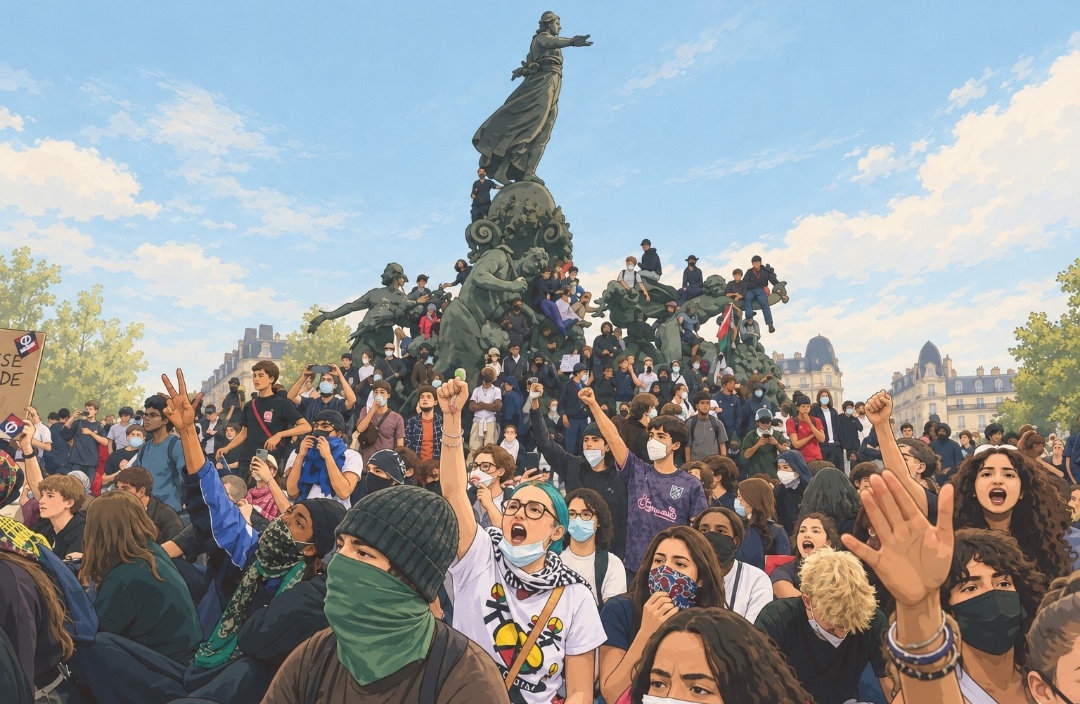
France’s student protests have entered a third week, drawing in teachers’ and parents’ unions as arrests passed 5,000. What began as blockades at a few high schools over crumbling classrooms has grown into a national confrontation with Prime Minister Sébastien Lecornu’s government.
How the France student protests began
Blockades began at lycées in the Créteil academy, around Paris, on 21 September and reached Strasbourg, Bordeaux, Nantes, Marseille and Lyon within weeks. Pupils complain of unreplaced teacher absences, decaying buildings, a shortage of furniture and swollen class sizes, with poorer districts suffering most. Reports of rats in classrooms have added to the anger, according to Newsweek. University students joined the blockades on 1 October.
By 30 September, the Education Ministry said 338 schools were affected, 45 of them still blockaded. After a crisis meeting chaired by Lecornu on 1 October, the government described the events as urban violence. Geffray ordered remote classes where damage or blockades made buildings unsafe, and said a little over 400 institutions would be closed on 2 October.
Arrests, injuries and closed schools
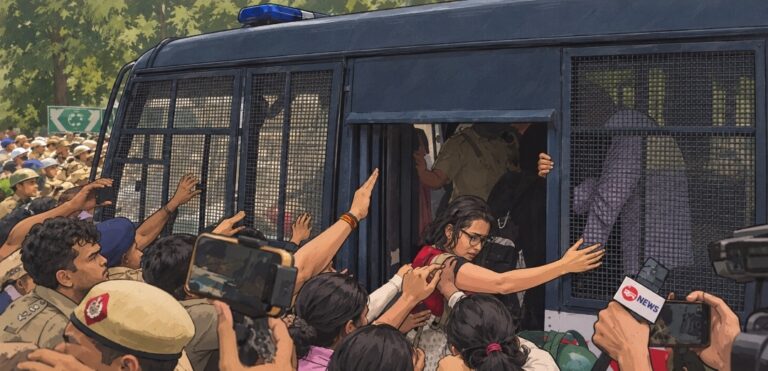
The Interior Ministry reported 1,949 arrests on 1 October. By 6 October the Justice Ministry had logged 5,060, 87 per cent of them minors, while Interior officials cited roughly 6,100. Between 400 and 500 schools were fully or partly closed on 5 October. Education Minister Édouard Geffray counted 24 schools burned or ransacked, and said on 1 October that 235 education staff and students had been injured. Newsweek reported more than 600 police officers injured and damage in the tens of millions of euros, and Paris police warned that the movement was being overtaken by violence. In the Drôme, Agence France-Presse reported nine arrests and a police officer injured during an intervention at a lycée in Montélimar, and burning waste containers were reported in Perpignan on 2 October.
Government blames “groupuscules”, opposition alleges repression
Geffray blamed ultra-violent groupuscules for taking the movement hostage and wrote on X that “violence will not deprive our students of their fundamental right to education.” Lecornu accused the France Unbowed party of encouraging the demonstrations. Its leader, Jean-Luc Mélenchon, accused the government of repression with a racist undertone, a charge Lecornu called an insult. Parents have begun appearing at demonstrations, angry about the police’s treatment of minors.
Budget cuts and a salary freeze
The unrest has coincided with the government’s 2027 budget, unveiled on 1 October with tax rises and spending cuts aimed at the deficit. Public sector unions struck against a salary freeze meant to save about two billion euros, while soaring fuel and commodity prices have added to the discontent. With a presidential election due next spring, both camps have reason to escalate.
Students reject the minister’s offer
Student union leaders, including the Union Syndicale Lycéenne, met Geffray on 2 October and left dissatisfied with the government’s response, calling on students to keep mobilising. Geffray has acknowledged that some of the students’ concerns are legitimate, even as he condemns the violence around the protests. He also told France 2 that 40 headteachers have been injured since the movement began, and accused France Unbowed of fuelling the blockades and claiming ownership of them.
What happens next
On 6 October, a third national day of mobilisation drew lycée and university students, with education unions joining and energy workers striking separately. Student councils left a Friday meeting with Geffray complaining of too little concrete commitment, although the minister opened a consultation platform for pupils and began reopening closed schools gradually. Calls have also circulated for a general mobilisation on 17 October, backed by gilets jaunes supporters and Communist Party leader Fabien Roussel.
The students’ demand is simple: schools that work. As arrests climb past 5,000, mostly of minors, the government has so far answered with a consultation platform and a law-and-order message. Whether that is enough before 17 October is the question now.