
Saturday, 10 October, 2026 | 5 PM (Scroll down to register)
5th Floor, DLF Tower A, Jasola Vihar, New Delhi
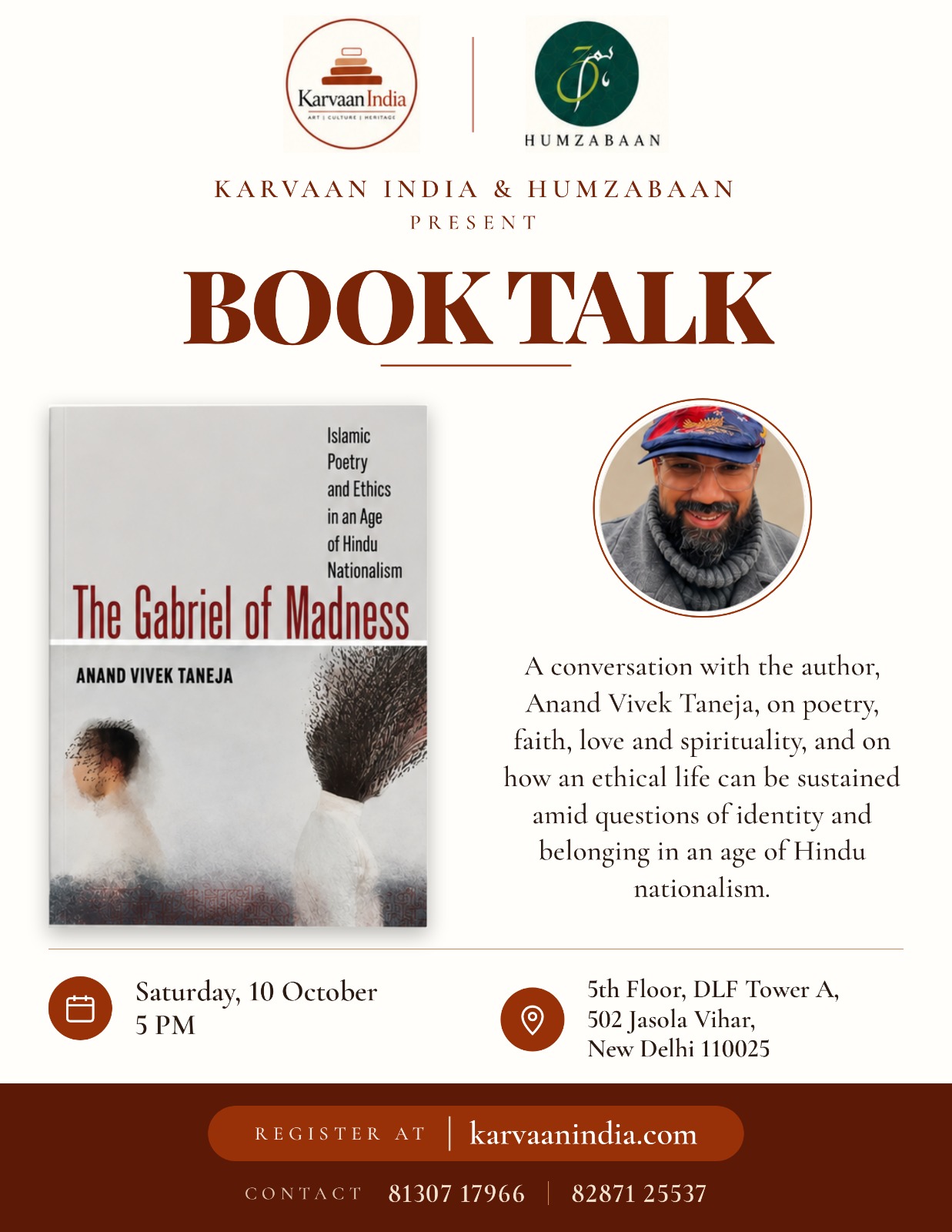
Gabriel of Madness by Anand Vivek Taneja is an exploration of madness, religion, spirituality and the city, centred on Delhi and the lives of people who inhabit its margins.
At its heart is the story of Gabriel, a man whose experiences of mental illness and religious devotion blur the boundaries between what society calls madness and what it calls spirituality. Taneja uses Gabriel and his encounters with Sufi spaces, shrines and other marginalised people to ask a larger question: who gets to decide what is madness and what is divine experience?
The book is also an ethnography of Delhi, particularly of spaces such as Nizamuddin Dargah, where people who are socially excluded can find forms of belonging that mainstream institutions often deny them. Taneja looks at Sufism not simply as a system of religious belief, but as a lived practice of care, intimacy and acceptance.
A central idea running through the book is that madness can challenge the social order. People labelled mentally ill may see and experience the world in ways that expose the limitations of supposedly rational society. The shrine becomes a space where the boundaries between the sane and insane, sacred and profane, believer and non-believer become less rigid.
In short, Gabriel of Madness asks us to reconsider madness not merely as an illness to be treated, but as an experience that can reveal something about religion, society, love, exclusion and the human need for belonging.