A survey of 1,000 maternal health professionals, including in India, finds most have seen heat-linked complications in the past five years. Simon Stiell wants pregnancy built into adaptation planning, with finance to match.
UN Climate Change Executive Secretary Simon Stiell said on Monday that extreme heat has made pregnancy and birth a “new faultline” in the global climate crisis, one that can be fatal. He was speaking at the launch of the Birthright campaign on the first day of the Pre-COP ministerial meeting in Nadi, Fiji.
Stiell cited a Wellcome-commissioned survey of 1,000 midwives, doctors and other maternal health professionals in Australia, Brazil, India, the UK and Zimbabwe. The survey ran from September 17 to October 1.
What the survey found
Seventy-three percent of respondents reported a rise in heat-linked cases or complications over the past five years. Nearly all, 98 percent, had cared for a pregnant woman whose health they believed was affected by extreme heat, and 99 percent had cared for an affected baby. More than four in five, 81 percent, said they were concerned or very concerned that heat will increasingly endanger maternal, foetal and newborn health without more action.
Stiell said extreme heat during pregnancy is increasingly linked to premature birth, stillbirth, low birth weight and maternal complications. Wellcome’s materials add that every 1°C rise in temperature correlates with a 5 percent increase in premature births and a 7 percent increase in gestational diabetes. The reports reviewed do not break down the findings by country, including India.
Who is most exposed
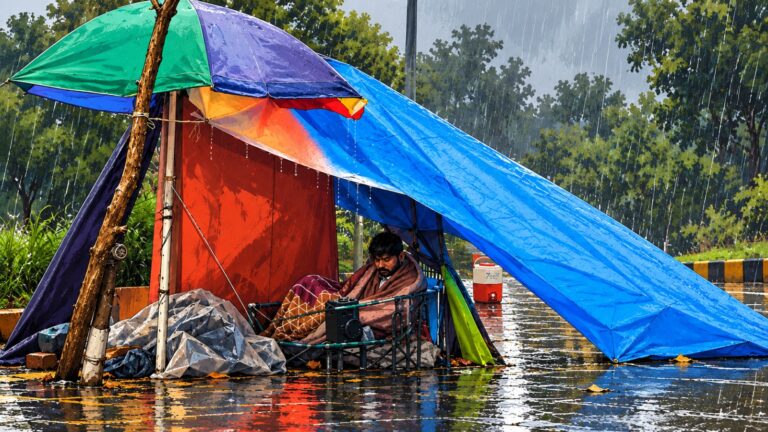
Stiell said advice alone cannot protect someone working outdoors, living in unregulated housing, travelling far to a clinic or relying on a facility without water, power or cooling. “Staying cool” is simply not an option when there is no cool place to go, he said. He warned that a safe birth already depends too much on geography, income and access to care, and that extreme heat will widen that injustice.
What he wants
Stiell set out three priorities. Countries should write pregnancy and newborn care into adaptation and heat planning, turn evidence into protection through alerts, training and safer facilities, and measure the harm.
The money question
He said the tripling of adaptation finance agreed at COP30 in Brazil must be delivered, and that nations must work with the whole financial system to make $1.3 trillion a year for developing countries a reality. Without it, he warned, the faultline could become another chasm of suffering and inequality.
Where talks stand
Pre-COP runs from October 5 to 8, co-hosted by Fiji and Australia, with ministers and delegates from more than 50 countries preparing for COP31 in Antalya, Türkiye. COP31 President Murat Kurum said promises do not hold back the sea or shield homes from fire, and that only delivery can save lives. According to figures cited by the Australian COP31 team, projected warming has fallen from about 4°C before the Paris Agreement to 2.6°C, but the last eleven years have set heat records.
The survey puts a number on what clinics are already seeing. What happens to those numbers depends on whether adaptation money reaches the hospitals and women Stiell described.