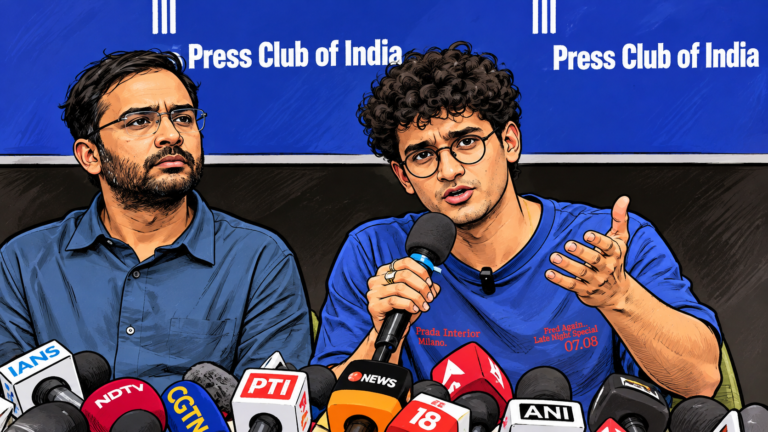
Like everyone glued to their screens since July and following events in the capital, I was in much the same boat. By “everyone”, I do not mean the whole world, only the cohort of sane people I keep around me. One name that shone without outshining anyone during this second wave of protests was that of the spineful Neha Bora.
When the first wave began in July, demanding the resignation of then education minister Dharmendra Pradhan, Neha Bora was a distant figure. Away from the stage, her hunger strike stood as a testament to the rage of the youth. She must have been aware that a movement can take time to gather momentum. Slowly, she came to people’s notice. Her smouldering courage was a slow-burning fire that engulfed everyone who waited long enough to see her. Her speeches held anger, and they also brought an unusual warmth that could melt even the most dogmatic minds. They may not have agreed with her completely, but for the first time, they were ready to listen.
Her voice was meant to make you feel something. Men seem to have mastered the loud, shrieking way of stirring a crowd, but her voice worked through a calm awakening, the kind that follows a mother’s touch and a woman’s presence. It comes from a willpower that refuses to be subdued by the resistance of the world.
As I scrolled through umpteen posts about who she is, where she comes from, who she was, and the ideology she subscribes to, one notion remained consistent in everything I came across, and that was her identity as a woman. Then I found myself wondering about something her parents must have thought about when she was born. Her name.
They say, “What’s in a name?” Perhaps Shakespeare could have asked, “What’s in the surname?” too. A surname carries its own weight, its own inheritance and mostly a discrepancy. The meaning of your first name can carry a kind of trust, a gift your parents bestow upon you when you are born.
What does Neha mean?
The name has Sanskrit and Hindi origins and is commonly associated with “love”, “affection”, “rain” or “downpour”. In Hindi, love is prem, and in Urdu it is mohabbat. It has also been linked poetically to loving eyes or a gentle shower of care.
Neha means love and affection, so perhaps my instincts were right about what her name represented. It also connotes rain or downpour, and perhaps the cloud of rage has finally burst into a flood. Her speeches seem to carry the promise of unprecedented change. The art of public speaking must have been practised by countless people since the world began, but only a few voices carry something beyond the words themselves. There is a warmth in hers that reminds me of the December we wait for through the hot summers. It is the kind of warmth that makes you notice someone amid a crowd of people trying to claim all the limelight. Her affection, her love and her faith in the cause make people stop and pay attention to her. With a balance of rage and calmness in her posture, she embodies what a movement can look like when it is led by a woman.
The woman in her is every patriarch’s ick. A patriarch would say that women do not look good on the streets, especially in the middle of so many men whose eyes bawl out at the sight of a woman who cannot be tamed. A woman’s anger is never meant to match the decibels of a man. Her anger is meant to cancel out the hate with a thing called sensitivity, especially in times of insensitivity.
For the longest time, women have been asked to suppress their rage, or perhaps wear it in a culturally acceptable way. If a woman expresses her angst outside those boundaries, she can risk being deprived of her femininity in the eyes of society. When women started seeing Neha on the mic, perhaps they felt like they belonged. When a men-loving society sees a woman holding a mic and expressing rage through sensitivity, it aspires. It begins to see that anger need not come at the cost of tenderness, and that softness does not make a woman any less formidable.
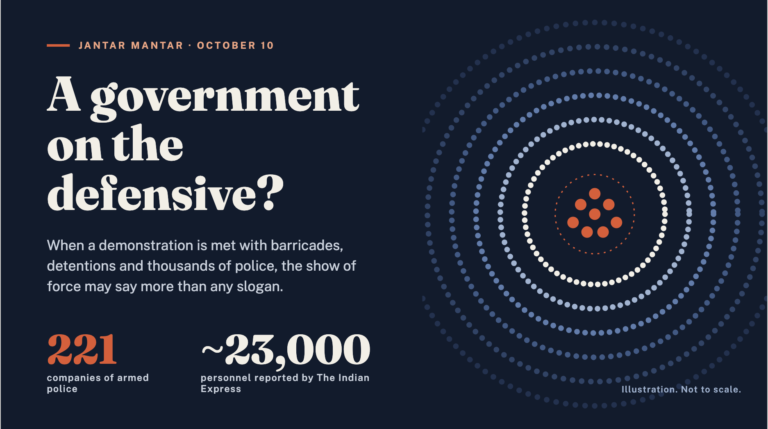
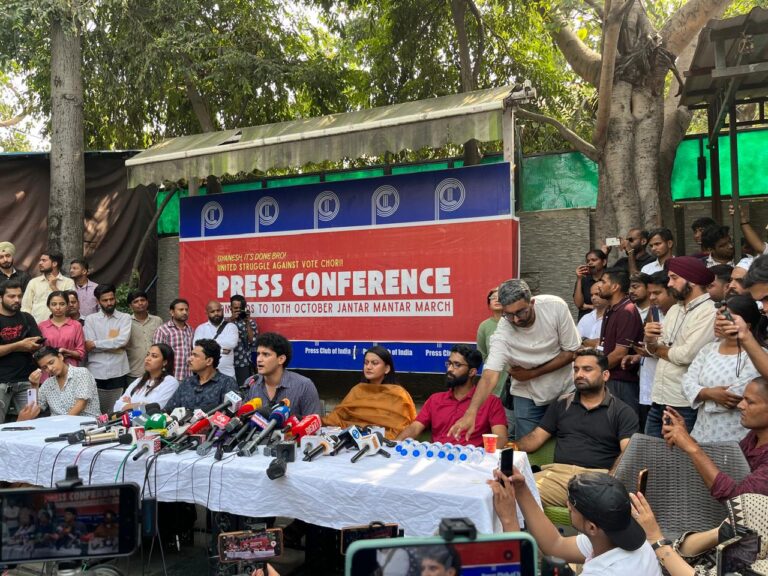
Her name is also poetically associated with “beautiful eyes”. The pictures of her emerging from the protests seem to capture that love in her gaze, the unmistakable smile, the small fist raised in the air, visible even from a distance. She was detained at the Jantar Mantar protest, where she had joined the INDIA bloc in demanding that the Special Intensive Revision (SIR) of electoral rolls be taken back. One picture from that day shows her in red, resting her head on her hand, a fiery smile on her face, surrounded by tiny growing plants. The frame makes for a canvas in itself. Amid those plants rose a bold flower named Neha.
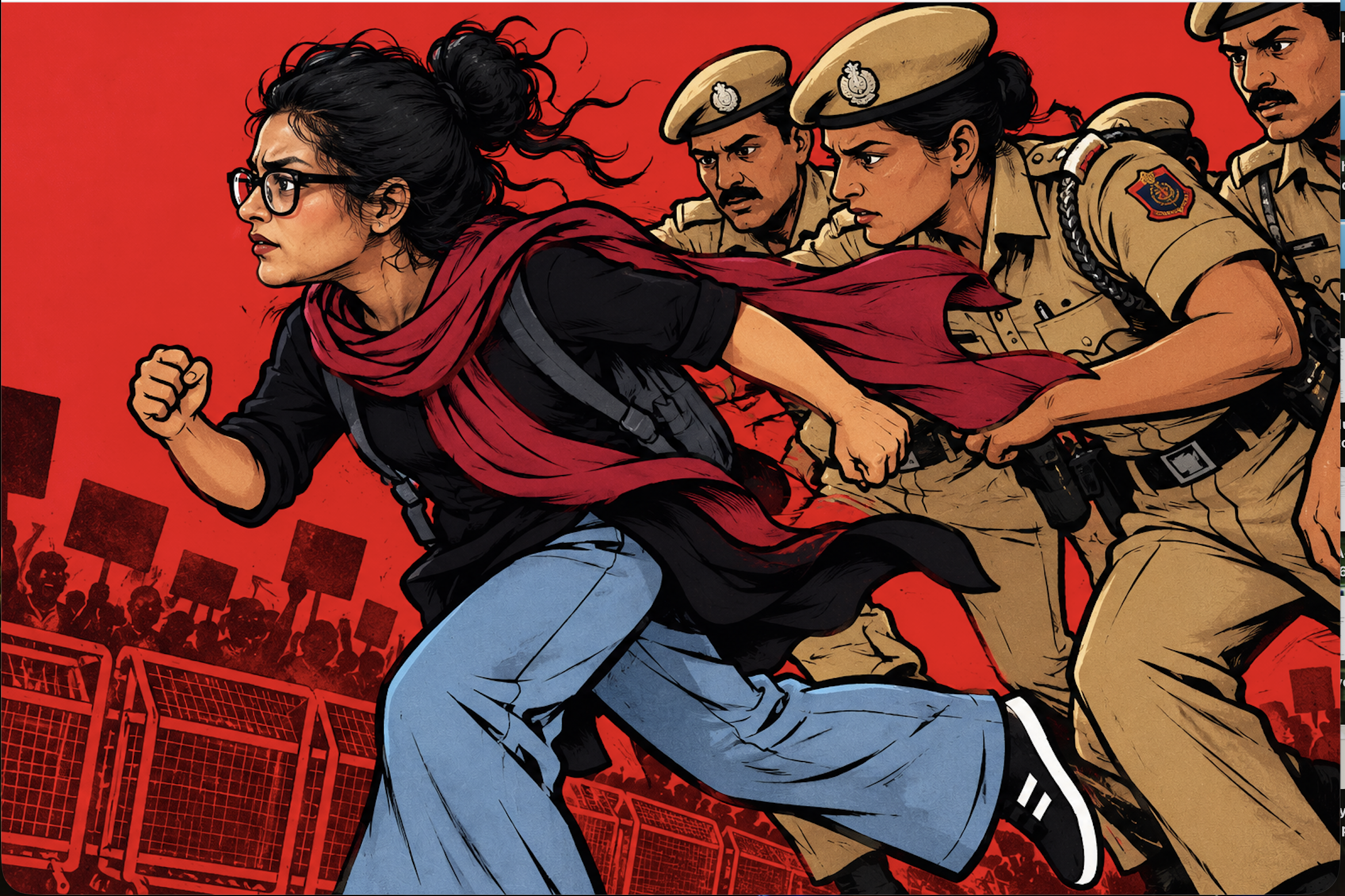
Inside the bus, when someone outside asked for a water bottle, she was the one who passed it through. Visuals of her smiling and running on the streets of the capital, or carrying hope in her gaze as she is dragged away, make her eyes speak like no one else’s.
My mother often asks me never to stomp my feet on the ground. She says it signifies that you are egoistic and that the Earth shall not contain you. I wonder, though, if Mother Earth enjoyed today the stomping of all those feet of solidarity that she had waited for.
I keep coming across posts in which fathers write about wanting a daughter like Bora. They want her to be fierce, unconventional in personality and fearless in speech. I rarely see anyone talk about the softness she carries. If you listen to her speeches closely, you will hear a smouldering rhythm, almost as if she were singing. The poetry in them is evident, and in that rhythm the force of her voice seems to step back, making way for a melody everyone wants to tune into in this hate-laden world.
In this harsh world, her melancholy can be felt. Sometimes it is a little too palpable, sometimes a little too distant, but it is always armed with gentleness.
When folks started pitting her against CJP founder Abhijeet Dipke, she responded to the malice with a tweet that read, “Solidarity, not comparison. We will fight this together.” There is something about gestures like that, and like the water bottle, that stays with me. From her tweet in solidarity to passing a bottle of water to a random stranger, she seems to remind us that a movement is held together by more than anger alone.
Perhaps the cameras are everywhere, and every action is noticed, but her softness remains at the epicentre of this movement. The cadence in her voice, with each word woven so gracefully, makes her rage palpable and leaves you with a hopeful anger that stays free of bitterness.
I do not know where we are all headed, but I believe the world needs more than anger. It also needs the softness of a woman to take care of a child who has lost its momentum. When sensitive women take to the streets, the revolution holds more than rage. Hope, tenderness and warmth fill the air and keep pulling everyone together.
Mother Earth needs the care of a woman!
Here’s to Neha and her warmth.
Mohabbat was long overdue in this country, and Neha’s name seems to have carried it all along, from the time she was born to the moment she gives it all back to the world today.
Neha ke naam mein “na” aur “haan”, dono hain!
That is what women should be allowed to be: bold enough to say no and open enough to say yes.
As I end this little essay on the names we carry, as against the surnames we inherit, I am reminded that it began when someone asked me the meaning of my name and then followed with another question: “Is it? Are you honest?”
( This was published first on the author’s Substack account )