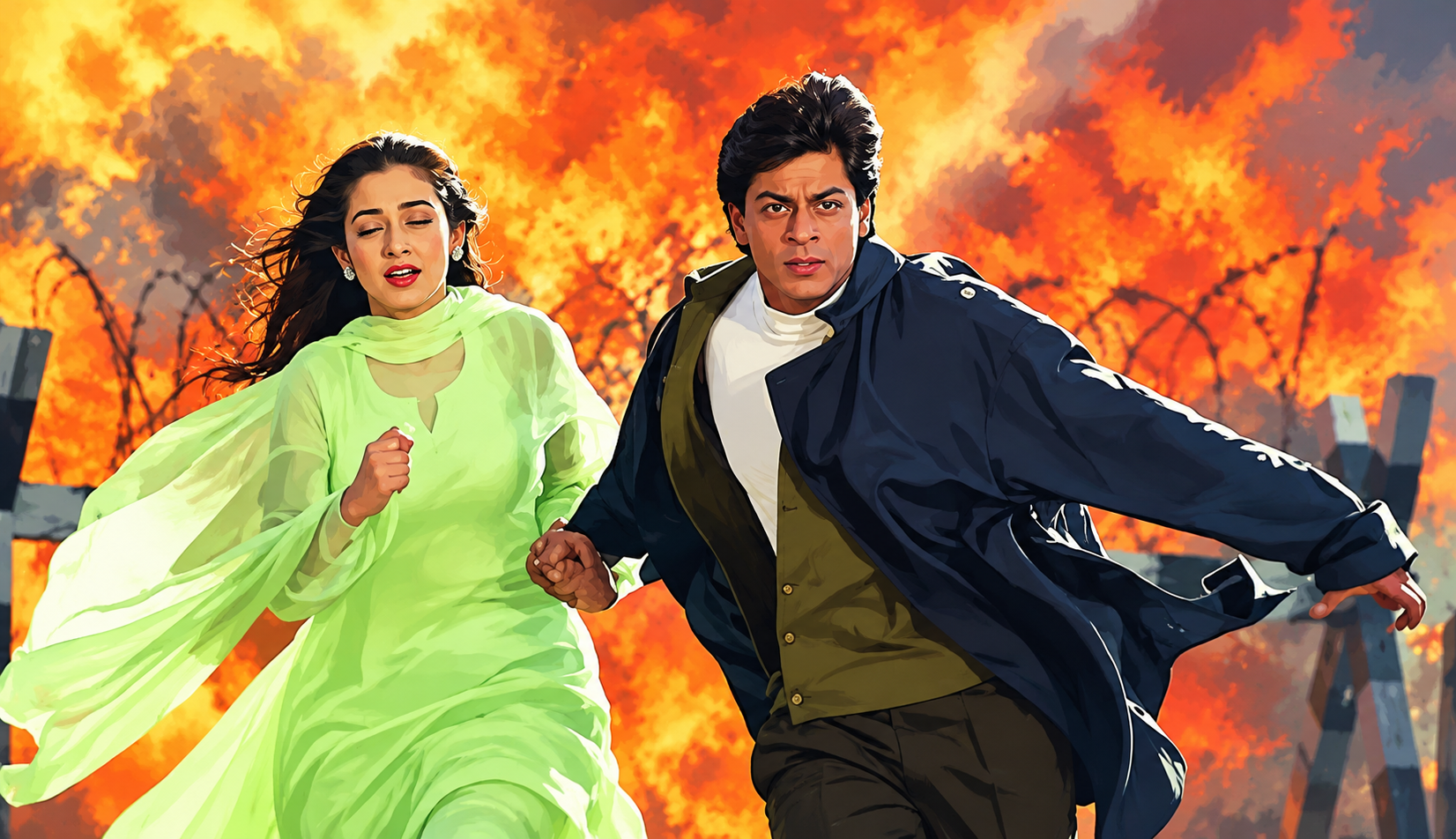
The song Dil Se Re from Mani Ratnam’s 1998 film Dil Se feels like the heart and soul of the movie, wrapping its themes of love, obsession, and deep yearning into something you can’t help but feel. With A.R. Rahman’s soul-stirring music and Gulzar’s poetic lyrics, sung by Rahman himself, the song dives into what it means to be human, fragile yet unbreakable, using nature’s imagery to reflect our emotional ups and downs.
It takes things like falling leaves, changing seasons, sharp thorns, and fleeting bubbles and turns them into a beautiful, thought-provoking story about pain, hope, and the endless cycles of life and love. This review unpacks those layers, showing how the lyrics not only carry the film’s story forward but also give us a way to see love’s messy, beautiful contradictions through a deeper, almost philosophical lens.
Symbolism of Nature and Separation
At its core, Dil Se Re employs nature as a canvas for emotional separation, vividly illustrated in lines like “Do Patte Patjhad Ke Pedon Se Utrey Thay” (Two leaves from autumn had come down from the tree) and “Pedon Ki Shaakhon Se Utrey Thay” (They had come down from the branches of the tree). These autumn leaves symbolise lovers or souls torn from their roots, evoking a sense of inevitable loss and transience. The imagery reinforces the film’s turbulent romance between Amar and Meghna, where external forces, be they societal or personal, pull them apart like leaves in the wind. This natural motif sets a melancholic tone, grounding abstract emotions in tangible, seasonal decay, and invites listeners to reflect on how separation is not just an event but a recurring pattern in the human experience.
Resilience and the Yearning for Renewal
But Dil Se Re doesn’t just linger in sadness; it shines a light on strength and hope through lines like “Phir Utne Mausam Guzre Vo Patte Do Bechaare” (Then all those seasons passed by, those poor little leaves) and “Phir Ugne Ki Chaahat Mein Vo Sehraon Se Guzre” (To bloom again, they journeyed through the wilderness). These “poor leaves” keep going despite tough times, carrying a quiet but fierce longing to start anew. It’s a lot like the film’s take on love that refuses to give up, where characters push through conflict and loneliness to chase connection. The lyrics remind us that real strength comes from this stubborn will to keep going, turning fragility into something powerful, just like nature’s way of bouncing back. It’s a gentle nudge, whispering that even after being torn away, the heart’s deep desire, its chaahat, keeps pushing us forward.
The Heart as a Metaphor for Fragility and Emotion
The transformation of leaves into hearts, “Vo Patte Dil Dil Dil Thay” (Those leaves were hearts), ties the song’s natural symbolism directly to human emotion, emphasising fragility. This metaphor underscores how hearts, like leaves, are susceptible to the whims of time and circumstance, fluttering yet easily scattered. It deepens the emotional core of Dil Se, where love is portrayed as both tender and tumultuous. By personifying the leaves as hearts, Gulzar crafts a universal allegory: emotions are ephemeral, yet their essence persists, inviting a visceral connection for listeners who have experienced love’s delicate balance.
Philosophy of Pain and Life’s Vitality
One of the most moving ideas in Dil Se Re comes through in the lines “Dil Hai To Phir Dard Hoga” (If you have a heart, there will be pain) and “Dard Hai To Dil Bhi Hoga” (If there’s pain, there’s a heart too). These words weave together a truth: pain is part of what makes us feel alive, showing that to love deeply means to truly live. In the film, this echoes Amar’s all-consuming devotion, where his heartache feels like proof of his passion. The words lift pain from something we just endure to a vital part of having a heart, sharing a quiet wisdom that goes beyond just love songs. This reciprocal logic, that the heart begets pain and pain confirms the heart’s existence, gives the song a deeper meaning, turning it into more than a ballad. It becomes a reflection on what it means to feel and exist.
Acceptance of Cycles and Love’s Confining Struggles
The recurring motif of changing seasons, “Mausam Guzarte Rehte Hain” (The seasons keep on passing), encourages acceptance of life’s impermanence, a gentle reminder to embrace flux rather than resist it. However, this is juxtaposed with the constraints of love in “Bandhan Hai Rishton Mein” (There’s a restriction in relationships) and “Kaaton Ki Taarein Hain” (There are barbed wires), evoking barriers like “Patthar Ke Darwaaze Deewaarein” (The gates and walls made of stone). These images paint relationships as both binding and wounding, reflecting the film’s exploration of love entangled with conflict and ideology. The words capture the paradox: while seasons flow freely, human bonds impose bandhan, or restrictions, turning affection into a battlefield of thorns and stones. Yet this struggle is portrayed as an inevitable part of the relational tapestry.
Hope and Beauty Amid Adversity
Amid the thorns and walls, hope blooms defiantly in “Belein Phir Bhi Ugti Hain” (But still the creepers grow) and “Aur Guchchhe Bhi Khilte Hain” (And even the flower buds bloom). This burst of optimism symbolises beauty’s persistence in hostile environments, much like love’s tenacity in Dil Se’s volatile setting. The creepers and buds represent quiet rebellion against confinement, suggesting that renewal is possible even in desolation. It’s an uplifting counterpoint to the song’s darker tones, reinforcing nature’s and, by extension, the heart’s innate ability to thrive. It offers the solace that adversity doesn’t extinguish growth but can sometimes nurture it.
Evolution of Narrative and New Beginnings
The song’s narrative arc evolves with “Aur Chalte Hain Afsaane” (And the story moves on) and “Kirdaar Bhi Milte Hain” (New characters meet), implying that life introduces fresh chapters and connections. Rooted in “Vo Rishtey Dil Dil Dil Thay” (Those relationships were hearts), this progression ties back to the heart metaphor, portraying relationships as living entities that adapt and expand. In the film, this mirrors the unfolding drama, where past pains give way to new encounters, emphasising continuity over finality. The words thus celebrate storytelling as an ongoing process, where hearts and relationships evolve, inviting listeners to view their own lives as dynamic tales ripe for reinvention.
The Whimsical and Fleeting Nature of Pain
Pain takes a lighter, almost playful turn in “Gam Dil Ke Paksh Chulbule Hain” (The pains of the heart are mischievous) and “Paani Ke Ye Bulbule Hain” (They are like bubbles in water), described as “Bujhte Hain Bante Rehte Hain” (They extinguish and then form again). This whimsical portrayal likens sorrows to fleeting bubbles, capturing their transient yet repetitive quality, akin to life’s rhythmic ebb and flow. It adds a layer of levity to the song’s intensity, suggesting that while pain recurs, its mischief makes it bearable. In Dil Se, this reflects the characters’ emotional volatility, where anguish bubbles up unpredictably but dissipates, allowing moments of clarity.
Dil Se Re beautifully blends poetic lyrics with deep, thoughtful ideas, using nature’s imagery to explore the messy, beautiful sides of love in a way that feels personal yet speaks to everyone. Its magic lies in how it balances heartache with hope, creating a song that feels timeless for anyone who has ever been broken but kept going.
That said, the lyrics sometimes lean towards romanticising pain, almost making suffering seem noble, much like the film’s portrayal of Amar’s intense, sometimes troubling devotion. This adds a layer of complexity, making you wonder whether the song celebrates resilience or risks glamorising unhealthy emotions.