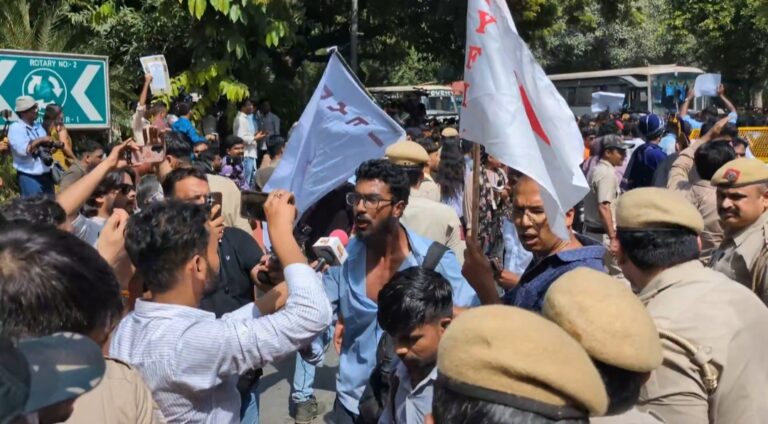
The historic campus of Jamia Millia Islamia (JMI) has once again become a hotbed of state-administrative repression, student resistance, and the violation of democratic rights. For more than two decades (20 years), there has been an undeclared ban on Student Union elections at this prestigious central university. A peaceful movement initiated by students to restore this democratic right has now escalated into a broader struggle against the combined strategic repression of the university administration and the police apparatus.
An Atmosphere of Fear, Digital Surveillance, and Administrative Silence
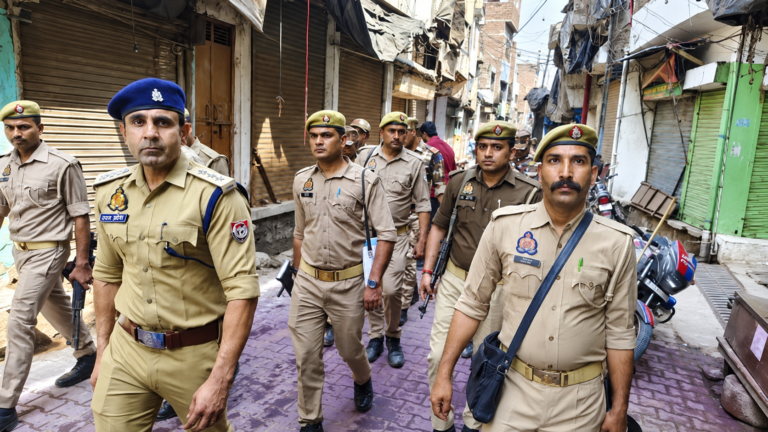
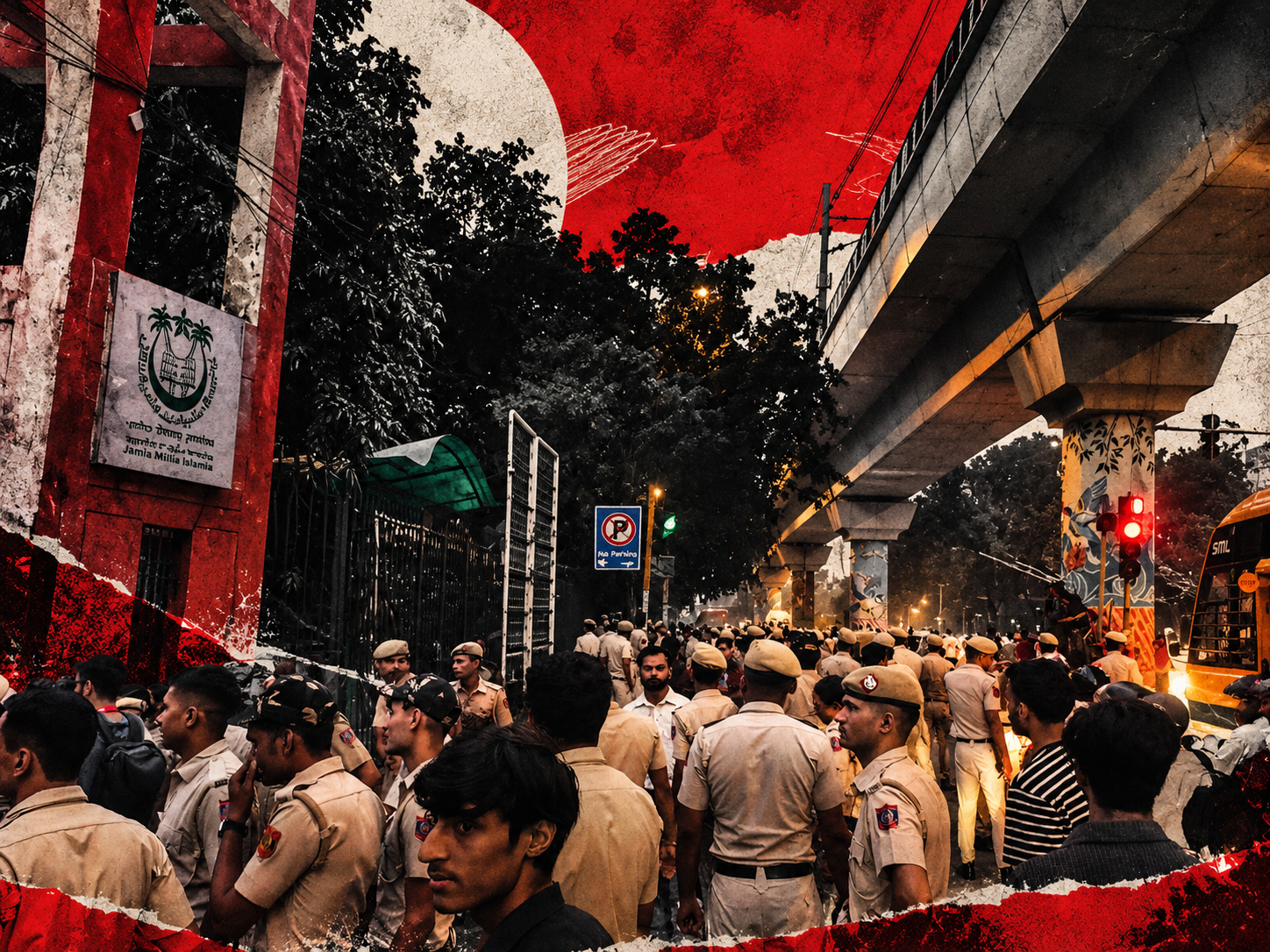
The heavy deployment of security forces at Jamia Millia Islamia’s main gate, ‘Bab-e-Maulana Abul Kalam Azad’ (Gate No. 7), and its surrounding areas has completely altered the normal academic environment.
Militarization of the Campus: Heavy contingents of Delhi Police and paramilitary forces are deployed at the main gate and the university’s perimeter. Every student entering or leaving is being closely monitored, indicating that the administration has closed all channels of communication.
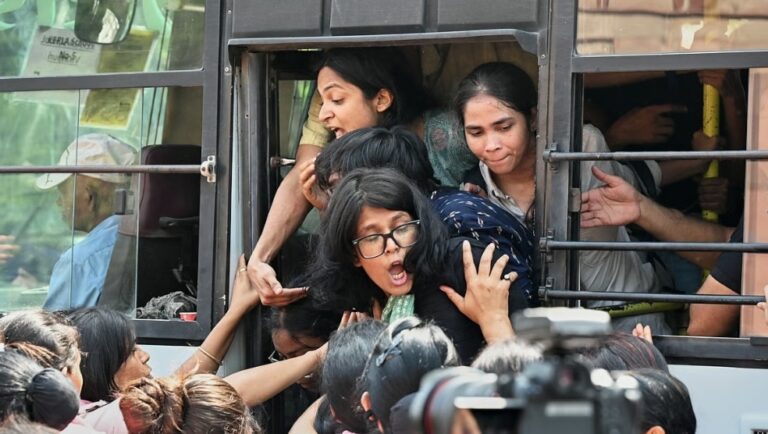
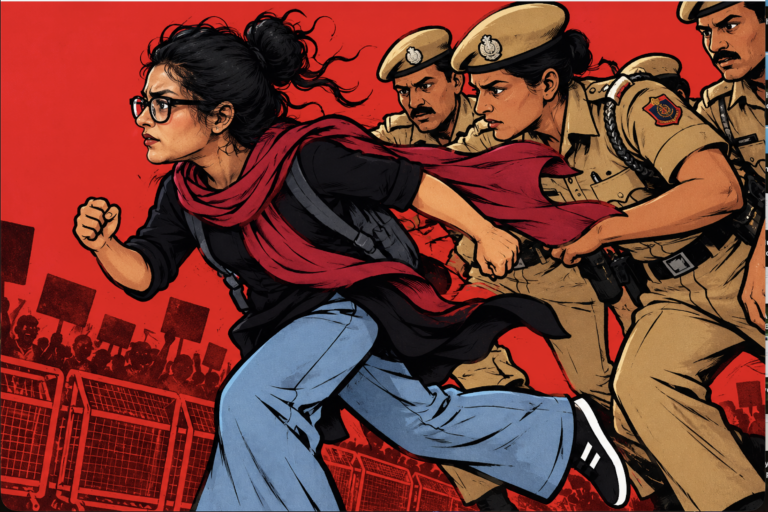
Student abuse and detention: Protesting students have openly reported undemocratic treatment, incivility, and physical assault by police and security personnel. Several students were even forcibly detained yesterday.
Allegations of secret surveillance and data sharing: Students allege that the university administration is sharing their personal data with security and intelligence agencies. Students are receiving direct phone calls from the Criminal Intelligence and Crime Branch, threatening to harass them and pressure them to withdraw from the protests.
Administrative and Police Silence (Media Denial): When our team attempted to contact the Jamia administration and the Delhi Police officials responsible for this serious incident and the repressive measures being taken against students, they completely refused to make any official comment or speak on camera. This silence raises serious questions about administrative accountability.
Detailed Statements of Prominent Student activist and Legal Experts
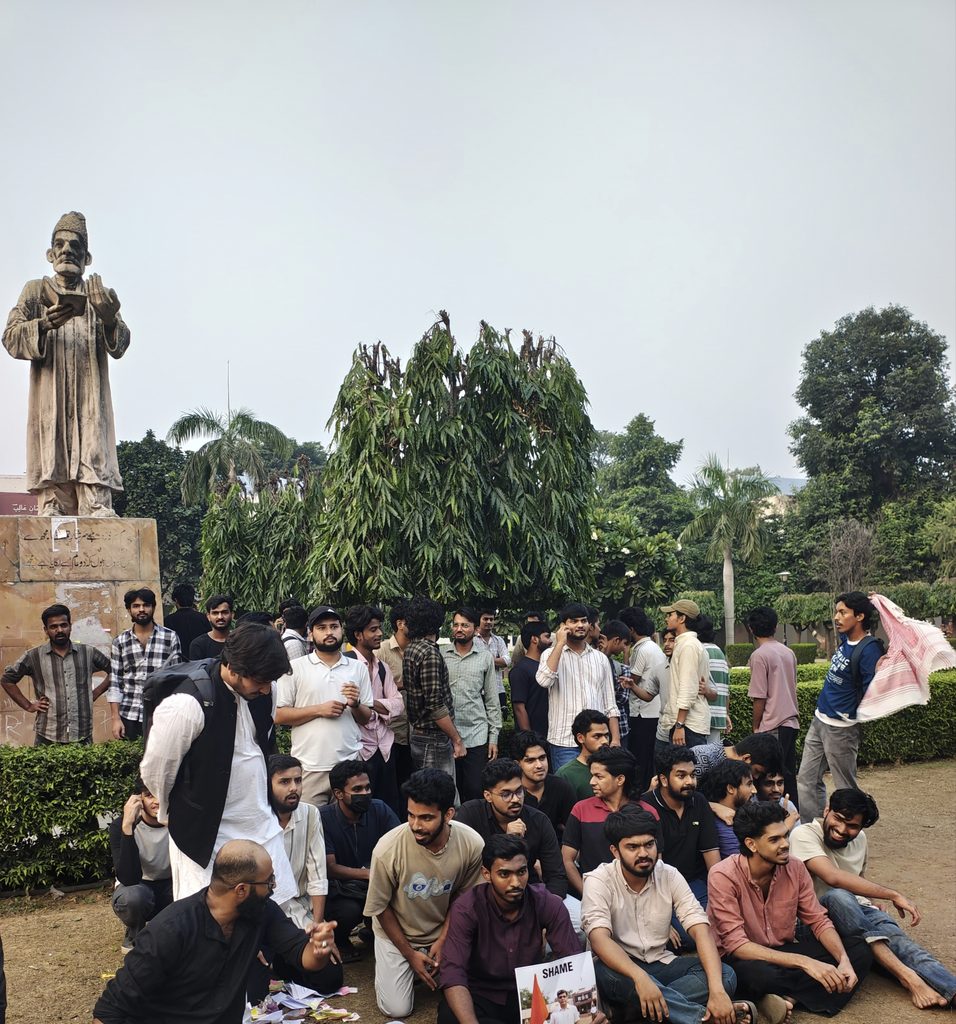
Presenting the ground reality of this movement, various student activists, leaders, and legal experts have expressed their outspoken views:
Zeeshan Ahmad, detained student, Jamia Millia Islamia:
“The government and intelligence agencies view this university and this entire Muslim-majority area through a prejudiced lens. The students sitting here for their basic demand namely, the restoration of the students’ union have absolutely nothing to do with any other outside political movement going on in Delhi. Despite this, the administration, in collusion with intelligence agencies, is creating an atmosphere of fear as if some criminal or anti-national conspiracy is underway in the university. At Delhi University (DU), students openly engage in politics, and wings of major political parties are active, but at Jamia, when ordinary students speak of their legitimate rights, ‘securitisation’ and ‘militarisation’ are imposed upon them. This is a well-planned pattern of administrative prejudice and repression.”
Lubaib Basheer (National Secretary, Fraternity Movement):
“We have broken the oppressive chains of those gates of Jamia which were being used to prevent us from entering our own campus. The police and administration dragged peaceful protesting students out brutally and threw them away, shirking their moral and administrative responsibility. This is our campus; no force can stop us from studying here, engaging in intellectual debate, or demanding our democratic rights. Until we get our democratic rights and the right to a students’ union, this resistance will not stop.
Anjan Azad, AIRSO
“For 20 years, the students of Jamia Millia Islamia have been denied their union rights. Now, when the students protest against it, the fascist Jamia Administration brutally attacked the students using goons from outside in the uniform of Security Guards. Whatever you have seen infront of Gate No. 07 and now witnessing in Jamia is a natural reaction of this perpetual fascist oppression on Jamia students. If students are treated like mosquitoes, then, how can Jamia admin expect the students to tolerate it?”
Shahid Ahmad (MSF Activist and Student, Jamia Millia Islamia)
“The brutality and violence with which nearly 40 of our fellow students were attacked yesterday morning was extremely shameful and undemocratic. An attempt was made to forcibly drive us out, but we are not ones to be afraid. These walls of Jamia and this struggle are our own. We will continue this fight until the Jamia administration backs down and restores the students’ union. We stand like a rock with our courageous comrades on hunger strike Jasim, Faizan, Rihan, and all other agitating students.”
Advocate Mohammad Usman Khan (Delhi High Court, Legal Aid Cell)
“The manner in which the administration and police together destroyed the peaceful protest site o students yesterday is against the rule of law. History is witness that such repression does not crush a movement but rather intensifies it further. In a democratic country, the existence of a students’ union is not a privilege but a fundamental right of every citizen and student. Under Article 21 of the Indian Constitution (Right to Life and Personal Liberty), the right to live with dignity, to protest peacefully, and freedom of expression are enshrined. The Jamia administration should respect this constitutional spirit and initiate the process of students’ union elections without any delay.”
The Illusion of Security Versus the Decline of Democratic Space The current crisis at Jamia Millia Islamia is not an isolated case of a single university; it is a microcosm of the shrinking democratic spaces in higher education institutions across the country.
The Political Agenda of ‘Securitization’
Whenever students on campuses raise their voices on fundamental issues such as academic autonomy, fee hikes, or the restoration of student unions, the combined power and administration immediately closes the channels of dialogue. Instead, a web of police forces, barricades, and CCTV surveillance is installed. This is proof that institutions are being transformed into control rooms rather than intellectual centers.
Blatant Disregard of Constitutional Rights
Article 19(1)(a) (freedom of speech and expression) and Article 19(1)(b) (right to peaceful assembly) of the Indian Constitution guarantee every citizen the right to express their views. Furthermore, Article 21, under the right to life, demands a fear-free and dignified academic environment. Despite this, the police’s entry into central universities and the treatment of students as criminals are a direct violation of these fundamental rights.
Institutional Bias and the Politics of ‘Othering’
Students and activists have repeatedly highlighted the targeting of specific communities or institutions, and their peaceful organizing is viewed with suspicion. This politics of ‘othering’ (demonstrating a class as alien or suspect) deeply undermines the fundamental principles of academic excellence and inclusive education.
The students of Jamia Millia Islamia are today fighting not only for themselves but to preserve the democratic soul of the Indian higher education system. The demand for lifting the ban on student unions that has been in place for the past 20 years is not an illegal demand; it is the only way to provide democratic leadership to universities. Despite all the efforts of the administration and police – be it repression, data surveillance or the policy of silencing the media – this resolve of the students testifies to the fact that the torch of resistance cannot be extinguished in the darkness of repression.