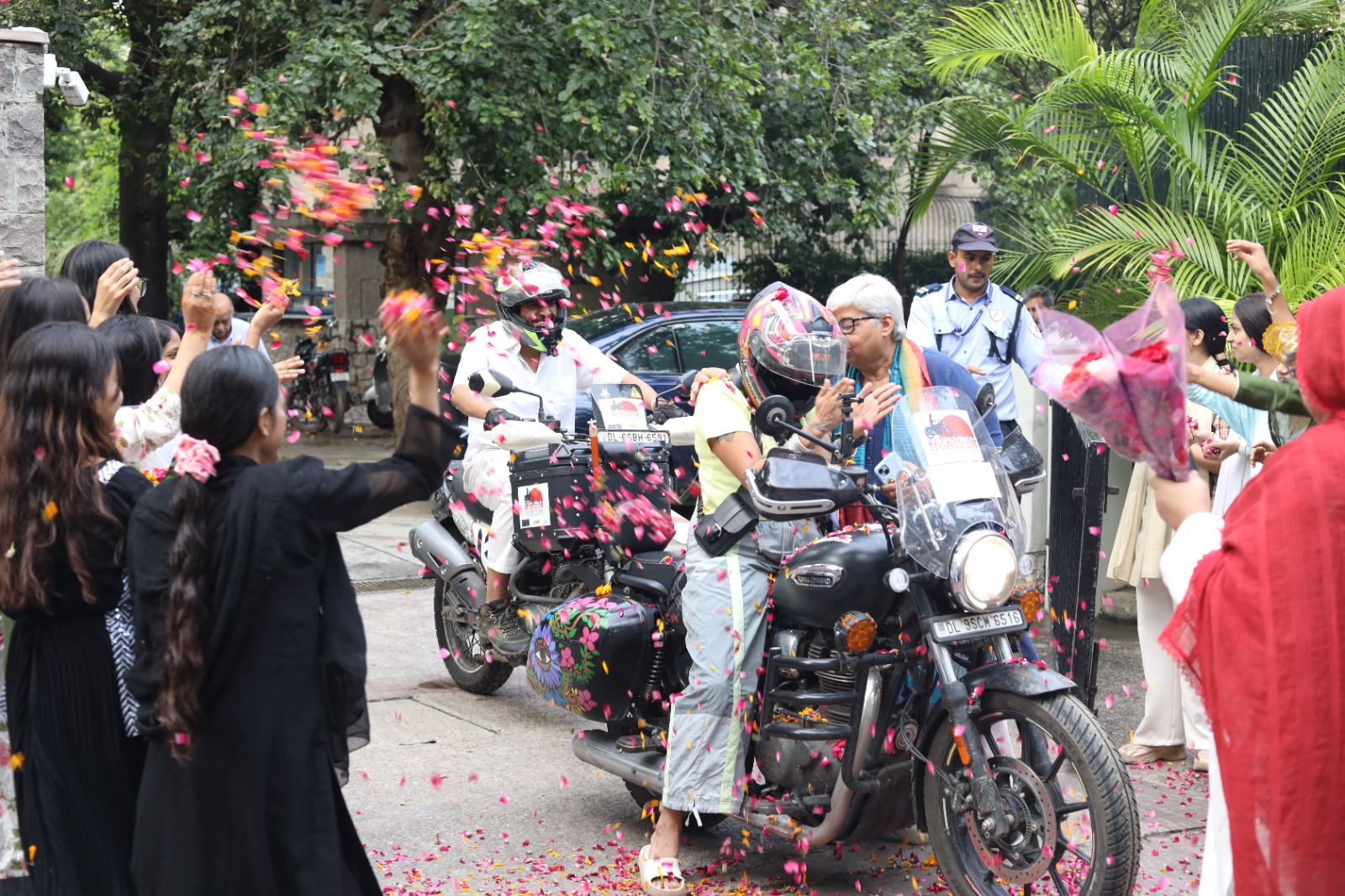
When Seher Hashmi set out from Delhi on 20 August, on a Royal Enfield bound for Kanyakumari, she was riding with her own diagnosis. On 15 October, she ended the journey at the India International Centre Annexe in Delhi, after 56 days, more than 7,500 kilometres and, according to the organisers, 111 sessions with over 15,000 young people across 14 states and 62 cities, towns and villages.
The campaign, Beyond the Horizon: A Ride for Resilience, was run under the aegis of Pehchan. Its primary sponsor was Mariwala Health Initiative, with Population Foundation of India as co-sponsor and Royal Enfield providing on-road service support. Its national coordinator, Shabnam Hashmi, is Seher’s mother.
“I’m a survivor myself”
Seher, a fashion stylist, visual artist and speaker, has lived with clinical depression and Borderline Personality Disorder for over a decade. She told Karvaan India that she also lived with suicidal thoughts. “I’m a survivor myself,” she said. “That is what made me realise that there is a lot of need of breaking the stigma around mental illness.”
She wanted young people to seek professional help faster, “and not just Google things and meet the wrong people and take advice.”
The motorcycle was deliberate. “I wanted to break the stereotype about women that women are weak and they can’t do anything, and only men can do all the good work,” she said. “Women are just there in the world to get married, have children and stay home.”
What the sessions looked like
The sessions covered depression, anxiety, emotional distress, self-esteem, relationships and stigma. Seher said she can’t recall every city, but one moment stayed with her, somewhere in the south. A girl ran up to her in tears. She had been so low that morning that she couldn’t get up for college, and said that after the session she felt “so inspired and motivated” that she was fine.
Many students told her they related to her story. “Some said, ‘Ma’am, I felt like you were talking about my life conditions,'” Seher said. Others said they never thought anyone would take mental health seriously. For many, she added, it was the first mental health session of their lives. “They had no idea that mental health is also an illness like any other physical illness.”
Men on the highway
On the road, she said, the reaction was unusual. “On the highway, boys’ ego used to get hurt,” she said. Second rider Sunny Lochav rode beside her. At times, she said, three or four men on Splendor motorcycles cut through, trying to scare her or make her fall. “I have great control over my bike,” she said. “That’s why I managed it.”
Where to send people for help
At each session, Seher gave students toll-free helpline numbers, many of them available around the clock. She told them they don’t have to share their name, age or identity, so they can speak to someone who won’t see them again. The reason, she said, is that confiding in a friend or relative can backfire: “They judge you, make fun of you, and tell ten other people.”
What Seher Hashmi wants next
She plans an international ride on her Royal Enfield next year. From the government, she wants affordable arrangements so survivors and patients can reach professionals, and a larger share of government funds for mental illness. In her view, the current funding is “not being used properly”.
Her closing message was simple. “Life is supposed to be extremely messed up,” Seher said. “But giving up is not an option.” If we want fewer suicides, she added, we need safe spaces and support groups where survivors can speak openly. “I have become better with my illness because I was able to share openly,” she said, “without the fear of ‘log kya kahenge’.”