Watching another protest for accountability unfold, I found myself supporting its cause and feeling politically homeless at once. As a Muslim student, I have grown used to a political landscape that rarely speaks to my experience without distorting it. The right often treats Muslim identity as a problem to be managed. Liberal and left spaces that I might otherwise turn to often hesitate to call Muslim suffering by its name. That hesitation carries weight. A community can be injured. When that injury is constantly rendered in generalised language, it begins to lose its outline in public life.
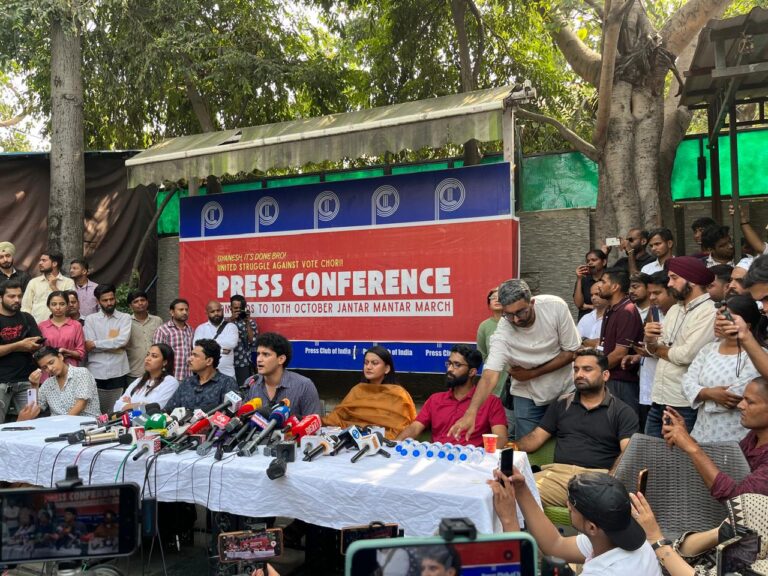
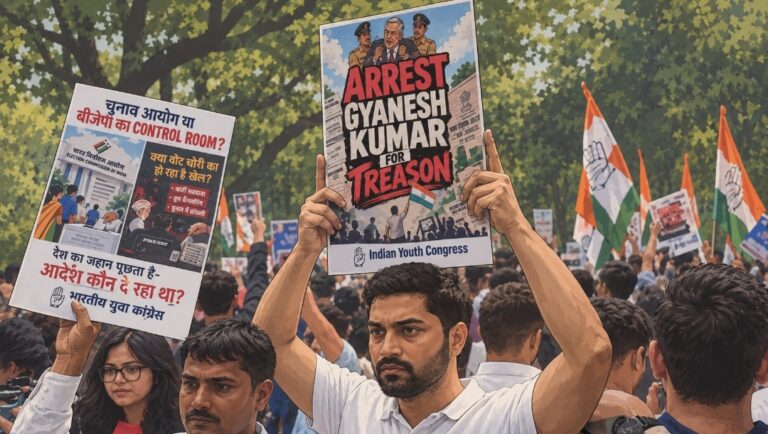
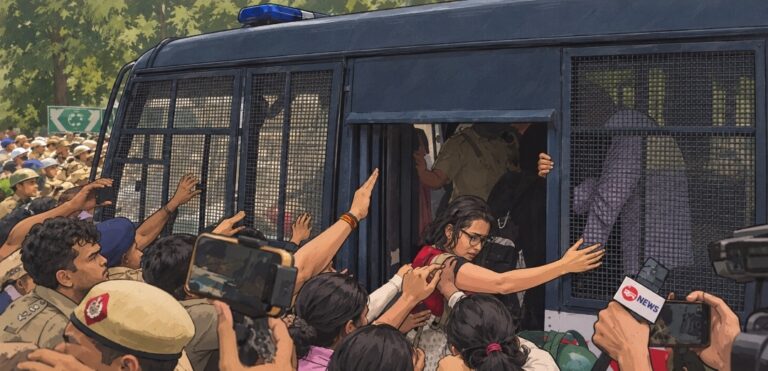
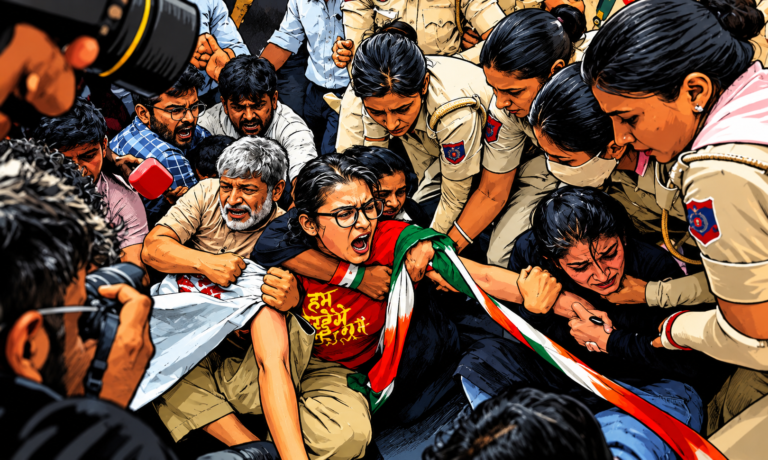
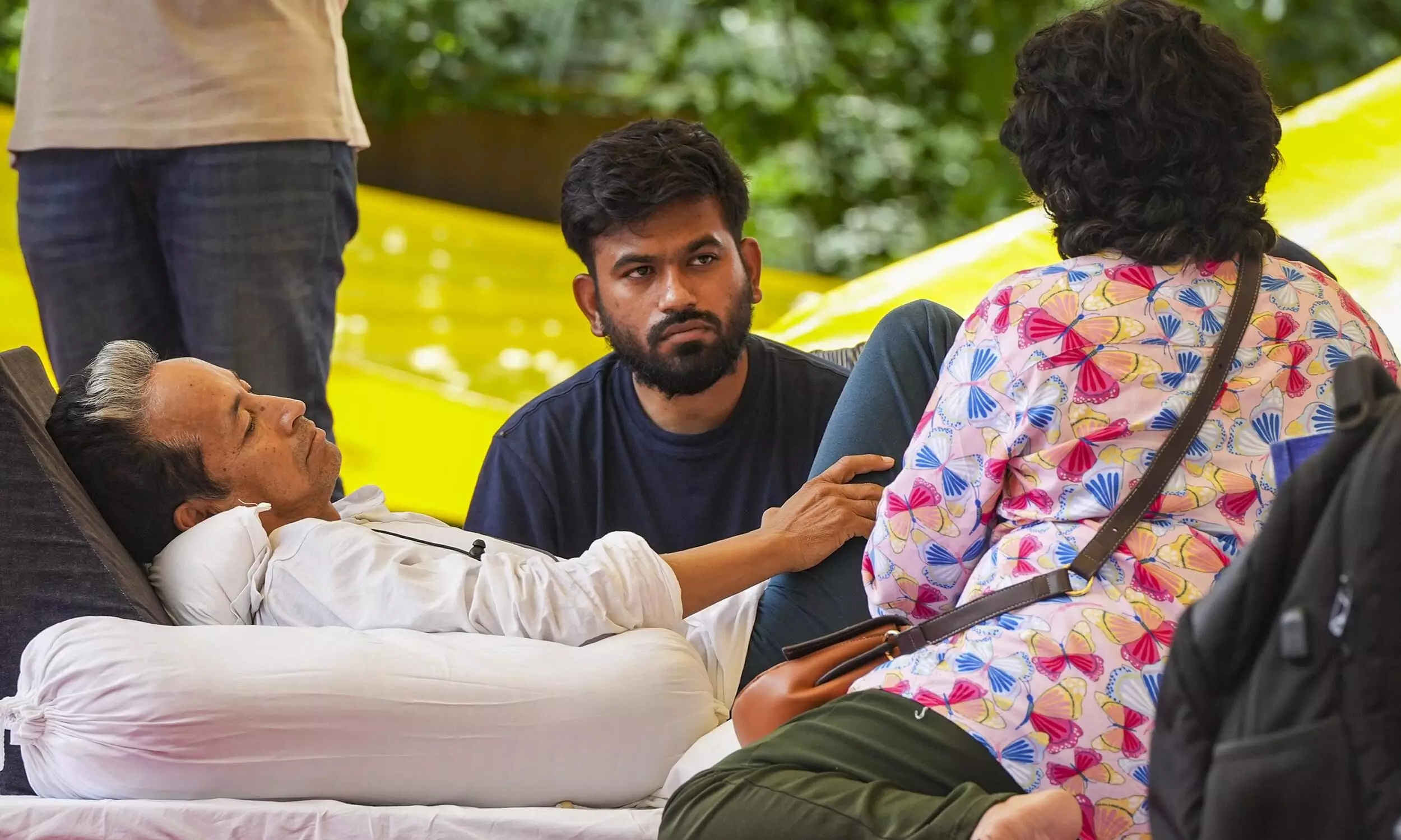
The Cockroach Janta Party’s protest, and its demand for Union Education Minister Dharmendra Pradhan’s resignation, has grown out of anger over NEET and other exam-related irregularities. I support that anger. I support the demand for accountability. There is another NEET story, though, from January 2026, that also deserves public attention. It may not have drawn the same national outrage, but it reveals something deeper about how Muslim presence is still viewed in India.
That story unfolded at the Shri Mata Vaishno Devi Institute of Medical Excellence, or SMVDIME, in Reasi, Jammu and Kashmir. The college had been allowed to start a 50-seat MBBS course for the 2025–26 session, and students were admitted through the normal NEET merit process. Reports differ on the exact number, but they agree on one point. A large majority of the selected students were Muslim, many of them from Kashmir. Protests began soon after. Groups linked to the Shri Mata Vaishno Devi Sangarsh Samiti and other pro-BJP, pro-RSS formations objected to Muslim students filling most of the seats in a college associated with the Vaishno Devi Shrine Board.
This is the part that stays with me. The students had broken no rule. They had entered through merit, cleared the qualifying exam, and done everything the system asked of them. Still, their presence became controversial. The message was difficult to miss. Muslim success seemed acceptable only up to a point. Beyond that point, it could be recast as unfair, threatening, or out of place.
Soon after the protests, the National Medical Commission withdrew the college’s permission to run the MBBS course, citing deficiencies in infrastructure, faculty strength, and clinical material. The students were then moved to other government medical colleges on supernumerary seats so their studies could continue. Maybe those deficiencies were real. Maybe the college did have serious problems. Even if one accepts the official explanation, the political meaning of what happened demands attention. A merit-based process produced Muslim students. That produced communal outrage. Then the final decision arrived in technical language, as though the atmosphere in which it took form carried no weight.
This is exactly the pattern that leaves many Muslims politically homeless. Hindutva politics has no difficulty naming Muslims. It names us constantly, and often violently, as demographic threat, civilisational outsider, or political excess. Liberal and left spaces, by contrast, often respond with a vocabulary so careful, so distanced from specifics, that Muslims begin to vanish from the sentence altogether. Critics of Indian left-liberal discourse have made this point before. They note a preference for words like minority, pluralism, or constitutional values over the more uncomfortable act of naming anti-Muslim discrimination directly. That generalised vocabulary carries some value. It can become an evasion, though, when it replaces the specific reality of what is happening.
That is why SMVDIME deserves attention beyond its own campus. SMVDIME’s story goes beyond a college losing recognition. It shows how merit can be accepted in principle and still rejected in practice when the successful candidates are Muslim. It shows how quickly a lawful outcome can be recast as a cultural trespass. And it shows how easily the Muslim dimension of an event can be set aside once an official explanation appears.
This argument calls for a solidarity that does not require Muslim experience to be depoliticised, softened, or translated before it can be heard. A Muslim student needs his pain recognised in its own terms, carrying its own legitimacy without requiring translation into universal language. If a protest for accountability can gather national outrage around one instance of NEET injustice, it is worth asking why a second incident, tied to the same exam and visibly formed by communal hostility, did not provoke the same moral clarity.
That is the loneliness I feel when I watch another protest unfold. I stand inside the demand for justice. I am also aware that the language of justice often arrives already sanitised, stripped of the words that would make my experience visible. I am asked to feel grateful for being included, even when the terms of that inclusion require me to remain unnamed.
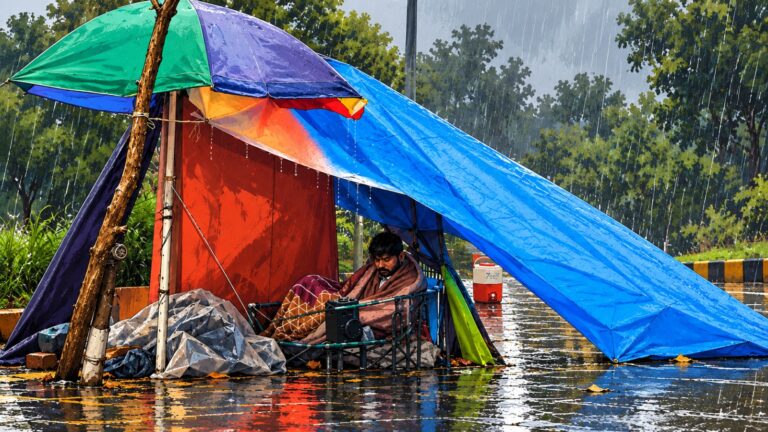
I support the hunger strike. I support the demand for accountability. I also support the right to say this plainly. I am a Muslim student who is tired of being asked to disappear inside language that refuses to name me.