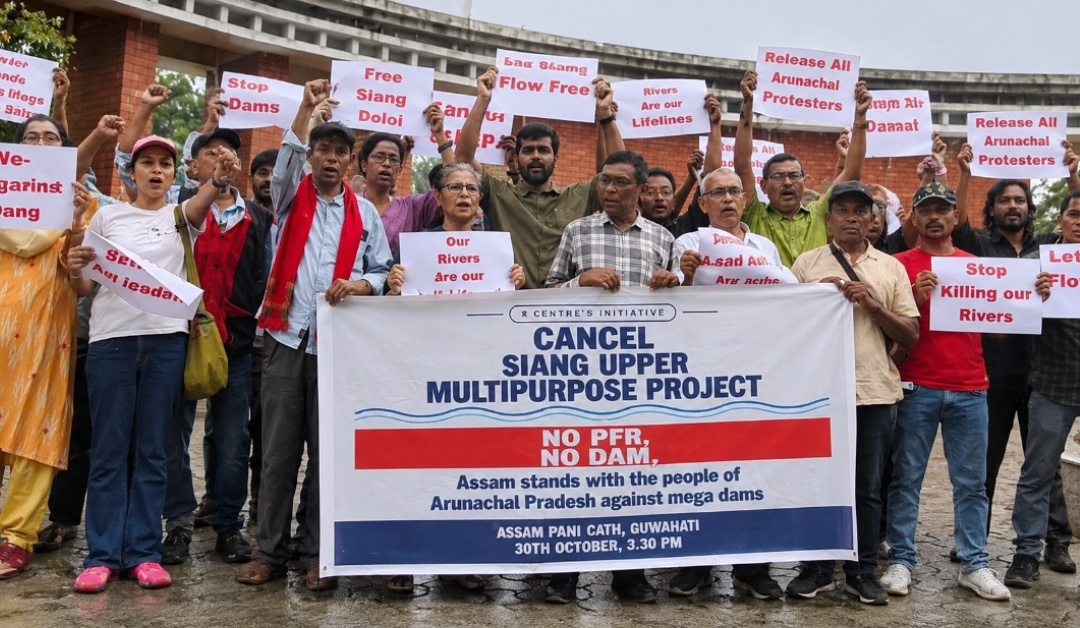
Protests against the proposed Siang Upper Multipurpose Project (SUMP) in Arunachal Pradesh have intensified, with indigenous communities opposing preliminary surveys for the 11,200-megawatt hydropower project amid arrests, preventive detentions and a growing security presence in the Siang Valley.
The agitation, led by organisations including the Siang Indigenous Farmers’ Forum (SIFF), has centred on fears of displacement, loss of ancestral land and ecological damage. Residents estimate that 27 villages could be submerged and several others affected by the proposed project.
Tensions escalated on October 23 in Pasighat, where clashes between protesters and security personnel resulted in the use of tear gas, damage to public property and arrests. Police subsequently reported 69 arrests and four preventive detentions under the Arunachal Pradesh Unlawful Activities (Prevention) Act, 2014.
Earlier in October, four SIFF activists were detained after opposing survey work for the project’s pre-feasibility report. The Upper Siang district administration also imposed restrictions on public gatherings as demonstrations spread across the region.
Indigenous organisations have demanded the release of detained activists, withdrawal of security personnel and suspension of survey work. Residents have also alleged that the deployment of paramilitary forces and restrictions on public assembly are being used to suppress opposition to the project.
The state government, however, has defended the project on grounds of national security and water management, citing concerns over China’s proposed hydropower project on the Yarlung Tsangpo river upstream. Authorities have maintained that action against protesters is necessary to address alleged violence and maintain public order.
The dispute highlights growing tensions between India’s infrastructure and strategic ambitions and the rights of indigenous communities whose ancestral lands, livelihoods and cultural identities could be affected by large-scale development.