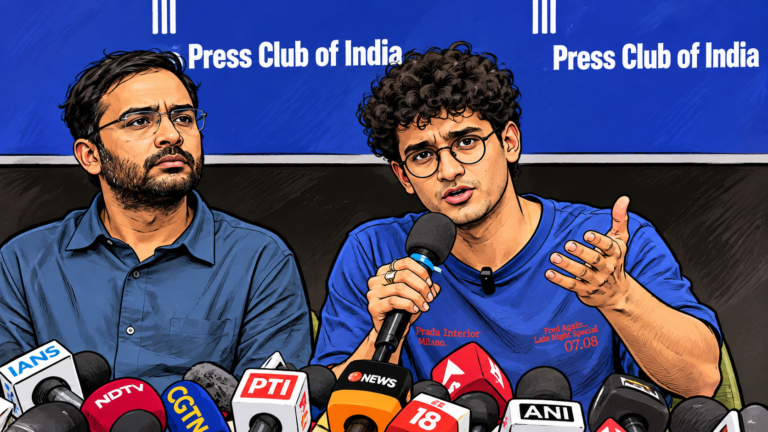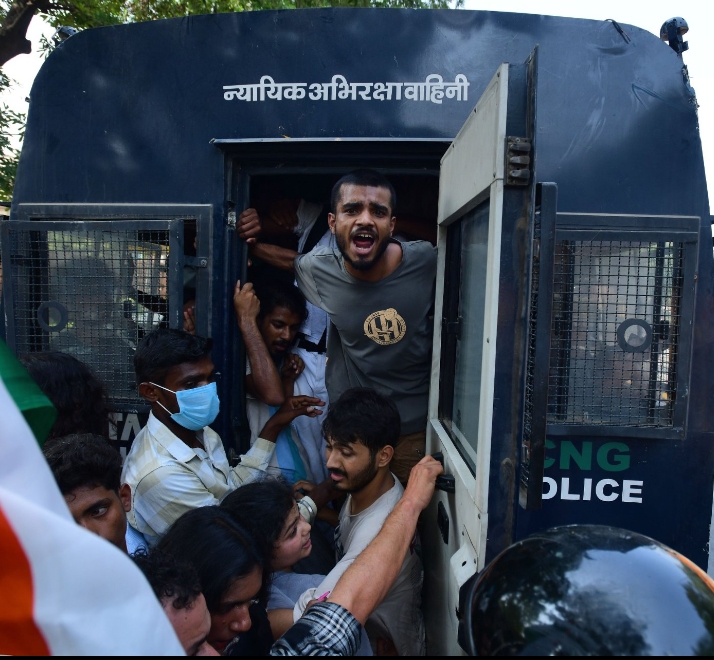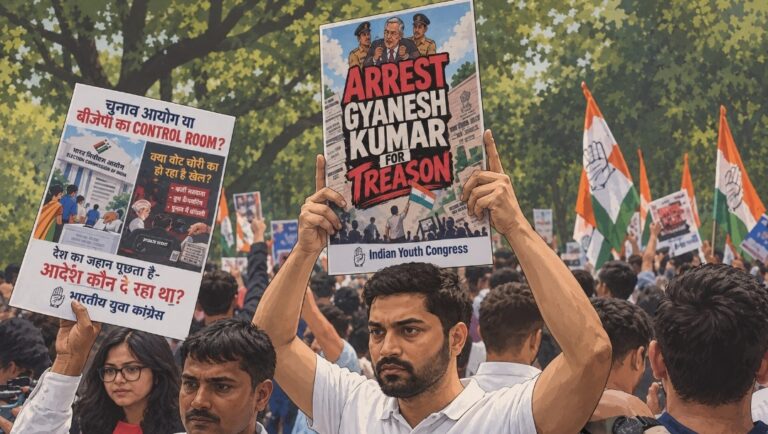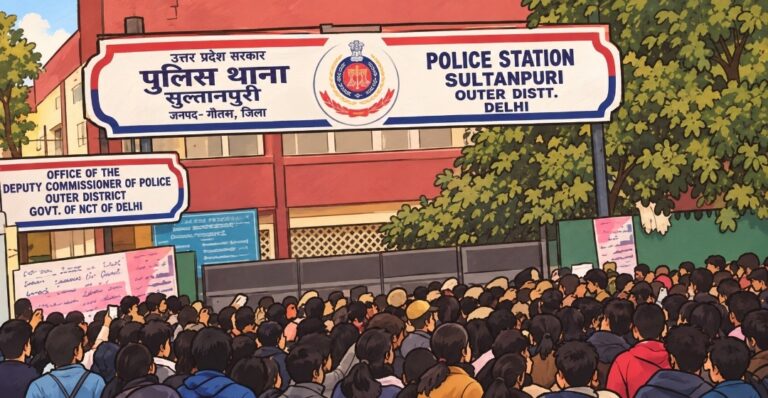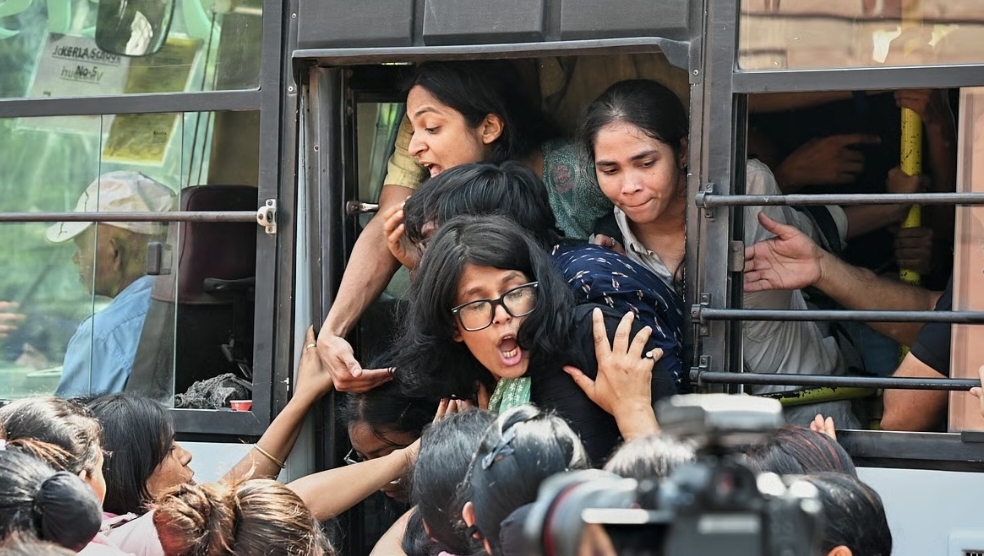
At least 43 journalists were detained, and several assaulted, while covering the protests against Chief Election Commissioner Gyanesh Kumar on October 10 and 11, the Committee to Protect Journalists (CPJ) said in a report published on October 12 and updated on October 15. Most were detained in New Delhi, where CPJ confirmed at least 39 cases over the two days. Others were detained in Ahmedabad, Pune and Mumbai while covering solidarity protests.
CPJ said police kept detaining journalists even after the Supreme Court, on October 11, recorded an assurance from Solicitor General Tushar Mehta that lawyers, journalists and other professionals would not be impeded in their work. The court also directed that no one be detained except by procedure established by law.
“A blot on India’s democratic traditions”
Kunal Majumder, CPJ’s Asia-Pacific programme coordinator, called the incidents “deeply troubling and a blot on India’s democratic traditions”. They “violate international standards on press freedom and journalists’ constitutional rights”, he said, “and also contradict the government’s assurance to the Supreme Court that journalists would not be impeded in their work.”
He added that India, “as the world’s largest democracy”, has a special responsibility to protect journalists and to hold police officers accountable for assaulting or obstructing them.
What CPJ documented
According to CPJ’s review of news reports, interviews and verified social media posts, most of the detained journalists were displaying press cards. Police dragged some by their clothes, shoved others into buses, seized at least five phones, pressured at least one journalist to delete footage, and drove some to holding sites up to 65 kilometres away. At least five were struck by police, according to their own or their outlets’ accounts.
Among those named by CPJ, a Siasat Daily crew said their phones were snatched and their data erased, and The Caravan’s Ryan Thomas said police hit him repeatedly on the head when he refused to delete footage. Rana Ayyub, a columnist for The Washington Post, said police beat her with a baton although they knew she was a journalist. Maktoob Media’s reporter Fida Fathima and two colleagues were surrounded at Connaught Place by men wearing press cards, who hurled Islamophobic slurs while uniformed police were present. YouTuber Kavya Karnatac said she and her crew were pulled out of their vehicle and put in a bus without being told why. The account of independent journalist Shyam Meera Singh was withheld in India in response to a legal demand.
CPJ said it emailed Delhi Police for comment and had not received a response. It cited a senior Delhi Police officer as telling a national daily that some journalists may have been detained because they were working close to protesters and didn’t move away during detention operations.
“Witnesses, not participants”
In a reply to Karvaan India, Somi Das, a Delhi-based researcher at CPJ, said the principle is simple. “Journalists are not participants in a protest; they are its witnesses,” she said. Documenting dissent “sits at the very core of their work”, and when authorities detain reporters or stop them from recording, “they deprive the public of an independent account of matters of urgent public interest”.
Das said the right to practise journalism is protected under Article 19 of the Constitution and reinforced by international standards. She pointed to the UN Human Rights Committee’s General Comment No. 37, which says journalists monitoring assemblies, including the conduct of law enforcement, are entitled to protection. They must not face reprisals or have their equipment confiscated or damaged, she said, “even where an assembly is declared unlawful or dispersed”. For legal questions about the detentions, she said, journalists should consult a lawyer who specialises in freedom of expression.
The cost beyond the day
Das said the damage goes beyond a lost day. “A confiscated phone or camera can leave a journalist unable to work for days,” she said, and being physically assaulted means journalists “pay out of their pocket for recovery”. The psychological impact “is not even talked about enough”. For freelancers and small newsrooms, she said, the result is lost income and “a quiet pressure to stay away from the story altogether, resulting in self-censorship”.
On how advocacy groups should respond, she said the first job is “rigorous documentation”: gathering fragments from news reports and social media, verifying them, and assessing them against India’s constitutional guarantees and international norms. The second is sustained engagement with the authorities, because “dialogue with them, however difficult, is indispensable if protections for the press are to translate from principle into practice”.
The gap between the assurance and the street
On October 11, the government told India’s highest court that journalists would not be impeded. On the same day, according to CPJ, police detained reporters at Connaught Place and on Janpath, among them journalists carrying press cards who were filming detentions. The Supreme Court has said that no one should be detained except by procedure established by law. Delhi Police have yet to say which procedure applied to the 43.