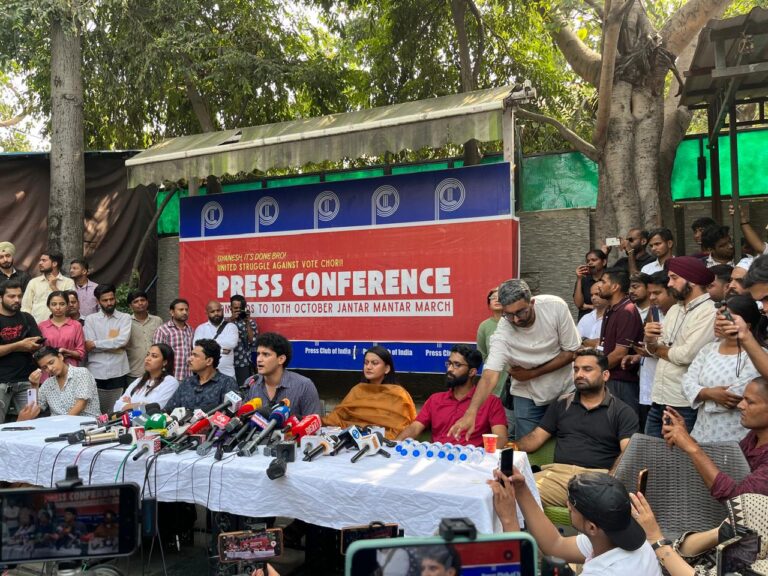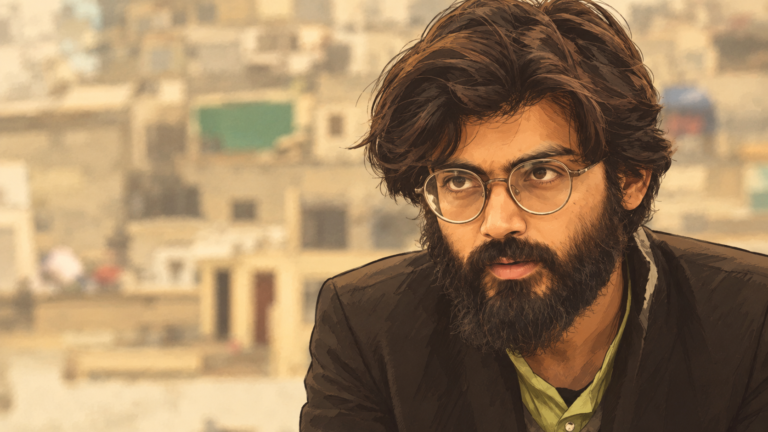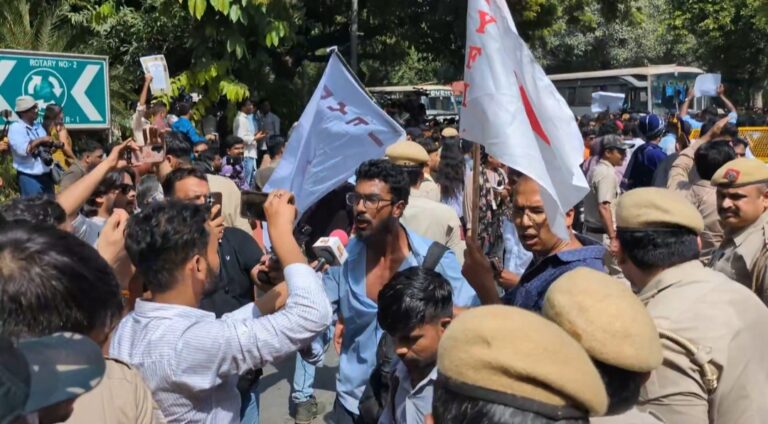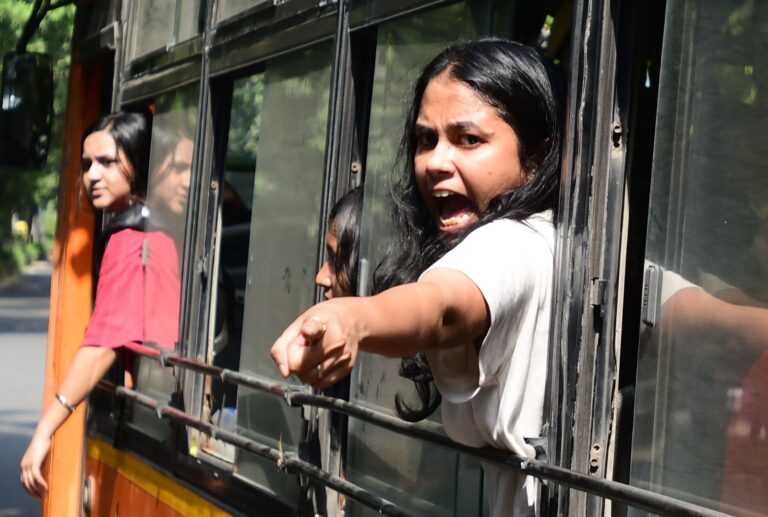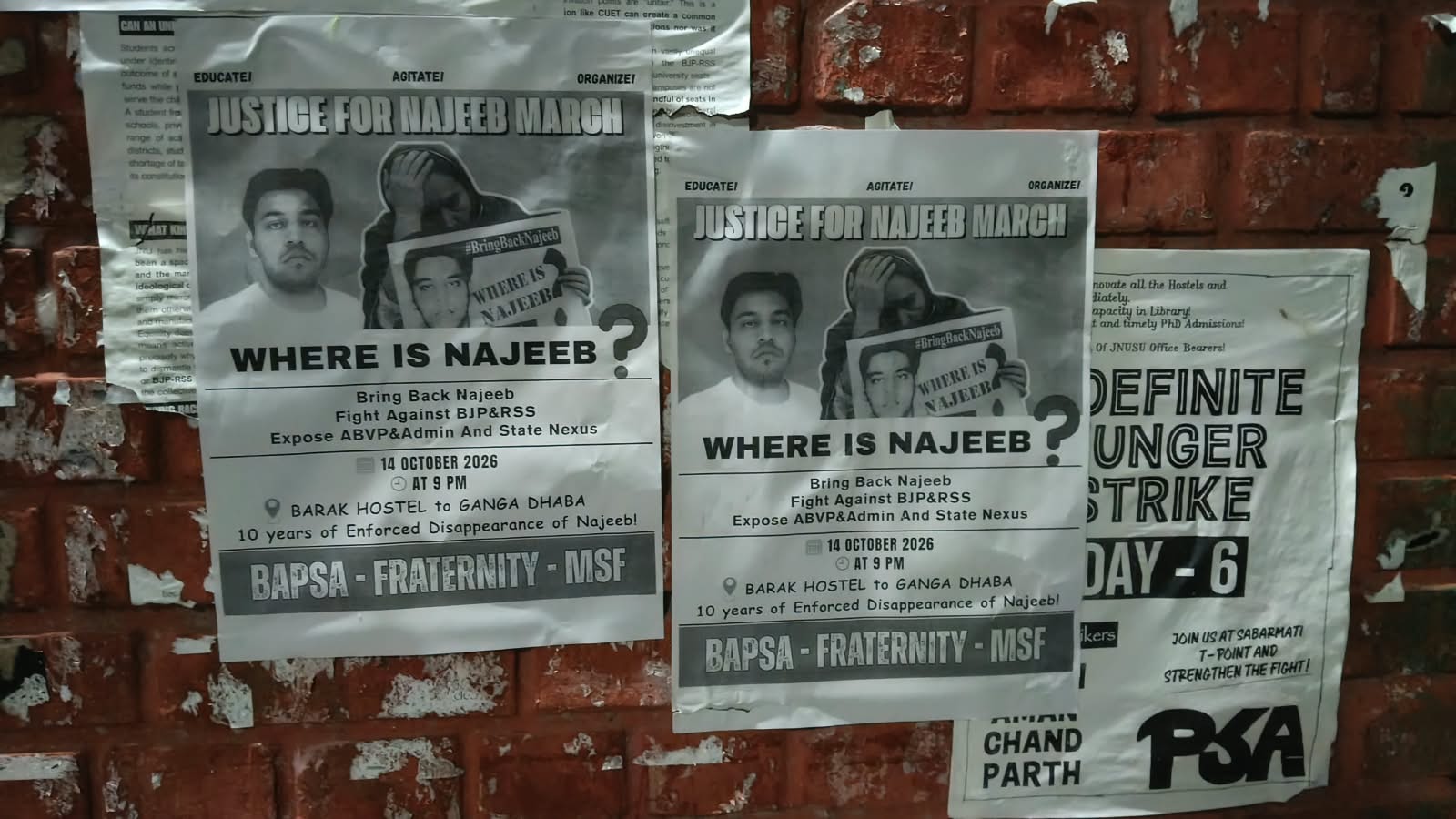
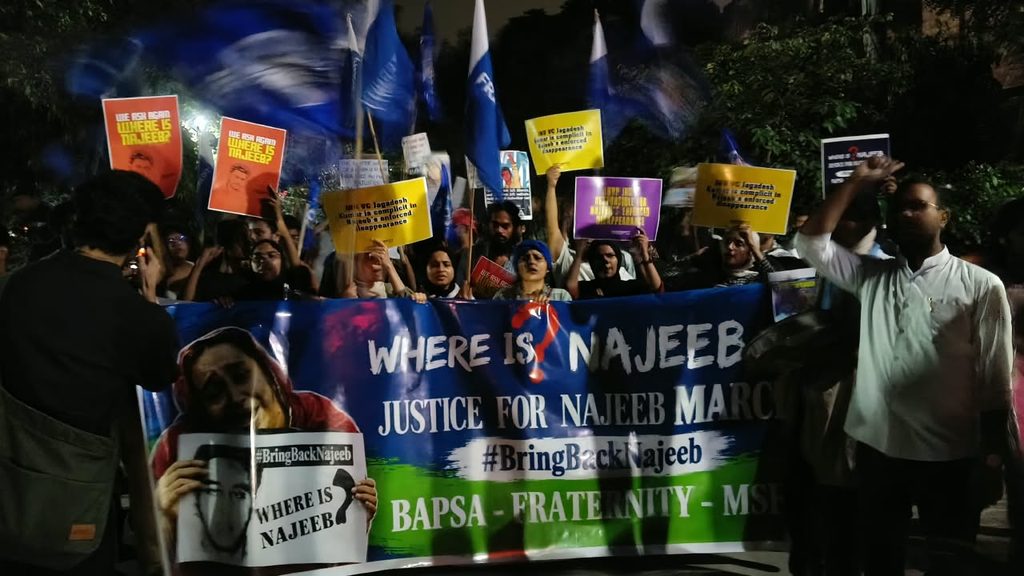
New Delhi: Hundreds of students gathered at Barak Hostel at Jawaharlal Nehru University (JNU) on Wednesday night to protest ten years of Najeeb Ahmad’s disappearance, asking the question that has followed the campus since 2016: where is Najeeb?
The “Justice for Najeeb” march was organised by the Birsa Ambedkar Phule Students’ Association (BAPSA) together with Muslim organisations, including the Muslim Students Federation (MSF), the Fraternity Movement. It began at 9 pm from Barak Hostel and moved towards Ganga Dhaba. Ahead of the march, the groups released a joint statement titled “Does JNU Remember Najeeb?”, demanding answers on his whereabouts and on who is responsible.
A decade after 15 October 2016
Najeeb Ahmad was a first-year MSc Biotechnology student when he disappeared from the JNU campus on 15 October 2016. The organisations say he had been assaulted the previous night in Mahi-Mandavi hostel by a mob of the Akhil Bharatiya Vidyarthi Parishad (ABVP). The statement says the CBI stated in May 2018 that it had found no evidence that a crime had been committed against him.
The organisations argue that the failure to trace him cannot be blamed on investigators alone. They allege that the JNU administration and the then left-led JNU Students’ Union (JNUSU) helped build and circulate a narrative in which Najeeb was the aggressor.
The letter
At the centre of the allegation is a letter. The statement says the then JNUSU president Mohit Pandey of the All India Students’ Association (AISA) and another AISA student signed a letter to the hostel warden portraying Najeeb as a criminal, and another declaring him mentally ill. The organisations say the letters are in the public domain, and that they became the foundation of a narrative later adopted by the JNU administration, the Delhi Police and the CBI.
Mohammad Alfauz, general secretary of the Fraternity Movement, said the question of Najeeb’s disappearance cannot be separated from the role of the union that led the campus at the time.
“When we ask about Najeeb’s disappearance, we have to talk about the JNUSU the Left was leading then, and its nexus with the Delhi Police,” he said. “The first application that went to the warden was signed by Mohit Pandey, who said Najeeb was mentally disturbed. That became the primary basis for the CBI, the JNU administration and the Delhi Police.”
Alfauz said further theories were then layered on, including the claim that Najeeb became aggressive after seeing a red thread on an ABVP member’s wrist. He argued that this reflected a wider attitude on the Left. “The idea that Muslims are inherently violent is part of that culture,” he said. “When the Left says that raising the Muslim question is a communal distraction from class struggle, that is exactly why Muslims struggle on this campus. Najeeb’s disappearance was a result of that. Even today, the Left has not seen him as a Muslim body.”
“Geographical profiling”
The organisations also point to what happened after Najeeb vanished. The statement says that in the early days the agencies tried to link him to “terror” outfits, suggesting he had gone to Jamia on his own, claiming he had been seen in Darbhanga, and circulating media reports that he had joined ISIS. According to the statement, the Delhi High Court rejected the ISIS-related reports as false.
Alfauz called this a pattern. “Jamia, Darbhanga, these are geographical profiling of Muslims, used to associate him with terror,” he said. “They terrorised and communalised Najeeb. JNU calls itself secular and progressive, but in its definition, whatever the Muslim community does becomes communalism. That is why we ask every year: where is Najeeb?”
“We see it as injustice”
Kranti Kumar, president of BAPSA, said his organisation does not treat the case as an isolated incident or only as a question of solidarity between Dalit, Bahujan and Muslim students. “We see it as injustice,” he said. “In the way the Brahmanical state targets oppressed communities and uses different operations against them, Najeeb’s case is the same. His identity was attacked, he was provoked, he was beaten, and then he was forcibly disappeared.”
Kumar said the aftermath was as troubling as the event. “Despite the forced disappearance, no action was taken against the perpetrators on this campus. Instead Najeeb was made the culprit, tagged as violent and pushed out,” he said. “It shows how a specific identity is targeted and removed from this university. No progressive group protested and no professor stood up for Najeeb.”
He added that the letter signed by Pandey, which says Najeeb was violent and had provoked and attacked the ABVP, became a base that the CBI, the Delhi Police and the administration used to treat Najeeb as a culprit. “All Muslim organisations, MSF, SIO and BAPSA included, have always carried this discourse forward and will continue to,” Kumar said.
AISA’s response
Daud, vice president of AISA at JNU, said the organisation’s position is that Pandey signed the letter in the confusion of the moment, without consulting the party. He said AISA later led the movement for Najeeb from the front, raised questions continuously and approached the courts. The signature, he said, was Pandey’s individual act and not the organisation’s.
The investigation
The statement also lists what the organisations call the CBI’s lapses. It alleges that the agency never conducted custodial interrogation of Najeeb’s assailants, even though a proctorial inquiry had found them guilty of violence against him. It also alleges that the CBI failed to collect full forensic data from the attackers’ phones, leaving three unexamined because they were pattern-locked. The organisations accuse the Delhi High Court of letting the CBI evade accountability for a “dereliction of duty”.
What remains unanswered
The organisations say they will keep supporting Najeeb’s mother, Fatima Nafees, in her search. Ten years on, the central question has not changed, and the statement adds two more: who is responsible, and what happens to the culprits.
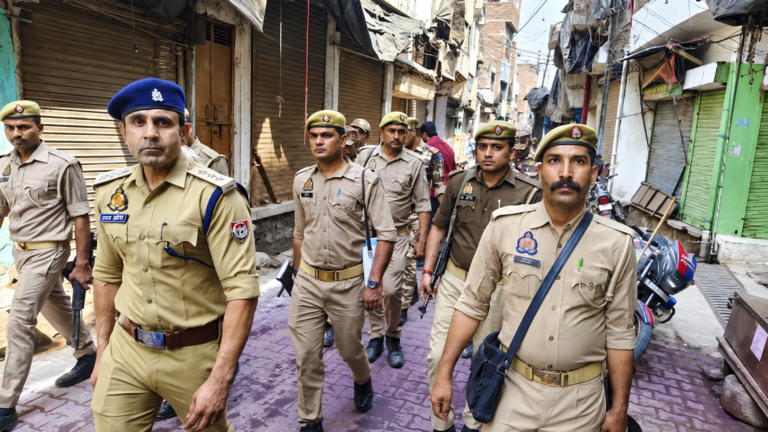
In the reports available, the CBI has not explained why the students found guilty by the proctorial inquiry were not interrogated in custody. Nor has the Delhi Police said where its search stands. For the students who walked from Barak Hostel to Ganga Dhaba on Wednesday night, a decade without answers is itself the story.